

TMJ and Jaw Pain

Jaw Pain and TMJ Dysfunction Treatment

TMJ dysfunction is one of those conditions that tends to get minimized even though it affects nearly everything involving your head and jaw. The clicking when you open your mouth, the ache after a meal, the headaches that seem to start at your temple or behind your ear, the sore jaw you wake up with from grinding, you have no control over during sleep. It is exhausting to deal with, and for many people, it has been going on for years.

The standard recommendation is a night guard, and while that protects your teeth, it does not explain why the jaw muscles are in constant tension and overwork in the first place. The jaw does not operate in isolation. It is directly connected to the cervical spine, the surrounding musculature, and the nervous system, and dysfunction in any of these areas can drive what happens in the joint. Treating the symptom without understanding that connection is why so many people wear their night guard faithfully and still wake up with a sore jaw every morning.

The cervical spine and the TMJ are directly connected through shared nerve pathways and overlapping muscle systems. When the neck is restricted, misaligned, or chronically tense, that tension travels into the jaw. Treating the jaw alone, without addressing the neck, is why most TMJ patients find only partial relief.

At Balance Atlanta, Dr. Caroline von Fluegge-Chen evaluates the jaw and the cervical spine together. She uses chiropractic adjustments, craniosacral therapy, Class IV laser, and trigger point work to address both, and coordinates with dentists when dental care is part of the picture. For people who have had TMJ symptoms for years and not found lasting relief, this combined approach is often what finally works.
Request Appointment

How TMJ Dysfunction Affects Daily Life

TMJ dysfunction affects approximately 10 million Americans. Women are affected at nearly twice the rate of men. About 30 percent of those with TMJ symptoms develop chronic pain that significantly interferes with daily activities.

Bruxism, the habit of grinding or clenching the teeth, affects 8 to 10 percent of the population. Many people do it during sleep without awareness until a dentist notices the tooth wear or a partner mentions the sound. Bruxism is one of the most consistent drivers of chronic TMJ pain and one of the clearest signs that the jaw muscles are under sustained stress that needs to be addressed at its source.

The jaw affects more than most people realize. Eating, speaking, swallowing, and even breathing all involve the TMJ. When it is not functioning normally, daily life becomes a series of workarounds. Avoiding certain foods. Being careful how wide you open your mouth. Carrying tension in your jaw and face all day. This does not have to be permanent.

What is TMJ Dysfunction?

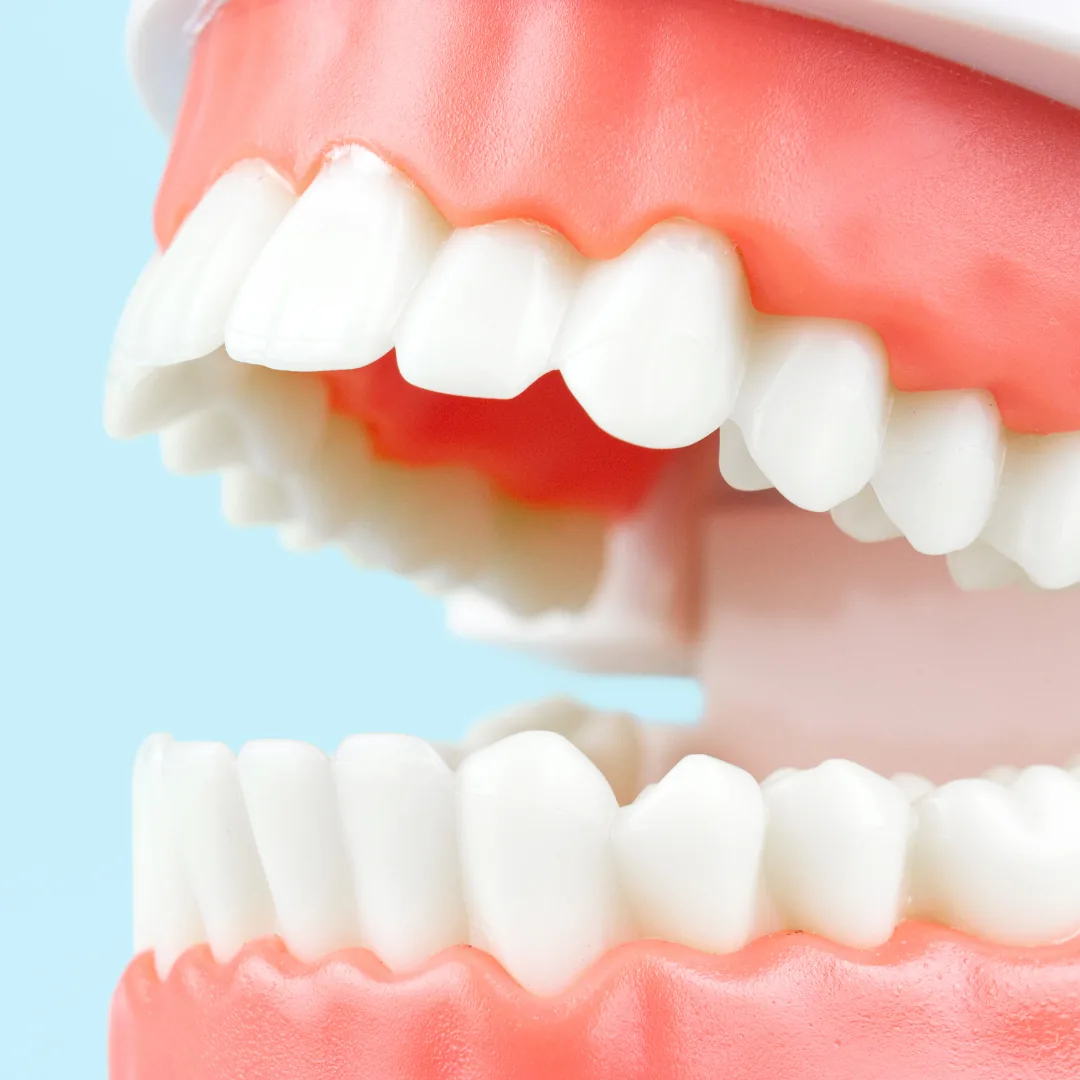
The temporomandibular joints are the two joints that connect the jawbone to the skull, one on each side. They work in coordination with each other and with the masticatory muscles, the muscles used for chewing, to allow the full range of jaw movement. When the joint itself, the disc inside it, or the surrounding muscles become dysfunctional, the result is the pain, clicking, locking, and restricted movement that characterize TMJ disorder.

The joint contains a cartilage disc that cushions the surfaces and allows smooth movement. When the disc shifts out of its normal position, the bones come into contact more directly. This is often what produces the clicking or popping sound. In more advanced cases, the jaw can lock in an open or partially closed position.

The masticatory muscles are among the strongest muscles in the body relative to their size. When they are chronically contracted from stress, bruxism, or abnormal jaw mechanics, they produce significant pain and refer symptoms into the head, ear, and neck. Releasing this muscular tension is one of the most impactful interventions in TMJ care.

Request Appointment

What Causes TMJ Dysfunction

Bruxism and Clenching

Grinding or clenching the teeth, particularly during sleep, places enormous sustained force on the TMJ and the muscles surrounding it. This overload inflames the joint, fatigues the muscles, and over time causes the disc inside the joint to shift. Bruxism is almost always associated with stress, sleep disturbance, or cervical spine tension. Addressing the cervical component and the stress response reduces the frequency and intensity of bruxism, which reduces the load on the joint.

Cervical Spine Misalignment and Tension

The cervical spine and the TMJ share nerve pathways and are connected through the muscles of the neck, jaw, and base of the skull. When the upper cervical vertebrae are restricted or misaligned, the tension that is created travels upward into the masseter, pterygoid, and temporalis muscles. The jaw compensates for this altered mechanical environment by shifting its resting position, which changes how the teeth occlude and how the joint loads. This is the connection that most TMJ treatments never address.

Forward Head Posture

Forward head posture alters the relationship between the skull, cervical spine, and jaw. As the head moves forward of its neutral position, the jaw is pulled posteriorly and the disc in the TMJ is displaced anteriorly. The muscles at the base of the skull contract to support the head in this position, creating chronic tension that refers into the jaw. People who spend long hours at screens frequently develop TMJ symptoms driven primarily by this postural pattern.

Stress

Stress activates the masseter and temporalis muscles through the same sympathetic nervous system pathway that tightens the shoulders and neck. Many people clench their jaws during concentration, frustration, or anxiety without realizing it. This sustained low-grade contraction overloads the joint throughout the day. Combined with nighttime bruxism, chronic stress keeps the jaw under load for the majority of the waking and sleeping hours.

Injury and Trauma

A blow to the jaw or face, whiplash from a car accident, or a dental procedure that required the jaw to be held open for an extended period can all traumatize the TMJ and surrounding muscles. Post-traumatic TMJ dysfunction often develops gradually rather than immediately, as compensation patterns develop in response to the altered mechanics the injury created.

Dental Malocclusion

When the upper and lower teeth do not meet in proper alignment, the jaw shifts to find a functional bite position. Over time, this compensatory position places uneven stress on the TMJ. Dental management of the bite, sometimes in conjunction with chiropractic care to normalize the jaw and cervical mechanics, addresses this contributor.

Arthritis

Both osteoarthritis and rheumatoid arthritis can affect the TMJ, degrading the joint surface and producing chronic inflammation, pain, and progressive loss of range of motion. Chiropractic care maintains joint mobility, reduces inflammatory load, and addresses the muscular compensation patterns that develop around an arthritic joint.
Woman seated in a chiropractic exam room showing her lower face and jaw, smiling with cabinets and clinical equipment visible behind her.

Symptoms of TMJ Dysfunction

Clicking, Popping, and Grinding Sounds

Clicking or popping when opening or closing the mouth reflects the disc shifting over the condyle head. In the early stages, this is painless but audible. As the condition progresses, the clicking often becomes louder, more frequent, and accompanied by pain. Grinding, or crepitus, indicates bone-on-bone contact in the joint and represents a more advanced stage.

Jaw Pain and Tenderness

Pain in the joint itself, in the muscles of the jaw, in front of the ear, or along the jaw line. It may be constant or provoked by chewing, opening the mouth widely, or sustained clenching. Many people notice the pain is worse in the morning after nighttime grinding.

Limited Opening or Locking

Difficulty opening the mouth fully, or episodes where the jaw locks open or partially open and cannot be moved without manual assistance. These episodes are alarming and reflect significant disc displacement within the joint.

Difficulty Chewing and Food Restrictions

Avoiding hard, chewy, or crunchy foods to prevent pain or clicking. Cutting food into smaller pieces. Chewing only on one side. These compensatory behaviors indicate the TMJ is limiting what a person can comfortably eat. Over time, asymmetrical chewing loads the joint further on one side and creates secondary muscle imbalances.

Tooth Wear and Dental Damage

Chronic bruxism gradually wears down the enamel on the teeth, flattening the chewing surfaces and, in severe cases, wearing through to the dentin underneath. This is one of the most concrete reasons to address bruxism at the source rather than simply protecting the teeth with a night guard.

Headaches

The temporalis muscle, which runs along the side of the skull, is a primary chewing muscle. When it is chronically overloaded by bruxism or TMJ dysfunction, it develops trigger points that refer pain across the temple and into the forehead in patterns identical to tension headaches. Many people with chronic headaches have an undiagnosed TMJ component.

Ear Pain and Fullness

The TMJ sits immediately in front of the ear canal. Inflammation and dysfunction in the joint produce pain felt inside the ear without an ear infection. A sensation of fullness, muffled hearing, or ringing in the ear can also accompany TMJ dysfunction.

Neck and Shoulder Tension

The muscles connecting the jaw and skull to the cervical spine create a direct mechanical link between TMJ dysfunction and neck tension. Most TMJ patients also carry significant muscle tension in the neck, suboccipital region, and upper shoulders. These do not resolve independently. They need to be addressed as part of the same treatment plan.

Difficulty Speaking

Pain or a limited range of motion in the jaw can make prolonged speaking uncomfortable, affecting people whose work requires extended talking. This is one of the more limiting functional impacts of TMJ dysfunction, and it improves directly as joint mobility and muscle tension normalize.

Request Appointment

How Balance Atlanta Treats TMJ Dysfunction

Care at Balance Atlanta begins with a thorough evaluation of the jaw, cervical spine, posture, and muscle tension patterns. Dr. Caroline assesses jaw range of motion, the pattern of clicking or locking, cervical mobility, forward head posture, and the specific muscles involved. The treatment plan addresses both the jaw and its upstream contributors. Dr. Caroline coordinates with patients’ dentists throughout care.

Chiropractic Adjustments to the Jaw and Cervical Spine

Gentle, specific adjustments to the temporomandibular joint improve joint mechanics, reduce disc displacement, and restore the normal range of motion. Techniques are precisely calibrated to the joint’s delicate nature. Upper cervical adjustments to the atlas and axis reduce tension in the deep neck muscles that directly influence jaw mechanics. For many patients, upper cervical adjustments produce a noticeable reduction in jaw pain and clenching frequency, even before the jaw itself has been directly treated.

Craniosacral Therapy

Craniosacral therapy uses extremely light manual contact with the skull, jaw, spine, and sacrum to release tension in the dural membrane surrounding the brain and spinal cord and to normalize the movement of the cranial bones. For TMJ patients, this includes direct work with the temporal bones, the skull bones that house the TMJ, and the sphenoid, which influences the entire cranial base through which the TMJ muscles attach. Many TMJ patients find craniosacral sessions produce a significant reduction in jaw tension and facial pain that persists for days after treatment.

Class IV Laser Therapy

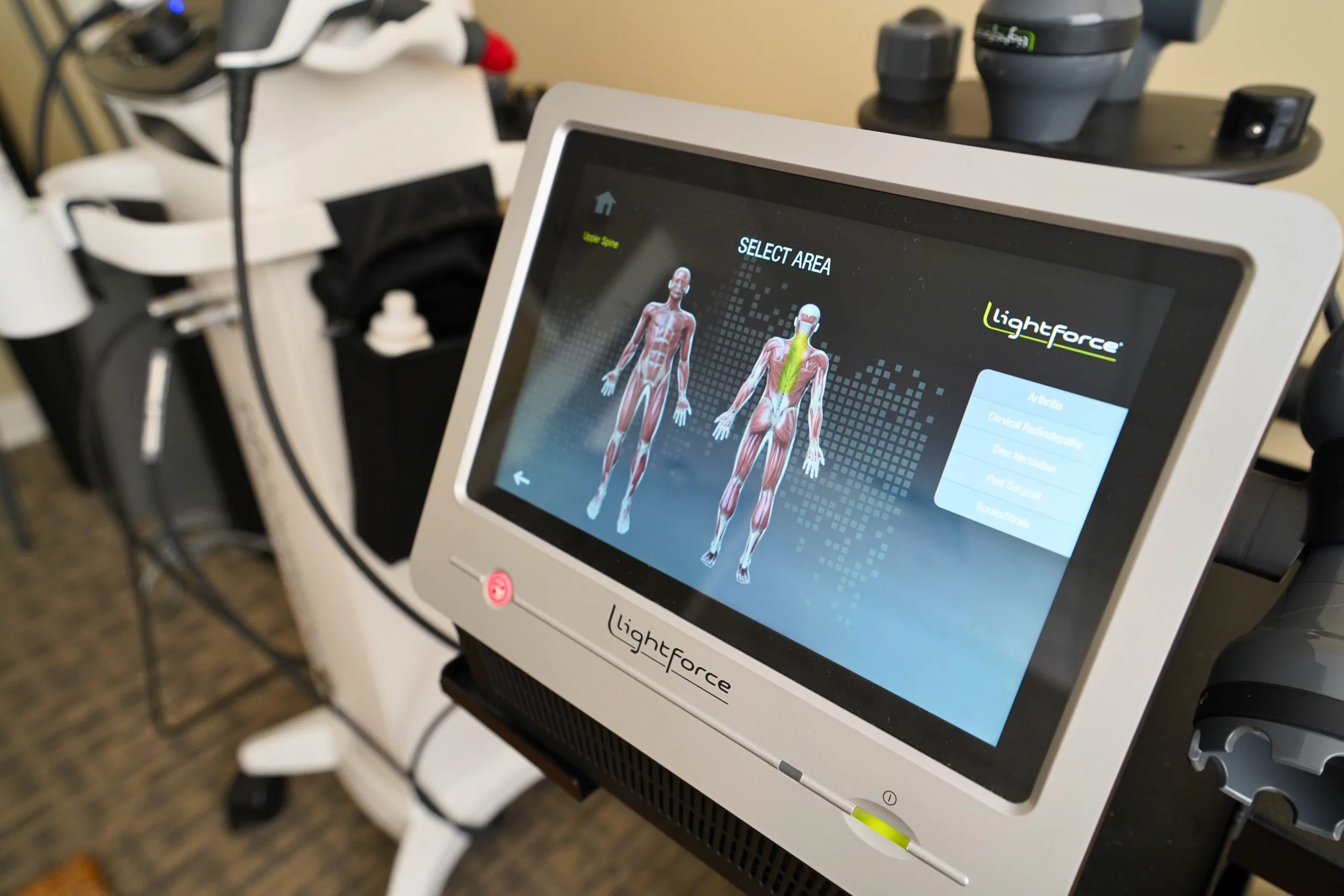
Deep-tissue laser therapy is applied to the TMJ and surrounding musculature to reduce joint inflammation, support cellular repair of the disc and joint capsule, and improve circulation in the chronically contracted masticatory muscles. For acute TMJ flares and for the inflammatory component of arthritic TMJ conditions, laser therapy addresses the tissue directly in a way that manual treatment cannot.

Trigger Point Therapy

The masseter, temporalis, medial and lateral pterygoids, and sternocleidomastoid are the primary muscles involved in TMJ dysfunction. They develop trigger points that produce jaw pain, temple headaches, ear pain, and referred pain into the teeth and face. The masseter trigger points in particular are responsible for a significant portion of the headache and facial pain associated with TMJ dysfunction. Many patients notice a significant reduction in their daily headache burden within the first few trigger point sessions.

Postural Correction

Forward head posture is one of the most consistent mechanical contributors to TMJ dysfunction and one of the most correctable. Dr. Caroline assesses posture as part of every TMJ evaluation and prescribes specific corrective exercises, cervical strengthening, and ergonomic modifications. For patients whose TMJ symptoms developed or worsened alongside heavy screen use, postural correction is often the intervention with the most durable long-term impact.

Jaw Stretching and Mobility Exercises

Specific exercises to restore full, symmetrical jaw opening, normalize disc position, and strengthen the muscles that open the jaw against the dominant closing muscles reduce the mechanical imbalance that perpetuates TMJ dysfunction. Dr. Caroline provides a home exercise program graduated to each patient’s current range of motion and pain level.

Request Appointment

Why Choose Balance Atlanta for TMJ Treatment?

The Cervical Spine Evaluated as Part of Every TMJ Case

Most TMJ treatment focuses on the jaw in isolation. Chiropractic care at Balance Atlanta begins with the understanding that the jaw and the cervical spine function as a connected system. Evaluating and treating both produce outcomes that jaw-only treatment cannot.

Craniosacral Therapy as a Core Tool

Craniosacral therapy is particularly suited to TMJ dysfunction because of its direct effect on the temporal bones and the cranial base musculature that connects jaw and cervical function. Very few practices offer this level of specific cranial work alongside chiropractic adjustment.

Coordination with Your Dentist

Dr. Caroline works alongside patients’ dental providers rather than independently. Night guards, occlusal adjustments, and orthodontic work all interact with the structural and muscular changes chiropractic care produces. Coordinated care produces better outcomes for both providers and patients than treating the jaw within a single discipline.

What This Approach Offers

Chiropractic care for TMJ is highly effective for the muscular and cervical contributors to jaw dysfunction. For advanced joint degeneration or significant disc displacement that has not responded to conservative care, dental or oral surgical consultation may also be appropriate. Dr. Caroline communicates clearly about what the evaluation shows and what a realistic outcome looks like for each patient.

Buckhead's Most Comprehensive Approach to TMJ

Adjustments, craniosacral therapy, laser therapy, trigger point work, postural correction, and functional nutrition together address more dimensions of TMJ dysfunction than any single-modality approach. For patients who have had TMJ symptoms for years without lasting relief, this combination is often what has been missing.

Common Questions

Have questions? We have honest answers.

We understand you’ve already been through the system—appointments, mixed answers, and limited results.That’s why Balance Atlanta takes a different approach, focusing on root causes, not just symptoms


Every plan is personalized, with clear guidance and honest communication at every step. The goal is simple: real, lasting improvements in how you feel and function every day.

Request Appointment
  • What is TMJ dysfunction?

    TMJ dysfunction refers to problems with the temporomandibular joint, the joint that connects the lower jaw to the skull on each side. The joint contains a cartilage disc that allows smooth movement during chewing, speaking, and swallowing. When the joint itself, the disc inside it, or the surrounding muscles become dysfunctional, the result is pain, clicking, locking, and restricted movement. The condition is often called TMD (temporomandibular disorder) and encompasses both joint problems and the muscular dysfunction that almost always accompanies them. Most people with TMJ symptoms have a significant muscular component that responds directly to chiropractic and soft tissue treatment.
  • What causes TMJ pain?

    Bruxism, chronic jaw clenching, forward head posture, cervical spine restriction, stress, dental malocclusion, arthritis, and direct trauma can all cause or contribute to TMJ dysfunction. In most cases, multiple factors are present simultaneously. The cervical spine component is among the most consistently involved and the least often addressed. When the neck is restricted or misaligned, the resulting tension travels directly into the jaw muscles through shared muscle attachments and nerve pathways. Many people with chronic TMJ pain have significant cervical restriction that has never been evaluated as part of their jaw care.
  • How does the neck affect the jaw?

    The cervical spine and TMJ are connected through multiple pathways. The muscles at the base of the skull, including the suboccipitals, attach to both the cervical vertebrae and the cranial bones that house the TMJ. When these muscles are chronically contracted, they alter the position of the temporal bones and the tension in the jaw. The trigeminal nerve, which carries sensation from the jaw and face, has connections with the upper cervical nerve roots. Irritation in the upper cervical spine can lower the jaw’s pain threshold through this shared neural pathway. Treating the neck directly reduces jaw pain, even before the jaw itself is addressed.
  • Can chiropractic care help TMJ dysfunction?

    Yes, particularly when the cervical and muscular contributors are addressed alongside the jaw itself. Adjustments to the upper cervical spine and the TMJ restore normal joint mechanics and reduce nerve irritation that contributes to muscle overload. Craniosacral therapy releases tension in the cranial bones, directly affecting the joints. Trigger point therapy eliminates the muscular pain sources responsible for much of the daily discomfort. Laser therapy reduces joint inflammation. Research supports chiropractic care for TMJ, particularly for the cervicogenic and muscular components that drive most chronic TMJ pain. The approach at Balance Atlanta is designed specifically to address these dimensions.
  • Does a night guard fix TMJ?

    A night guard protects teeth from the damage caused by bruxism. It does not address why the bruxism is occurring. For many patients, a night guard reduces tooth wear and may reduce some jaw pain. But because it does not treat the cervical tension, muscle trigger points, or stress response driving the grinding, symptoms persist. Chiropractic care addresses those drivers directly. Many patients find that combining a night guard with cervical and muscular treatment produces significantly better outcomes than either alone. Dr. Caroline coordinates this care with the patient’s dentist.
  • Why does TMJ cause headaches and ear pain?

    The temporalis muscle, which attaches along the side of the skull, is a primary chewing muscle. When it is chronically overloaded, it develops trigger points that refer pain across the temple and forehead in patterns that are identical to tension headaches. The TMJ sits immediately in front of the ear canal, so joint inflammation is felt as ear pain. These are not separate problems. They are symptoms of the same underlying dysfunction. Treating the masseter and temporalis trigger points and normalizing joint mechanics typically produces a significant and fairly rapid reduction in both the headaches and the ear pain that accompany TMJ dysfunction.
  • How does stress make TMJ worse?

    Stress activates the sympathetic nervous system, which increases muscle tension throughout the body, including the jaw. Many people clench their jaws during stressful tasks without realizing it. At night, this stress manifests as bruxism. The jaw is under sustained muscular load for much of the day and night in people with significant stress. Addressing the cervical nervous system component of this response and providing specific techniques for reducing jaw tension during the day reduces the total load on the joint.
  • Can children and teenagers get TMJ dysfunction?

    Yes. TMJ dysfunction can develop at any age. In younger patients, it is often related to stress, oral habits such as chewing on objects, dental development, or sports injuries. Chiropractic care for younger patients uses appropriately gentle techniques. Early treatment before the condition becomes chronic produces better outcomes.
  • How long does it take to see improvement?

    Many patients notice a reduction in jaw pain, clicking frequency, and associated headaches within the first two to four weeks of consistent care. The cervical component often responds faster than the joint itself. Full normalization of jaw mechanics in chronic cases typically requires eight to twelve weeks of treatment. Dr. Caroline provides realistic expectations at the first visit based on the evaluation findings and the duration of symptoms.