Shoulder Pain

Shoulder Pain Treatment

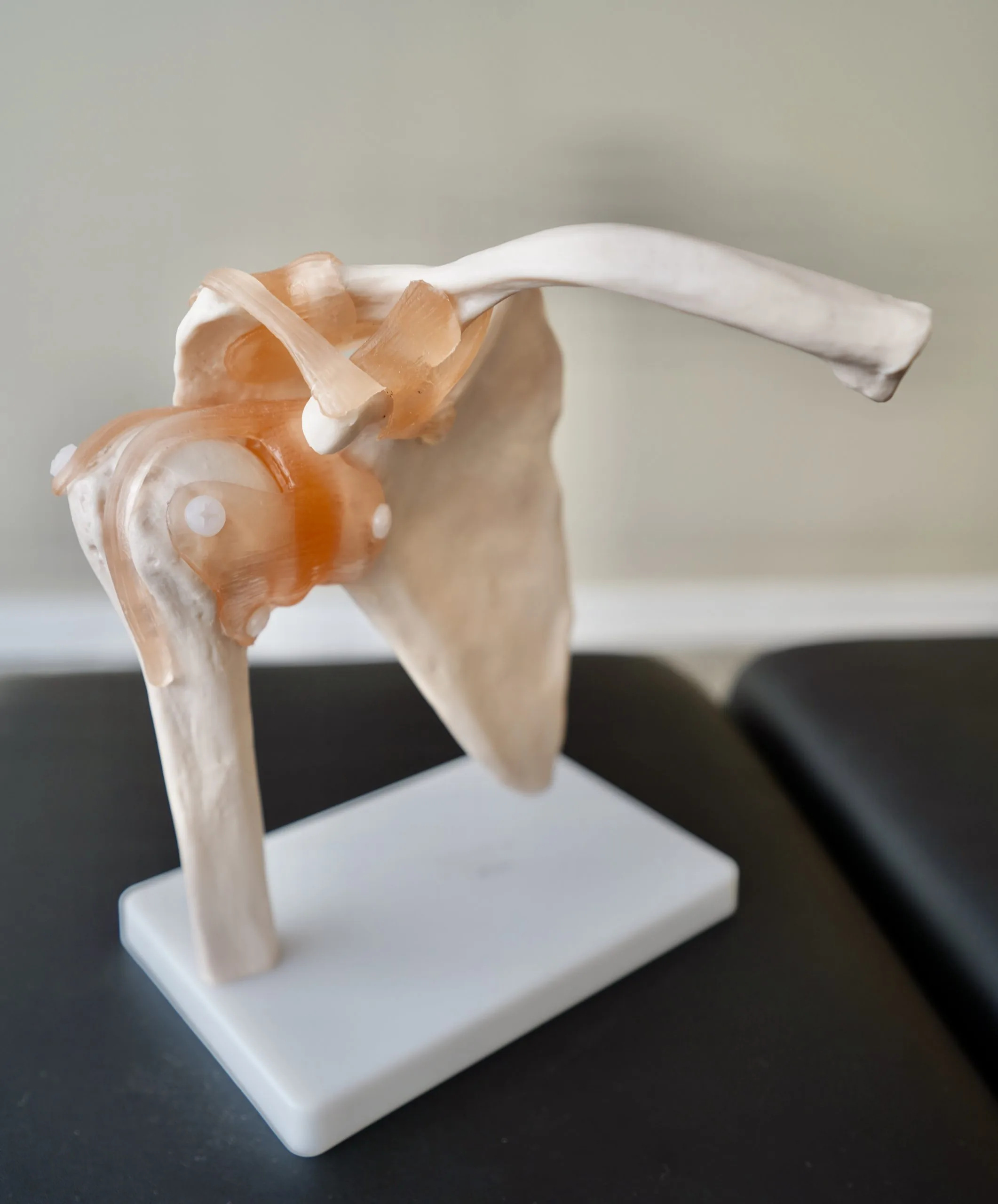
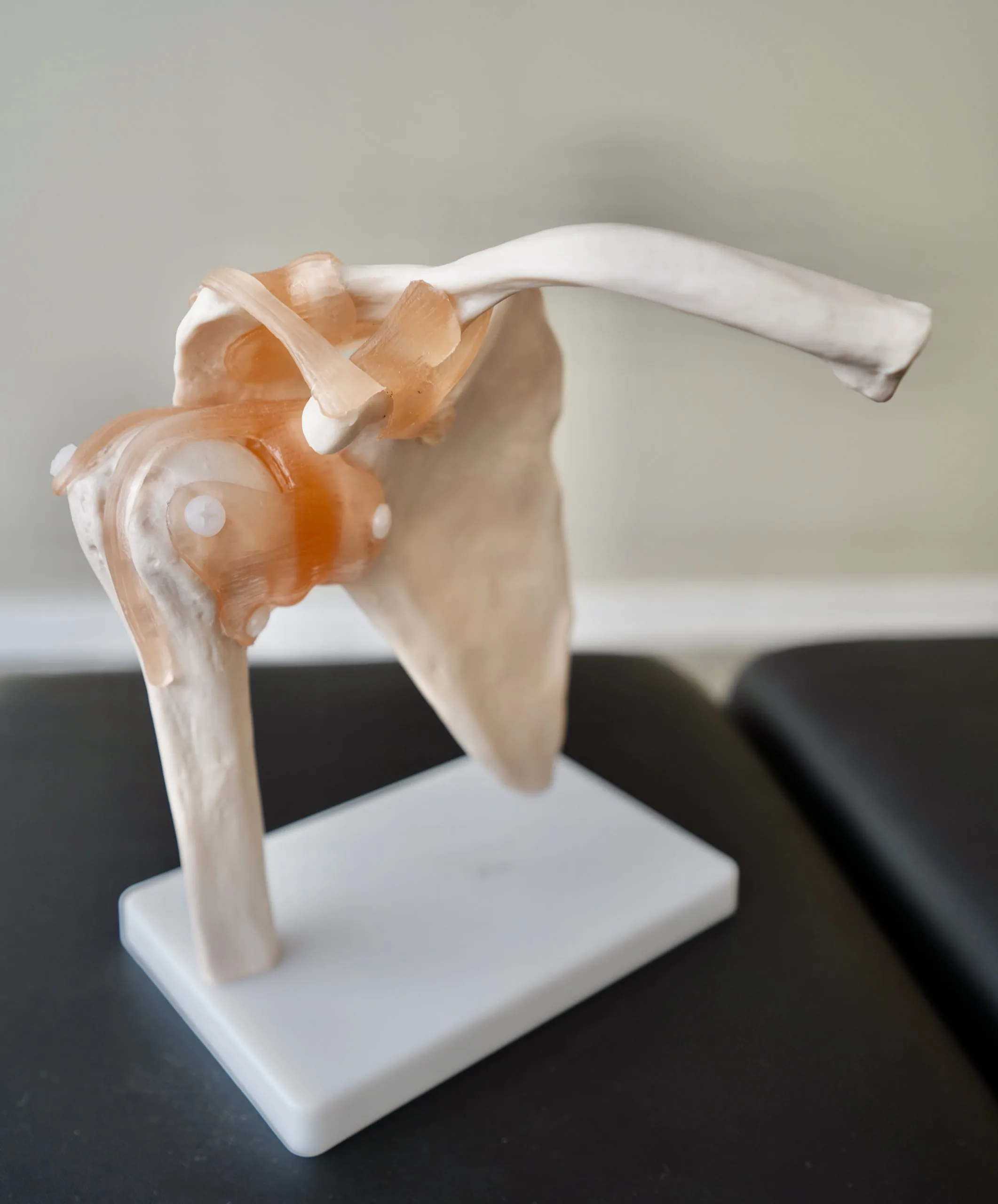
Anatomical shoulder model showing scapula, clavicle and humerus with translucent ligament overlays on a display stand

Shoulder pain has a way of making itself known in every corner of your day. Reaching for something on a shelf, rolling over in bed, pulling on a jacket in the morning. The shoulder is involved in nearly every movement your arms make, which means when something is wrong there, very little feels unaffected.

What makes shoulder pain complicated is that the joint itself is one of the most mobile in the body, which also makes it one of the least stable. It depends heavily on the surrounding muscles and tendons, as well as the mechanics of the neck and upper back, to function properly. Pain that feels like a shoulder problem can sometimes come from the rotator cuff, sometimes from the cervical spine, and sometimes from the way the entire upper body moves and compensates.

The shoulder does not work in isolation. The neck, upper back, and posture all directly affect how the shoulder moves and how much stress it carries. When the neck is restricted or the upper back is rounded, the shoulder absorbs the consequences. Treating the shoulder alone, without addressing upstream contributors, is why so many people achieve only partial improvement rather than full recovery.

At Balance Atlanta, Dr. Caroline von Fluegge-Chen evaluates the neck, upper back, and shoulder together. She then uses chiropractic adjustments, Class IV laser therapy, radial pressure shockwave, and trigger point work to treat the actual source of the problem. The goal is a shoulder that moves freely and stays that way.

Request Appointment
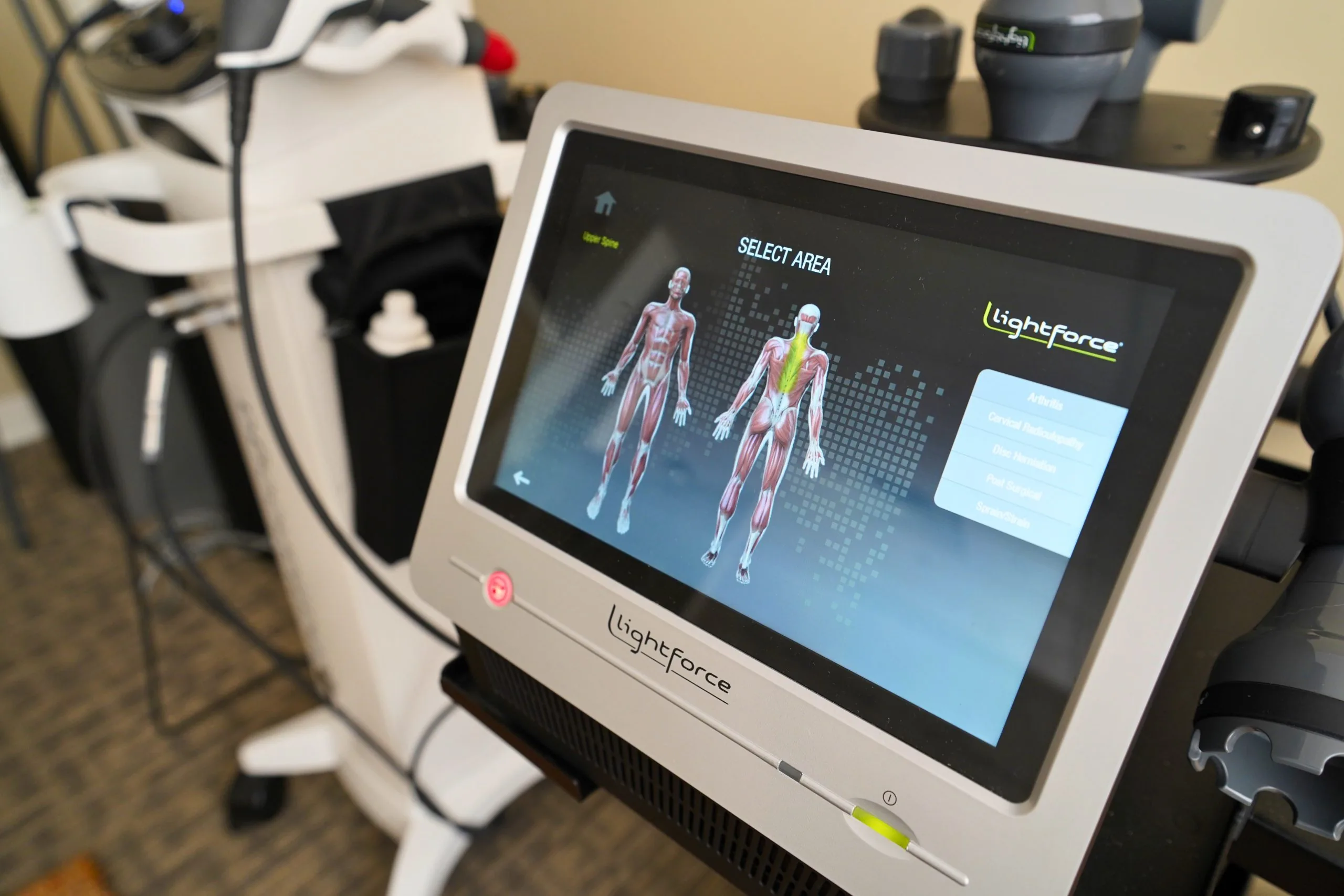
Laser therapy console showing anatomical muscle diagrams and 'Select Area' menu, with the handheld laser wand visible for shoulder-pain treatment.

How Common is Shoulder Pain?

About 20 percent of adults will experience shoulder pain at some point. Rotator cuff problems account for 30 to 40 percent of cases of shoulder pain. Frozen shoulder affects 2 to 5 percent of the population and is significantly more common in people with diabetes.

Despite how common shoulder pain is, many people manage it with rest and anti-inflammatories for months before seeking proper care. Rest reduces pain. It does not address what is causing the pain. The shoulder remains overloaded or inflamed, and the problem either persists or gradually worsens.

The earlier shoulder pain is properly evaluated and treated, the better the outcome. Shoulder conditions that become chronic are significantly harder to resolve than those caught early.

Request Appointment

Common Causes of Shoulder Pain

The shoulder is the most mobile joint in the body. That mobility makes it powerful and versatile. It also makes it vulnerable. Pain can come from the tendons, the joint itself, the bursa, the surrounding muscles, or from the neck and upper back.

Rotator Cuff Problems

The rotator cuff is a group of four muscles and their tendons that hold the upper arm in the shoulder socket and allow rotation. These tendons are under constant load and are among the most commonly injured structures in the body. Tendinitis is inflammation of a tendon, usually caused by overuse. A partial or full tear is more serious damage that may follow a sudden injury or develop gradually from cumulative stress. Both produce pain, weakness, and restricted movement. Shockwave and laser therapy are two of the most effective treatments for rotator cuff tendinopathy.

Shoulder Impingement

Impingement happens when the tendons in the shoulder get pinched between the bones during arm movement. This causes pain when lifting the arm, especially between 60 and 120 degrees of elevation. It often develops from a combination of rounded posture, tight muscles, and repetitive overhead use. Correcting the posture and restoring normal shoulder mechanics are the most effective long-term solutions.

Frozen Shoulder

Frozen shoulder, also called adhesive capsulitis, involves progressive stiffening of the joint capsule around the shoulder. It goes through stages: a painful phase, a frozen phase in which movement is severely restricted, and a thawing phase in which mobility gradually returns. The whole process can take one to three years without treatment. It is significantly more common in people with diabetes and in those who have kept the shoulder immobile for an extended period. Gentle mobilization, laser therapy to reduce inflammation, and specific stretching can considerably shorten recovery.

Bursitis

A bursa is a small fluid-filled sac that cushions the shoulder joint. When it becomes inflamed, usually from repetitive movement or direct impact, it produces pain, swelling, and tenderness over the outer shoulder. Laser therapy directly addresses the inflammation in the bursa and is one of the most effective treatments for shoulder bursitis.

Poor Posture and Rounded Shoulders

Rounded shoulders and forward head posture are among the most consistent contributors to shoulder pain in working adults. When the shoulders roll forward, the space inside the shoulder joint narrows. The tendons are more likely to be impinged. The muscles at the back of the shoulder are constantly stretched and overworked. The muscles at the front are tight and shortened. This imbalance creates pain that does not fully resolve without correcting the posture driving it.

Neck and Upper Back Restriction

The nerves that supply the shoulder come from the neck. When the neck is restricted or the upper back is stiff, the nerves can be irritated higher up, producing pain, weakness, and reduced range of motion in the shoulder, even when the shoulder joint itself is healthy. Shoulder pain accompanied by neck stiffness, or that radiates into the arm, almost always has a cervical component that should be part of the evaluation.

Golf-Related Shoulder Pain

The golf swing places significant rotational stress on the shoulder, particularly on the lead shoulder at impact and follow-through. Golfers frequently develop rotator cuff irritation, shoulder impingement, and acromioclavicular joint pain. The pattern of injury depends on swing mechanics, flexibility, and core stability. Improving spinal rotation and thoracic mobility reduces the compensatory load the shoulder carries through the swing.

Tennis and Overhead Sport Injuries

Serving, overhead strokes, and the repetitive loading patterns of tennis, swimming, volleyball, and baseball all create cumulative stress on the rotator cuff and shoulder capsule. Tendinitis, impingement, and partial rotator cuff tears are common in these athletes. Recovery requires treating the inflamed tissue directly with laser and shockwave therapy, restoring normal joint mechanics with adjustments, and addressing the movement patterns that caused the overload.

Labral Tears

The labrum is a ring of cartilage around the rim of the shoulder socket that deepens the socket and helps keep the joint stable. Tears can result from a dislocation, a fall, or repetitive overhead throwing. They cause pain, clicking, and a sense of instability in the shoulder. Minor labral tears respond to conservative care. Significant tears may require orthopedic evaluation.

Arthritis

Both osteoarthritis from wear over time and rheumatoid arthritis can affect the shoulder joint. They cause pain, stiffness, and progressive loss of range of motion. Chiropractic care maintains joint mobility, reduces mechanical stress on arthritic joints, and uses laser therapy to address the inflammatory component that causes daily pain.

Old Injuries

A dislocation, a past fracture, a sports injury, or a car accident involving the shoulder can leave lasting changes in joint mechanics. The shoulder compensates for the altered mechanics, overloads adjacent structures, and develops secondary problems months or years after the original injury. Old injuries that were treated acutely but not fully rehabilitated are a common finding in people with chronic shoulder pain.

Assorted dried herbs and flowers arranged beside a small ceramic bowl on a white background

Shoulder Pain Symptoms

The location and type of pain help identify which structures are involved.

Pain When Lifting the Arm

Pain that is worst when lifting the arm between shoulder height and overhead is characteristic of impingement or rotator cuff tendinitis. The tendons are being compressed in this range of motion.

Weakness When Raising or Rotating the Arm

Difficulty holding the arm up, rotating it outward, or maintaining strength against resistance suggests rotator cuff involvement. A significant tear may produce noticeable weakness even without much pain.

Pain at Night or Lying on That Side

Nighttime shoulder pain that wakes you up or makes sleep uncomfortable is one of the most consistent indicators of rotator cuff and bursitis problems. The shoulder does not fully rest in any lying position, and the inflamed tissue remains painful through the night.

Progressive Stiffness

A shoulder that is becoming progressively harder to move, particularly when reaching behind the back or across the body, is the hallmark of frozen shoulder. Movement is restricted in multiple directions and worsens over weeks and months.

Clicking, Catching, or Grinding

Sounds or sensations of clicking when moving the arm may indicate labral involvement, tendon irregularities, or early arthritic changes in the joint. When combined with pain or instability, these warrant prompt evaluation.

Pain Radiating into the Arm

Shoulder pain that travels into the upper arm, elbow, or hand suggests nerve involvement from the neck or from compression within the shoulder itself. The specific pattern of radiation helps identify which nerve is affected.

Tenderness at the Outer Tip of the Shoulder

Localized tenderness at the bony point at the top of the shoulder may indicate acromioclavicular joint irritation, common in contact sports, heavy lifting, and falls.

Request Appointment

How Balance Atlanta Treats Shoulder Pain

Dr. Caroline begins with a thorough evaluation of the shoulder, neck, and upper back together. She assesses shoulder range of motion, muscle strength and balance, posture, cervical mobility, and nerve function. Treatment is built around the specific findings.

Chiropractic Adjustments

Specific, gentle adjustments to the shoulder joint restore normal joint mechanics, reduce impingement that irritates the tendons, and improve the range of motion that inflammation and muscle tightness have been limiting. Shoulder adjustments are carefully targeted. They are adapted to the specific restriction or misalignment present, not applied uniformly to every shoulder presentation. Adjustments to the neck and upper back address the upstream contributors. Restoring normal cervical mobility reduces the nerve irritation that contributes to shoulder pain. Improving upper thoracic movement restores the shoulder blade mechanics that the shoulder depends on to function correctly.

Radial Pressure Shockwave Therapy

Shockwave therapy delivers targeted acoustic pulses into chronically inflamed tendons and soft tissue around the shoulder. For rotator cuff tendinopathy, calcific tendinitis, and bursitis that have not responded to rest or stretching, shockwave therapy breaks down fibrotic and calcific tissue changes, stimulates a fresh healing response, and produces lasting pain reduction. Research consistently supports shockwave therapy for chronic rotator cuff tendinopathy, particularly in cases that have plateaued with other treatments.

Class IV Laser Therapy

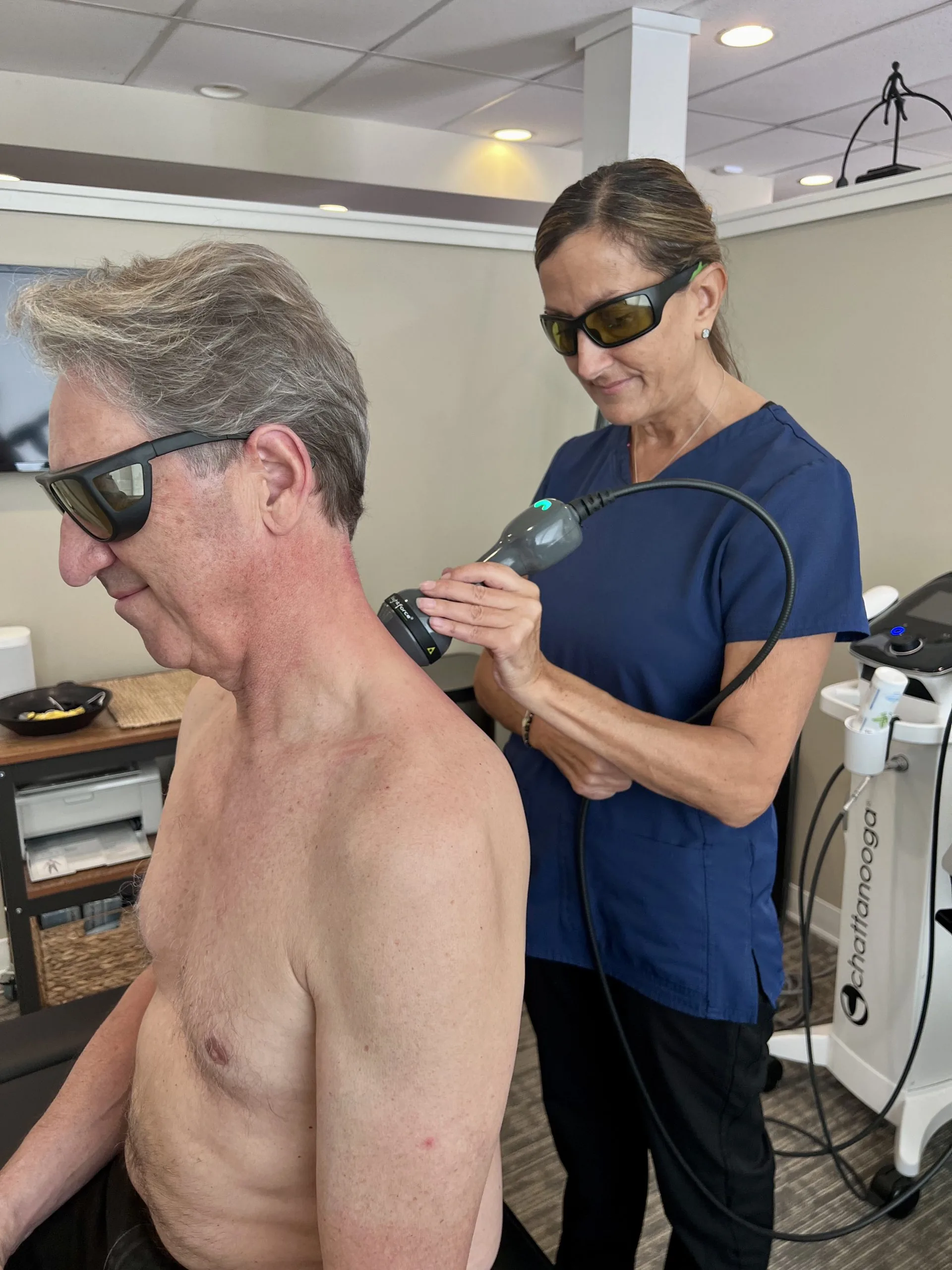
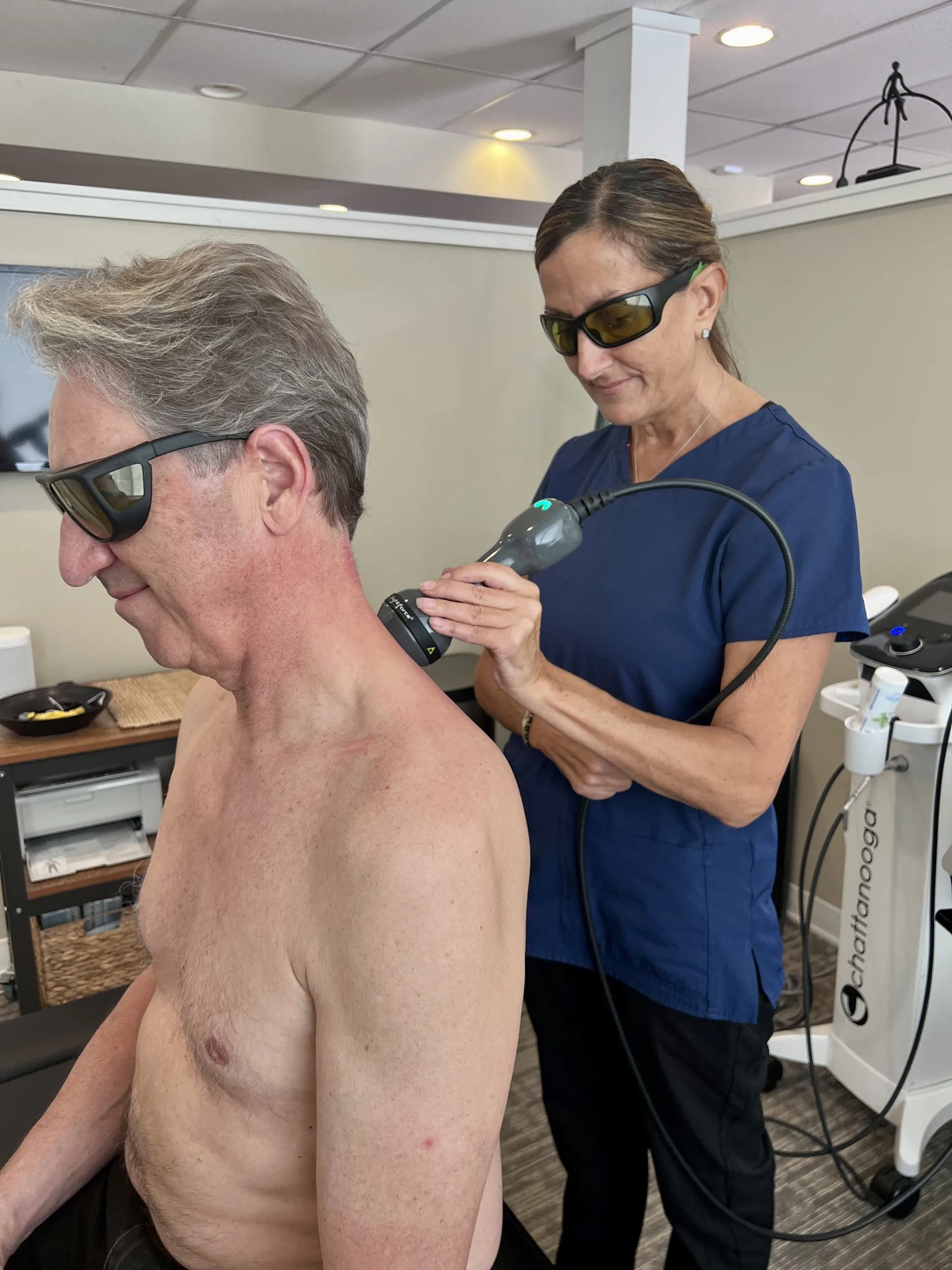
Laser therapy uses focused light energy to reduce inflammation in the shoulder joint and surrounding tissue, accelerate cellular repair in damaged tendons, and improve blood flow to areas of chronic compression. For frozen shoulder, bursitis, and post-injury inflammation, it addresses the inflammatory component of pain in ways that manual treatment alone cannot reach. Sessions are painless and brief. Laser is particularly effective in the early stages of treatment when inflammation is highest, and as a complement to shockwave for chronic rotator cuff conditions.

Trigger Point Therapy

The rotator cuff muscles, the muscles between the shoulder blades, the upper trapezius, and the muscles of the neck all develop trigger points that refer pain into the shoulder and arm. These tight, knotted spots are a significant source of the daily aching that people experience with shoulder problems. Direct release of these trigger points reduces pain, improves muscle balance, and restores the range of motion that chronic tightness has been limiting.

Postural Correction

For shoulder pain driven by rounded posture, correcting that posture is the most important factor in preventing the pain from returning. Dr. Caroline prescribes specific exercises to open the chest, strengthen the muscles between the shoulder blades, and restore the upper back position that allows the shoulder to function correctly. Ergonomic guidance for desk setup and daily habits is part of every posture-related shoulder care plan.

Stretching and Rehabilitation

Targeted stretching of the chest and anterior shoulder restores the balance between the overstretched posterior muscles and the shortened anterior ones. Progressive strengthening of the rotator cuff and shoulder stabilizers rebuilds the support system the shoulder needs to function under load without pain. Dr. Caroline provides a specific home program calibrated to each patient’s current range of motion and the structures involved.

Request Appointment

Why Choose Balance Atlanta for Shoulder Pain?

The Neck and Upper Back Evaluated as Part of Every Shoulder Case

Shoulder pain that involves the neck or upper back will not fully resolve with shoulder-only treatment. Dr. Caroline evaluates all three regions together. This is one of the most consistent differences between a complete and an incomplete shoulder evaluation.

Shockwave and Laser for Tissue Repair

Rest and stretching improve symptoms. They do not repair damaged tendon tissue or resolve chronic bursa inflammation at the cellular level. Shockwave and laser therapy do. For patients with rotator cuff tendinopathy, calcific tendinitis, or frozen shoulder, these technologies target the tissue damage directly and produce outcomes that conservative care alone cannot achieve.

Specific Protocols for Athletes and Active People

Golf, tennis, swimming, and throwing sports all create specific shoulder loading patterns that require sport-informed treatment. Dr. Caroline understands how these mechanics contribute to shoulder problems and addresses both the injury and the movement patterns that produced it. The goal for an athlete is always to return to full function, not just to reduce pain.

Non-Surgical and Drug-Free

Most shoulder pain does not require surgery. The combination of treatments at Balance Atlanta provides a credible, evidence-based alternative to injections and surgical intervention for most shoulder conditions. For patients who have been told surgery might be next, a thorough evaluation here is a reasonable first step before making that decision.

A Plan That Rebuilds Function

Pain relief is the starting point, not the endpoint. The rehabilitation and strengthening components of every care plan are designed to rebuild the shoulder’s capacity to move, lift, and rotate without limitation. The goal is a shoulder you can rely on again.

Common Questions

Have questions? We have honest answers.

We understand you’ve already been through the system—appointments, mixed answers, and limited results.That’s why Balance Atlanta takes a different approach, focusing on root causes, not just symptoms


Every plan is personalized, with clear guidance and honest communication at every step. The goal is simple: real, lasting improvements in how you feel and function every day.

Request Appointment
  • What causes most shoulder pain?

    Rotator cuff irritation, impingement, bursitis, and frozen shoulder are the most common diagnoses. But the structural contributors that allow these to develop include rounded posture, neck and upper back restriction, and muscle imbalances that have been building for months or years. In active people and athletes, overuse due to sport-specific movement patterns increases the load. Most shoulder pain involves a combination of local tissue irritation and upstream structural contributors.
  • Can neck problems cause shoulder pain?

    Yes, regularly. The nerves that supply the shoulder originate in the neck. When the neck is restricted or a disc is causing nerve irritation, the pain travels into the shoulder and arm. This can feel identical to shoulder-based pain. Shoulder pain accompanied by neck stiffness, radiating into the arm, or not improving with shoulder-focused treatment often has a cervical component that needs evaluation.
  • How is a rotator cuff injury treated?

    The rotator cuff is a group of four muscles and their tendons that wrap around the shoulder joint and allow the arm to rotate. Tendinitis means the tendons are inflamed, usually from overuse or repetitive movement. A tear means the tendon tissue is partially or fully disrupted. Tendinitis responds well to laser therapy to reduce inflammation, shockwave therapy to stimulate tissue repair, and specific exercises to restore balanced loading. Partial tears follow a similar approach with close monitoring. Full tears that produce significant weakness or functional limitation may require orthopedic evaluation. Dr. Caroline assesses the likely severity at the first visit and advises accordingly.
  • What is frozen shoulder?

    Frozen shoulder is a condition in which the lining of the shoulder joint becomes inflamed and gradually tightens, restricting movement in all directions. It is painful in the early phase and severely stiff in the middle phase. It is more common in people with diabetes, thyroid problems, and those who have kept the shoulder immobile after an injury. Without treatment, the full cycle takes one to three years. Gentle mobilization, laser therapy to reduce the joint inflammation, and specific stretching exercises can significantly shorten that timeline. Early intervention in the painful phase produces the best outcomes.
  • How does posture affect the shoulder?

    When the shoulders round forward and the upper back slouches, the space inside the shoulder joint narrows. The tendons are more likely to be pinched during arm movement. The muscles at the back of the shoulder are constantly overstretched. The muscles at the front are chronically shortened. This imbalance produces impingement and pain that cannot be resolved without correcting the posture driving it. Desk workers, drivers, and anyone who spends long hours at a screen are particularly susceptible to this pattern.
  • Why does shoulder pain hurt more at night?

    Nighttime shoulder pain is characteristic of rotator cuff and bursitis problems. During the day, the arm position and movement provide some relief. When lying down, the shoulder cannot rest in a position that fully unloads the inflamed tissue. Blood flow changes during sleep also increase sensitivity in inflamed tissue. The result is pain that wakes you or prevents you from falling asleep. Reducing the inflammation with laser therapy and treating the underlying tissue damage is what resolves nighttime shoulder pain, not just pain management.
  • Can chiropractic care help golf or tennis shoulder injuries?

    Yes. Sport-related shoulder injuries respond well to the combination of treatments at Balance Atlanta. Shockwave addresses tendon damage caused by repetitive loading. Laser reduces the inflammation. Adjustments restore joint mechanics. Trigger point work releases the muscle knots that develop from the repetitive strain patterns these sports create. Beyond treating the injury, Dr. Caroline addresses the movement and postural factors that produced it. Improving thoracic rotation in golfers and restoring shoulder blade mechanics in overhead athletes reduces the likelihood of the same injury recurring.
  • How long does shoulder pain take to improve?

    Acute shoulder injuries from a recent strain or impingement episode often respond significantly within two to four weeks of consistent care. Chronic conditions, including long-standing tendinopathy, established bursitis, and frozen shoulder, typically require six to twelve weeks for meaningful and lasting improvement. Dr. Caroline sets realistic expectations for your first visit based on the evaluation findings and how long the problem has been present.
  • When should shoulder pain be taken seriously?

    Shoulder pain that persists beyond two weeks, limits daily activities, or worsens rather than improves warrants a proper evaluation. Sudden severe pain after a fall, impact, or lifting accident, inability to raise the arm, or visible deformity requires prompt assessment. Numbness, tingling, or weakness in the arm, along with shoulder pain, indicates nerve involvement and should be evaluated as soon as possible. Earlier assessment consistently leads to faster and more complete recovery.