



Poor Posture

Poor Posture Treatment

Poor posture is one of those things most people are aware of but have not quite gotten around to fixing. The slouch that settles in after an hour at a desk, the head that drifts forward every time you look at your phone, the rounded shoulders that have slowly become your default position. It feels like a cosmetic issue or a habit problem, something you will address eventually.

What is easy to miss is how much that posture pattern is connected to other symptoms you may already be dealing with. Forward head posture places a significant load on the cervical spine and the muscles that support it. Rounded shoulders alter how the shoulder joint moves and can contribute to pain that seems unrelated to posture. Chronic low back pain, headaches, fatigue, and even breathing patterns can all be influenced by the way you carry yourself through the day. Posture is not just about how you look. It is about how your entire structure is functioning.

Headaches that show up by mid-afternoon. Jaw tightness you carry all day. Shoulder pain that never fully goes away. Tingling in the hands. Fatigue that comes from nowhere. These are not separate issues. When the spine is held in a poor position for hours every day, everything connected to it has to compensate. The muscles work harder. The joints take on more stress. The nerves get irritated.

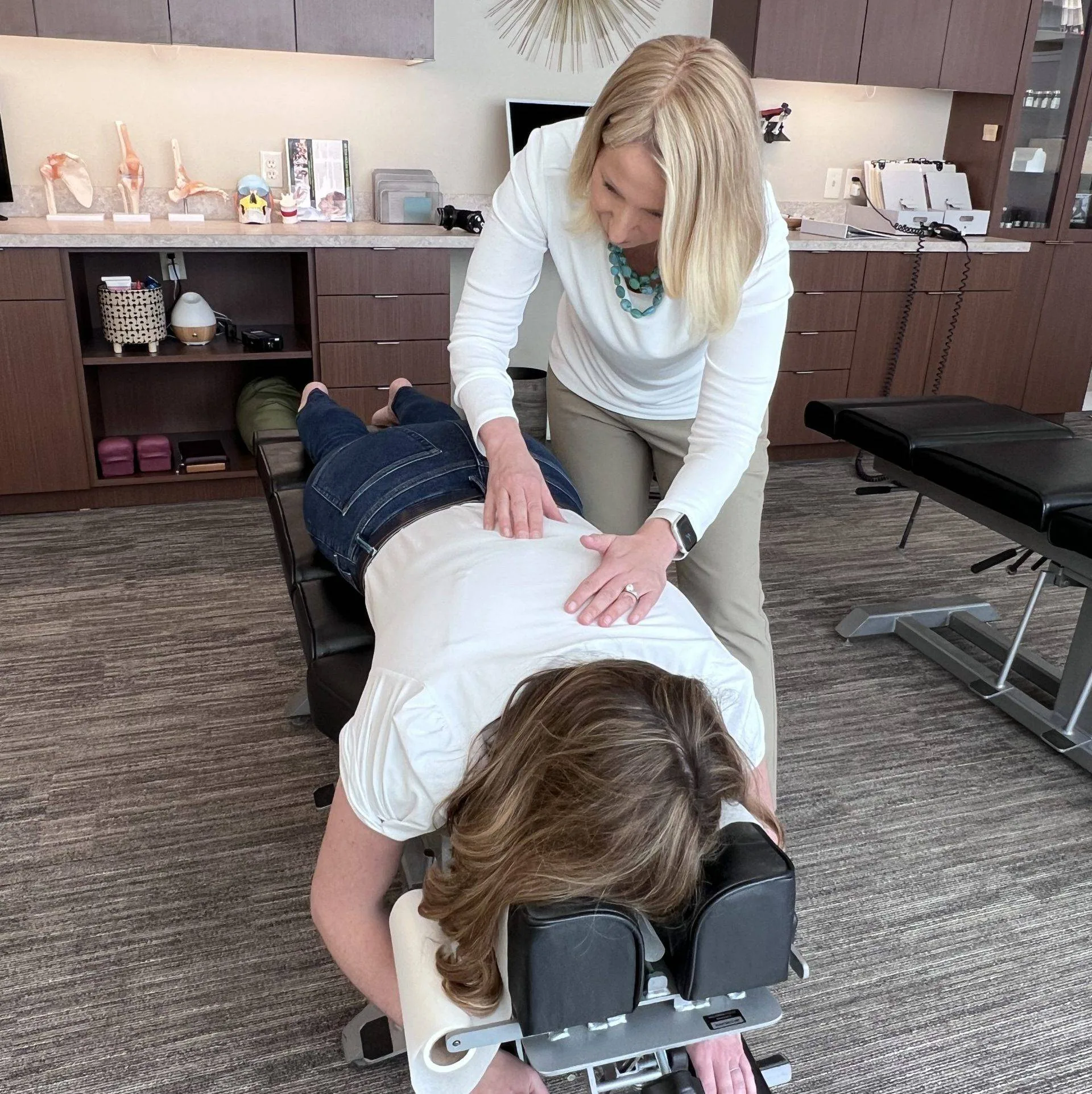
At Balance Atlanta, Dr. Caroline von Fluegge-Chen evaluates exactly what your postural patterns are doing to your spine and the structures around it. She then uses chiropractic adjustments, Class IV laser, trigger point work, radial pressure shockwave, and targeted exercises to correct those patterns at the structural level, not just remind you to sit up straighter.

Request Appointment

Why Poor Posture Is More Serious Than It Looks

Poor posture is not just an appearance issue. It is a load issue. Your spine was designed to carry your head, torso, and arms in a specific arrangement that distributes that weight evenly. When that arrangement shifts, the weight does not go away. It lands somewhere it was not meant to be.

The most common shift is forward head posture. For every inch your head moves forward of its natural position, the effective load on your neck roughly doubles. Most people who use phones and computers carry their head two to four inches forward. That means the neck is supporting two to four times its normal weight for hours every day.

Over time, this kind of sustained overload leads to muscle tightness, joint wear, disc pressure, and nerve irritation. Those changes produce the symptoms that bring people

Request Appointment

What Causes Poor Posture

Screens and Tech Neck

Phones, laptops, and computers are the single biggest driver of poor posture today. Looking down at a phone pulls the head forward. Looking at a screen that is too low has the same effect. Most working adults spend six or more hours a day in these positions. The cumulative effect on the neck and upper back builds quickly.

Sitting All Day

The human body was not designed to sit for eight hours. When you sit for long periods, the hip flexors shorten, the pelvis tilts forward, the lower back flattens, and the upper back rounds. By the end of a working day, your entire spine has shifted from its natural position. Over the years, that shift becomes structural.

Weak Core and Back Muscles

Your core is what holds your spine in its proper position. When those muscles are weak, the spine collapses into whatever position gravity takes it. Strengthening the core is one of the most important parts of posture correction, but the muscles need to be retrained after the alignment is corrected, not before.

Muscle Imbalances

Poor posture creates tight muscles in some areas and weak muscles in others. The tight muscles pull the joints out of alignment. The weak muscles cannot pull them back. Both sides of this imbalance need to be addressed. Stretching alone helps the tight side. It does not fix the weak side.

Injuries

A past injury to the neck, back, or shoulder often leaves a postural compensation pattern behind. The body learns to hold itself differently to protect the injured area. Even after the injury heals, the compensatory pattern stays. Over time, it creates new problems in the areas that were compensating.

Carrying Weight Unevenly

A heavy bag always on one shoulder. A child is always carried on the same hip. A wallet always in the same back pocket. Small asymmetries that repeat every day for years create real structural imbalances.

Sleeping Position

Sleeping on your stomach puts the neck in a rotated position for hours at a time. Using a pillow that is too high or too low alters the neck’s curve throughout the night. The average person sleeps for seven to eight hours. That is a long time in a compromised position.

Age

The structural changes that develop from years of poor posture do not reverse on their own. The muscles shorten. The joints stiffen. The discs change shape in response to the altered loading. Addressing posture earlier produces better outcomes, but improvement is possible at any age with the right approach.

What Poor Posture Does to Your Body

This section is important. If you have been treating symptoms separately without improvement, the connection to posture may be what you have been missing.

Neck and Back Pain

The most obvious effect. When the spine is out of its natural alignment, the muscles that support it have to work much harder just to hold you upright. They fatigue. They tighten. They eventually hurt. Persistent neck and back pain that worsens during the day or after sitting is often a direct consequence of postural overload.

Headaches

The muscles at the base of your skull are among the first to suffer from poor posture. When your head is carried forward, those muscles never get to relax. They develop tight, knotted spots that refer pain up into your head. Many chronic headaches that people treat with pain relievers are actually posture-driven headaches. Treating the neck and posture treats the source.

Jaw Pain and TMJ

This surprises a lot of people. Your jaw and your neck are directly connected through muscles and nerves. When your head is in a forward position, your jaw is pulled backward from where it naturally sits. The muscles around the jaw have to compensate. This creates clenching, grinding, and jaw pain. Improving your posture is one of the most effective interventions for jaw problems.

Shoulder Pain and Tightness

Rounded shoulders are one of the hallmarks of poor posture. When the shoulders roll forward, the muscles across the back of the shoulder get overstretched and fatigued. The muscles at the front get shortened and tighter. This imbalance causes chronic shoulder pain, reduced range of motion, and eventually the kind of shoulder problems that are difficult to resolve without addressing the posture driving them.

Carpal Tunnel and Hand Tingling

The nerves that go to your hands start in your neck. Forward head posture and rounded shoulders compress those nerves higher up, before they ever reach the wrist. Many people treated for carpal tunnel with no lasting relief actually have a posture-driven nerve compression problem in the neck and shoulder. Correcting the posture corrects the compression.

Fatigue

Holding your body in a poor position takes significantly more muscular effort than sitting or standing well. You are fighting gravity all day rather than working with it. That constant extra effort is tiring. Many people who feel chronically low on energy find that posture correction gives them noticeably more energy during the day.

Breathing

A slumped position closes off the front of your chest. This limits how fully your lungs can expand. Over time, shallow breathing from poor posture becomes the habit. You take in less oxygen, feel more fatigued, and your body functions less efficiently overall.

Request Appointment

Biological Contributors to Anxiety and Depression

Mood disorders rarely develop from a single cause. The following biological factors are among the most common and most consistently overlooked contributors.

Head Too Far Forward

The most common postural problem. The ears should sit directly above the shoulders. When they are noticeably in front, the neck is carrying an extra load. This is the primary driver of neck pain, headaches, and jaw problems from posture.

Rounded Shoulders

The shoulders roll forward and inward. The chest caves slightly. The upper back rounds. This is the pattern driven by prolonged sitting and screen use. It causes shoulder pain, tight chest muscles, and restricted breathing.

Stooped Upper Back

An exaggerated curve in the upper back. Often called a hump or hunchback. Develops from years of slouching. Causes upper and mid-back pain and can significantly restrict shoulder movement.

Swayed Lower Back

The pelvis tips forward, making the lower back curve excessively. This compresses the joints at the back of the spine and puts pressure on the discs. It is commonly driven by tight hip flexors from prolonged sitting.

Flat Lower Back

The natural curve of the lower back disappears. The pelvis tucks under. This is often a consequence of chronic slouching in a chair. It increases disc pressure and is a common finding in people with lower back pain.

Uneven Hips or Shoulders

One shoulder higher than the other. One hip rotated forward. These asymmetries indicate that the spine is not balanced. They create uneven loading on the joints throughout the spine and lead to pain on the side that is carrying more weight.

How Balance Atlanta Treats Poor Posture

Dr. Caroline begins with a full postural assessment. She looks at how you stand, how you sit, and how you move. She identifies which specific patterns are driving your symptoms. Treatment is built around what she finds, not a generic posture protocol.

Chiropractic Adjustments

Poor posture creates joint restrictions throughout the spine. The joints get stuck in the positions their posture has been holding them. Adjustments restore normal movement to those joints. They correct the alignment that exercises and stretching alone cannot change. This is the most important distinction in posture correction. You cannot simply strengthen your way out of a structural misalignment. The joint needs to move freely before the surrounding muscles can hold it in the right position. Adjustments create that freedom.

Class IV Laser Therapy

Years of poor posture create chronic inflammation in the joints, discs, and soft tissue of the spine. Laser therapy uses focused light energy to reduce that inflammation directly. It accelerates healing in damaged tissue and improves blood flow to areas that have been chronically compressed. Sessions are short and painless. Laser therapy is particularly useful for patients with significant disc compression or joint inflammation from long-standing postural problems.

Radial Pressure Shockwave Therapy

When muscles have been tight for years, the tissue itself becomes dense and less flexible. Stretching helps, but it does not fully address the structural changes inside the muscle. Shockwave therapy delivers targeted pulses of energy that break up that dense tissue and restart the healing process. This is especially useful for the chronic tightness in the upper trapezius, the muscles across the tops of the shoulders that are almost always overloaded in people with poor posture.

Trigger Point Therapy

Poor posture loads certain muscles constantly. Those muscles develop tight, painful knots called trigger points. The muscles at the base of the skull, across the tops of the shoulders, between the shoulder blades, and along the sides of the neck are particularly common locations. Direct release of these trigger points reduces pain immediately and restores the range of motion that the knots were limiting. For patients whose headaches and shoulder pain are posture-driven, this is often the treatment that produces the most noticeable quick improvement.

Postural Correction Exercises

Once the joints are moving correctly and the muscle knots are released, specific exercises retrain the muscles to hold the spine in its corrected position. Dr. Caroline prescribes exercises that target the weak muscles that have been failing to support good posture, not generic stretches. The deep neck flexors, the lower trapezius, and the muscles between the shoulder blades are the key groups to strengthen. Building these up makes posture improvements last.

Stretching

The short, tight muscles on the opposite side need to be lengthened as the weak muscles are strengthened. Dr. Caroline provides specific stretches for the chest, hip flexors, and cervical muscles that have shortened from poor posture. These are part of the home program every patient receives.

Ergonomic Guidance

Treatment in the office addresses the structural problem. What you do at your desk, how you sleep, and how you carry weight throughout the day either support or undermine that work. Dr. Caroline provides practical, specific guidance on these factors as part of your care plan.

Request Appointment

Why Choose Balance Atlanta for Posture Correction?

Treating the Whole Picture, Not Just the Pain

If your headaches, jaw tightness, shoulder pain, and hand tingling all trace back to posture, treating each one separately will produce limited results. Dr. Caroline evaluates and treats the source. When the structural posture problem is corrected, many of the downstream symptoms improve together.

Structural Correction, Not Just Advice

Most posture guidance consists of reminders to sit up straight and do certain stretches. These help. They are not enough on their own when the underlying joint restrictions and muscle imbalances are significant. The approach at Balance Atlanta directly addresses those structural problems.

The Right Sequence of Treatment

Adjustments first to free the restricted joints. Laser and shockwave to address the inflammation and dense tissue. Trigger point release to remove the painful knots. Then exercises to build the strength that holds the correction. This sequence matters. Trying to strengthen muscles before the joints are aligned and the tissue is healthy produces incomplete results.

A Plan That Makes Improvements Last

Posture correction that does not include a home exercise program and ergonomic changes does not last. The postural forces that created the problem are still there every day at the desk, the phone, and the car. Dr. Caroline builds both the in-office treatment and the daily habits into every posture care plan.

Improvement at Any Age

The earlier poor posture is addressed, the easier the correction. But improvement is possible at any age. Dr. Caroline uses techniques adapted to each patient’s current flexibility, strength, and joint health. Progress looks different for a 25-year-old and a 65-year-old, but both can improve.

Common Questions

Have questions? We have honest answers.

We understand you’ve already been through the system—appointments, mixed answers, and limited results.That’s why Balance Atlanta takes a different approach, focusing on root causes, not just symptoms


Every plan is personalized, with clear guidance and honest communication at every step. The goal is simple: real, lasting improvements in how you feel and function every day.

Request Appointment
  • What exactly is poor posture?

    Poor posture is any position the body holds regularly that puts unnecessary stress on the spine, muscles, and joints. Forward head position, rounded shoulders, a rounded upper back, an excessively curved or flat lower back, and uneven hips are the most common patterns. None of these is a comfortable position to be in. The body adapts to them over time, which is why people stop noticing they are there.
  • How does posture cause headaches?

    When your head sits forward of your shoulders, the muscles at the base of your skull have to work continuously to support it. They never get to relax. They develop tight, knotted spots that send pain up into the head. The pain follows predictable patterns, usually starting at the base of the skull and moving forward over the top of the head or behind the eye. Treating these muscles and correcting the forward head posture can reduce or eliminate this type of headache.
  • How does posture cause jaw pain?

    Your jaw rests in a position relative to your skull. When your head moves forward, your jaw shifts backward from its natural position. The muscles around the jaw have to compensate for this displaced position. Over time, this leads to chronic jaw muscle fatigue, clenching, and clicking or pain associated with jaw problems. Improving forward head posture takes the jaw back to its natural resting position and reduces the compensatory strain.
  • Can poor posture cause carpal tunnel?

    Yes, indirectly. The nerves that go to your hands start in your neck. When your neck is in a forward head position, and your shoulders are rounded, those nerves are compressed higher up, before they ever reach the wrist. Many people with hand tingling and wrist pain who have not responded to wrist-focused treatment find significant improvement when the postural component in the neck and shoulder is corrected.
  • Can chiropractic care fix poor posture?

    Chiropractic care corrects joint restrictions and structural misalignments that contribute to poor posture. Adjustments restore normal movement to the spinal joints. Trigger point therapy releases the muscle knots that are pulling the spine out of position. Laser and shockwave therapy address the chronic inflammation and dense tissue from years of postural strain. Exercises retrain the muscles to hold the corrected position. Together, this is a complete approach to posture correction. It is not a quick fix. But with consistent care and consistent home practice, meaningful structural improvement happens.
  • Can posture be corrected at my age?

    The speed and extent of improvement depend on how long the postural patterns have been present and how much structural change has occurred. Younger people generally respond faster. But improvement is genuinely possible at any age. Dr. Caroline adapts treatment to your current condition and sets realistic expectations based on what the assessment shows.
  • How long does posture correction take?

    Most people notice improvement in their symptoms, less neck pain, fewer headaches, and reduced shoulder tension, within the first few weeks of care. The structural postural changes take longer, typically three to six months of consistent treatment and home exercises, for significant and lasting improvement. The keyword is consistent. Adjustments, home exercises, and daily habit changes all work together. Progress stalls when any of those three components is missing.
  • What can I do at home to improve my posture?

    Set up your screen at eye level so you are not looking down. Use a chair that supports the natural curve of your lower back. Take a break from sitting every 30 to 45 minutes and move around. Stretch your chest and hip flexors daily. Avoid carrying bags on the same shoulder every day. Sleep with a pillow that keeps your neck in a neutral position. Dr. Caroline will give you specific guidance on all of these as part of your care plan.
  • Why do I feel tired all the time if it might be posture-related?

    Holding your body in a poor position takes muscular effort. Your muscles are working harder than they need to, all day long, just to keep you upright. That is draining. Add in shallow breathing from a closed chest, reduced circulation from compressed tissue, and the stress of chronic pain, and the fatigue makes complete sense. Many patients report feeling more energetic within weeks of starting posture correction care.