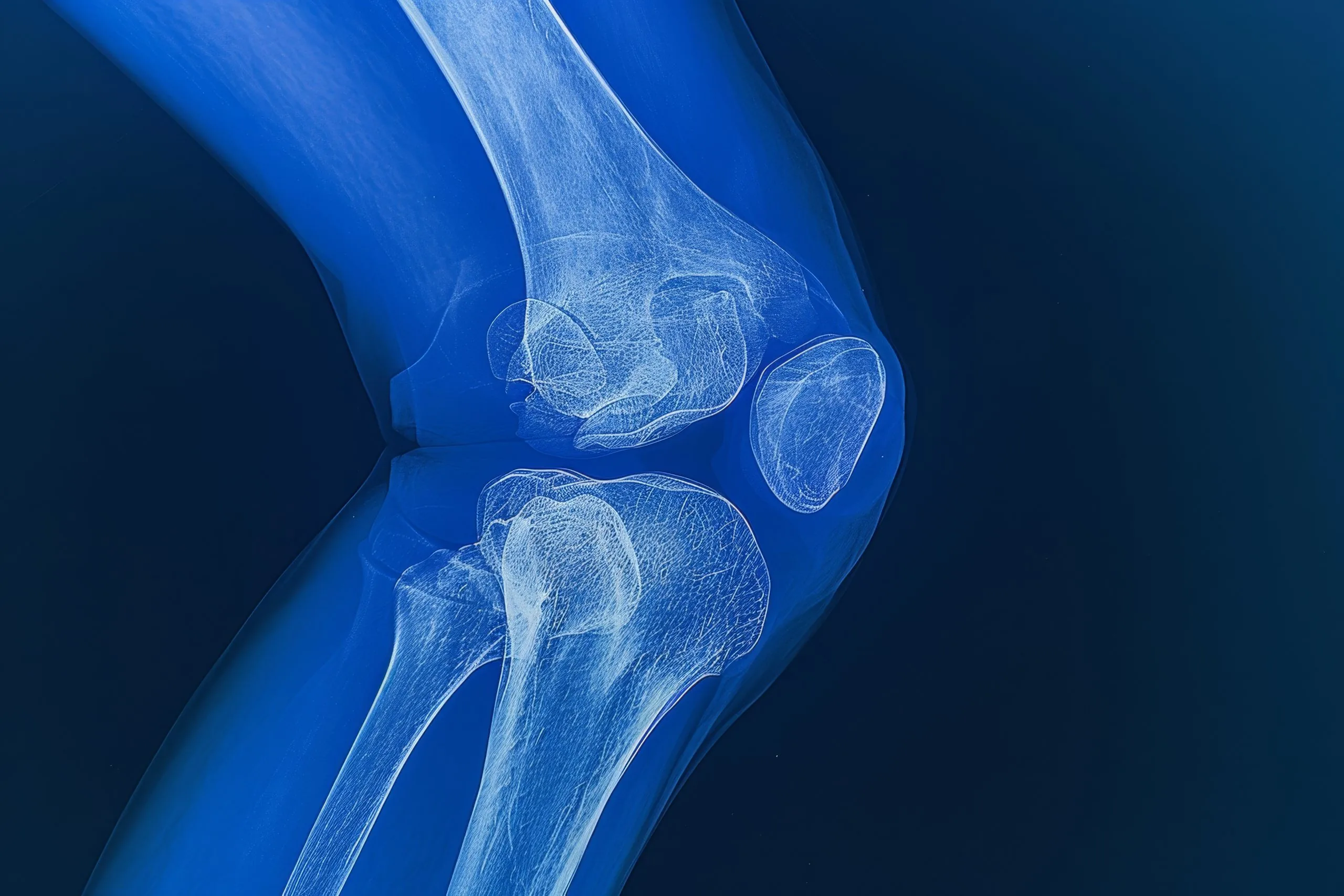
Knee Pain

Knee Pain Treatment

Knee pain has a way of quietly shrinking your world. Stairs that used to be automatic now require a plan. Sitting through a meeting or a movie leaves you stiff. A walk that should feel good turns into something you pay for later. It is not just the pain itself that wears on you. It is the way you start adjusting everything around it without even realizing it.

The knee is rarely the whole story. It is a joint that sits between the hip and the foot, and when either of those areas is not moving as it should, the knee bears the consequences. Weakness in the hip, tension in the calf, or imbalances in your gait can all show up as knee pain. Treating the knee in isolation, without considering the full picture, is one reason so many people stay stuck in the same cycle of flare-ups and temporary relief.

The knee is the middle joint of a chain that runs from the hip through the foot. When the structures above or below it are misaligned or imbalanced, the knee absorbs the consequences. Rest quiets the pain temporarily. But the overload continues, and the pain returns.

At Balance Atlanta, Dr. Caroline von Fluegge-Chen evaluates the full chain before treating any part of it. Class IV laser, radial pressure shockwave, chiropractic adjustments, and trigger point work then address the knee, the surrounding tissue, and the mechanics driving the problem. The goal is not to manage pain. It is to correct the cause.

Request Appointment

How Common is Knee Pain?

Approximately 25 percent of adults report experiencing knee pain, making it one of the most common musculoskeletal complaints in the United States. Osteoarthritis affects around 10 percent of men and 13 percent of women over 60, with knee osteoarthritis being among the most prevalent forms. Meniscus tears occur in about 60 percent of people with knee pain, particularly athletes and older adults. ACL injuries affect 100,000 to 200,000 people annually.

Despite how common knee pain is, many people cycle through the same limited options. Rest, anti-inflammatories, and maybe physical therapy. These approaches have value. But they do not address the mechanical contributors that keep the knee under stress, nor do they treat the inflamed tissue directly at the level of the damage.

The combination of treatments available at Balance Atlanta reaches those dimensions. For many patients, it is the first approach that produces meaningful and lasting improvement.

Request Appointment

Causes of Knee Pain

The knee is a complex joint that depends on cartilage, ligaments, tendons, bursae, and the surrounding muscles, all working together. Pain can develop from injury, degeneration, overuse, or mechanical imbalance, often from a combination of these.

Osteoarthritis

The most common cause of knee pain in adults over 50. Cartilage in the knee joint gradually wears down, narrowing the joint space and allowing bone surfaces to contact each other with insufficient cushioning. Pain, stiffness, and grinding sensations develop progressively. Morning stiffness that eases with movement is characteristic. Chiropractic care improves knee joint mechanics, reduces the mechanical stress, accelerates degeneration, and strengthens the supporting musculature to slow progression.

Meniscus Tears

The menisci are two C-shaped pads of cartilage that cushion and stabilize the knee. A tear, from a twisting injury or from degeneration in older adults, produces pain, swelling, clicking or locking of the knee, and a sense of instability. Minor tears respond well to conservative care. Dr. Caroline evaluates the specific pattern of symptoms to determine what is appropriate and refers for imaging when a significant tear is suspected.

Runner's Knee (Patellofemoral Pain Syndrome)

Pain around or behind the kneecap, especially with activities that load the joint in flexion: running, squatting, climbing stairs, or sitting for extended periods. Runner’s knee is typically driven by a combination of patellar tracking problems, quad and hip weakness, and altered gait mechanics. Treating the knee in isolation without correcting these upstream factors is why runner’s knee recurs so consistently.

Patellar Tendinitis

Inflammation of the patellar tendon, the structure connecting the kneecap to the shinbone. Common in athletes who jump, run, or sprint repeatedly. Pain is felt just below the kneecap and worsens with activity. Radial pressure shockwave therapy is one of the most effective treatments available for chronic patellar tendinopathy, particularly in cases that have not responded to rest and stretching alone.

Iliotibial Band Syndrome

The iliotibial band runs along the outer thigh from the hip to the knee. When it becomes tight and inflamed, it causes sharp pain on the outer side of the knee that is typically worst at a specific point in the running or cycling stride. IT band syndrome is a mechanical problem. Treating the band alone without addressing the hip weakness and pelvic mechanics that cause it to overtighten produces temporary improvement at best.

Bursitis

Inflammation of the bursae that cushion the knee joint. Prepatellar bursitis produces swelling directly over the kneecap, typically from repetitive kneeling. Pes anserine bursitis affects the inner side of the knee just below the joint and is particularly common in people with osteoarthritis and in runners. Laser therapy directly addresses the inflammatory component of bursitis in a way that rest and ice cannot fully reach.

Ligament Injuries (ACL, PCL, MCL, LCL)

Ligament sprains and tears produce pain, swelling, and instability. Minor to moderate sprains respond well to conservative rehabilitation. Significant tears often require surgical evaluation. Dr. Caroline assesses ligament integrity during the evaluation and refers for orthopedic consultation when structural repair is indicated. For partial sprains and post-surgical rehabilitation, the combination of laser therapy, adjustments, and progressive rehabilitation accelerates return to function.

Hip and Pelvis Misalignment

Misalignment in the hip or pelvis alters the mechanics of the entire lower extremity. It changes how the knee tracks through its range of motion and creates asymmetrical loading that concentrates stress on specific structures within the joint. Hip and pelvic adjustments are a core component of knee pain care at Balance Atlanta because the knee often cannot be resolved without correcting the underlying imbalance.

Weak Quadriceps and Glutes

The quadriceps and gluteal muscles are the primary stabilizers of the knee and pelvis, respectively. When either group is weak, the knee absorbs more load than it should and the patella tracks abnormally through its groove. Strengthening these muscles alongside direct knee treatment is one of the most important factors in preventing knee pain from returning.

Gout

A form of inflammatory arthritis caused by uric acid crystal deposits in the joint. Produces sudden, severe pain, redness, and swelling, often in the big toe but also in the knee. Functional medicine evaluation at Balance Atlanta can support uric acid management through dietary modification alongside care for the joint inflammation.

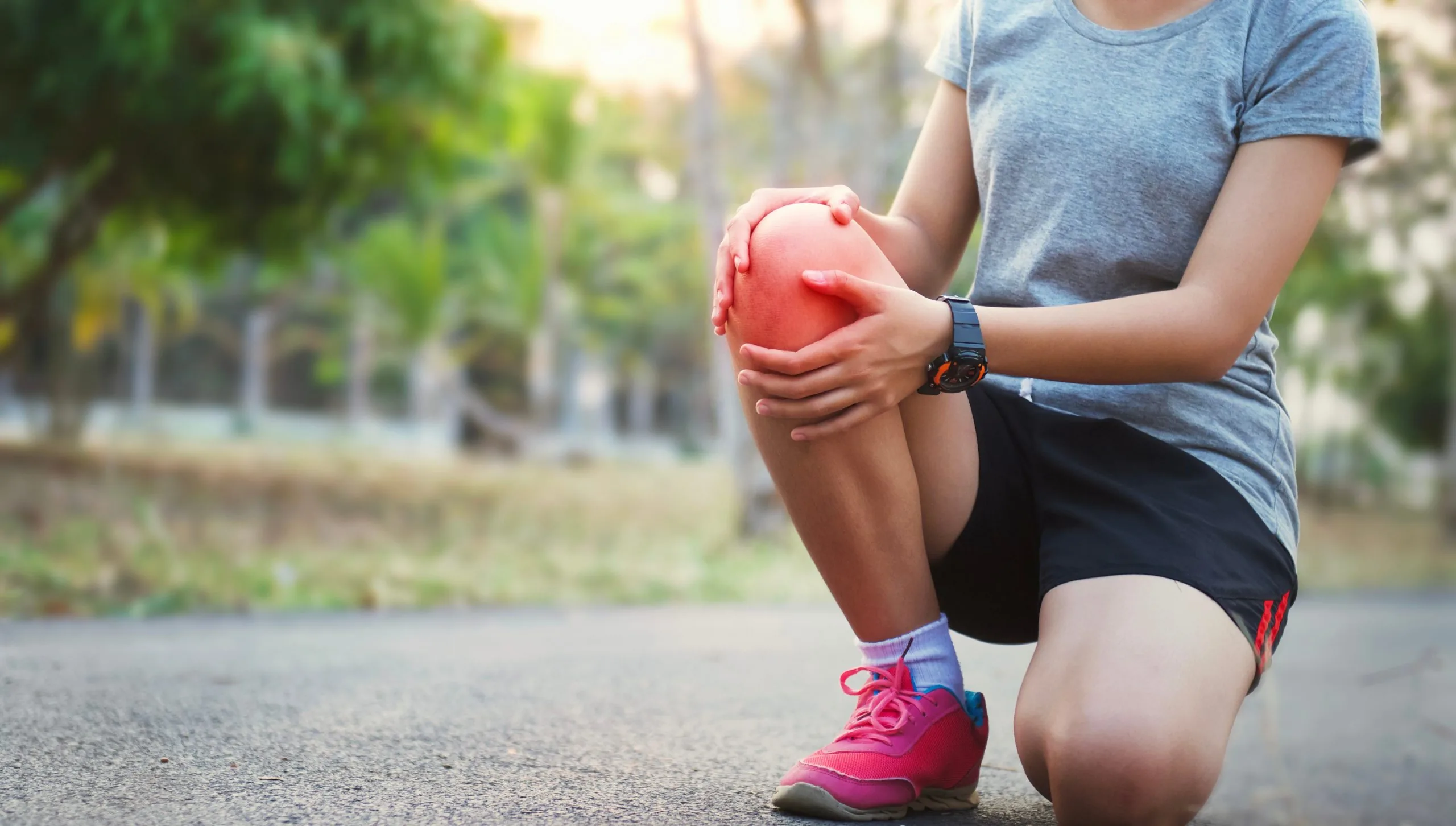
Runner kneeling on a road holding their knee while wearing athletic shoes and shorts

Knee Pain Symptoms

The pattern of symptoms provides important clinical information about which structures are involved.

Pain with Stairs or Squatting

Increased pain when loading the knee in flexion points to the patellofemoral joint or patellar tendon. This is the most common pattern in runner's knee and patellar tendinitis.

Inner Knee Pain

Pain on the medial side of the knee may reflect MCL involvement, pes anserine bursitis, or medial meniscus irritation. In people with osteoarthritis, medial compartment narrowing is most common and produces pain with weight-bearing activity.

Outer Knee Pain

Pain on the lateral side is characteristic of IT band syndrome, an LCL sprain, or involvement of the lateral meniscus. It often worsens at a specific point in the gait cycle.

Pain Behind the Kneecap

Deep aching behind or around the kneecap, especially with prolonged sitting, is characteristic of patellofemoral syndrome. The pain often eases briefly when the knee is straightened, then returns.

Swelling

Joint swelling indicates inflammation inside or around the knee. Acute swelling after an injury suggests possible ligament or meniscus involvement. Chronic low-grade swelling accompanies osteoarthritis and bursitis.

Clicking, Popping, or Grinding

Occasional clicking without pain is common and usually not concerning. Grinding that accompanies pain reflects roughened cartilage surfaces contacting each other and indicates the joint needs attention. A catching or locking sensation suggests meniscal involvement.

Stiffness After Rest

Stiffness that is worse after sitting or lying down and gradually eases with movement is characteristic of osteoarthritis. The joint needs movement to distribute synovial fluid and warm the surrounding tissues.

Instability or Giving Way

A sensation that the knee might buckle or give way during weight-bearing activity indicates ligament laxity or significant weakness in the supporting muscles. Stability work and ligament assessment are priorities when this pattern is present.

Request Appointment

How Balance Atlanta Treats Knee Pain

Care begins with a thorough evaluation. Dr. Caroline assesses the knee joint, patellar tracking, hip and pelvic alignment, gait, muscle strength, and neurological function. The treatment plan is built around the specific structures involved and the mechanical factors contributing to the overload.

Chiropractic Adjustments to the Knee, Hip, and Spine

Precise, gentle adjustments to the knee joint correct patellar tracking, restore normal joint mechanics, and reduce the stress concentration that produces pain. Many people are not aware that chiropractic adjustments can be applied directly to the knee. Hip and pelvic adjustments correct the upstream misalignments that alter knee loading. Lumbar adjustments address nerve root contributions to knee pain and improve the overall mechanical environment the knee operates in. Treating the knee in isolation without also correcting the hip and spine produces incomplete results for most patients.

Radial Pressure Shockwave Therapy

Shockwave therapy delivers acoustic pulses to chronically inflamed tendons, bursae, and soft tissue around the knee. For patellar tendinitis, IT band syndrome, and pes anserine bursitis, it breaks down the fibrotic changes that develop with long-standing inflammation, stimulates the healing response in tissue that has stopped healing on its own, and produces lasting pain reduction in conditions that rest and stretching alone cannot resolve. Research specifically supports shockwave therapy for chronic patellar tendinopathy.

Class IV Laser Therapy

Deep tissue laser therapy reduces inflammation in the knee joint and surrounding soft tissues, accelerates cellular repair of damaged cartilage and tendon, and improves circulation in the treated area. For osteoarthritis, laser therapy addresses the chronic joint inflammation that produces pain and stiffness without adding medication. For tendon and bursal conditions, it accelerates the resolution of the inflammatory phase that slows healing.

Trigger Point Therapy

The quadriceps, hamstrings, calf muscles, and IT band all develop trigger points that refer pain into the knee and contribute to abnormal patellar tracking and joint loading. Releasing these trigger points directly reduces pain and restores the muscle mechanics that the knee depends on for proper function. The vastus medialis oblique, the inner quad muscle responsible for patellar alignment, is particularly important. Restoring its function through trigger point release often produces noticeable improvement in patellar tracking almost immediately.

Postural and Gait Correction

How a person stands and moves determines how the load is distributed through the knee with every step. Knee valgus, where the knee caves inward with each step, is one of the most consistent contributors to knee pain and is often driven by weak glutes and hip abductors rather than by the knee itself. Overpronation of the foot changes knee mechanics from below. Dr. Caroline assesses posture and gait as part of every knee evaluation and provides specific corrective exercises and ergonomic guidance.

Stretching and Rehabilitation

Hip flexor stretching, IT band mobility work, hamstring lengthening, and thoracic extension all reduce the mechanical tensions that alter knee loading. Progressive strengthening of the quadriceps, glutes, and hip abductors addresses the muscular deficits that allow the knee to be overloaded in the first place. Dr. Caroline provides a specific home program calibrated to each patient’s current capacity and the structures involved.

Request Appointment

Why Choose Balance Atlanta for Knee Pain?

The Full Kinetic Chain Evaluated

Most knee pain treatment focuses on the knee. Balance Atlanta evaluates the hip, pelvis, lumbar spine, and foot alongside the knee because that is where the forces driving knee overload often originate. Finding the upstream cause and correcting it produces results that knee-focused treatment alone cannot match.

Laser and Shockwave

Class IV laser addresses the inflammatory and cellular repair dimensions of knee tissue damage. Radial pressure shockwave addresses the structural changes in chronic tendon and bursa tissue. Together, they reach dimensions of knee pain that adjustments and rehabilitation alone cannot. These are the same technologies used by professional sports organizations for athlete recovery, available here in Atlanta for every patient.

Most Patients Have Not Tried Knee Adjustments

Many people with knee pain have never had a direct adjustment to the knee joint itself. Restoring normal knee joint mechanics, particularly patellar tracking, through specific adjustments produces immediate improvement in the loading pattern that is producing pain. This is one of the most impactful and underutilized interventions in knee care.

Non-Surgical and Drug-Free

For patients managing knee pain with anti-inflammatories, considering injections, or being told they may need surgery, the combination of treatments at Balance Atlanta in Buckhead provides a credible non-surgical path forward. Many patients who have been told that knee replacement is their next option experience significant improvement with this approach before that decision becomes necessary.

Built for Lasting Results

Correcting patellar tracking, strengthening the hip and quadriceps muscles that protect the knee, and improving gait mechanics that overload the joint all reduce the likelihood of recurrence. The goal is not temporary relief. It is a knee that functions well and stays that way.

Common Questions

Have questions? We have honest answers.

We understand you’ve already been through the system—appointments, mixed answers, and limited results.That’s why Balance Atlanta takes a different approach, focusing on root causes, not just symptoms


Every plan is personalized, with clear guidance and honest communication at every step. The goal is simple: real, lasting improvements in how you feel and function every day.

Request Appointment
  • What are the most common causes of knee pain?

    Osteoarthritis, meniscus tears, patellar tendinitis, IT band syndrome, runner’s knee, bursitis, and ligament sprains are among the most frequent causes. Overuse injuries in athletes from repetitive loading are common. In older adults, cartilage degeneration and the gradual accumulation of mechanical wear are the primary drivers. Because the knee is the middle joint in the lower-extremity chain, hip and pelvic misalignment, weak glutes, overpronation of the feet, and lumbar spine dysfunction all contribute to knee pain by altering how the joint is loaded. Dr. Caroline evaluates all of these during the initial assessment.
  • Can hip or back problems cause knee pain?

    Yes, regularly. Misalignment in the hip or pelvis alters the mechanics of the entire lower extremity and concentrates stress on specific structures within the knee. Lumbar nerve root compression can produce pain felt in the knee without any primary knee pathology. Weak hip abductors cause knee valgus with every step, producing chronic overload that drives patellofemoral and IT band syndromes. When knee pain does not respond to knee-focused treatment, the hip and lumbar spine are often the missing piece.
  • What is runner's knee and how is it treated?

    Runner’s knee, or patellofemoral pain syndrome, is pain behind or around the kneecap that worsens with activities that load the joint in flexion, such as running, squatting, stairs, or prolonged sitting. It is caused by the kneecap tracking abnormally through its groove, creating friction and inflammation on the joint surface. The most effective treatment addresses patellar tracking directly through knee adjustments, releases the vastus medialis trigger points that inhibit normal tracking, strengthens the hip abductors that prevent knee valgus, and corrects gait mechanics that perpetuate the problem. Rest reduces pain temporarily. Correcting the tracking is what prevents it from returning.
  • Can chiropractic care help knee osteoarthritis?

    Yes, meaningfully. Chiropractic care cannot reverse cartilage loss that has already occurred. What it does is reduce the mechanical stress accelerating degeneration, improve joint mobility so the remaining cartilage can function properly, strengthen the muscles that reduce the load the joint carries, and use laser therapy to reduce the chronic inflammation that causes daily pain and stiffness. Many patients with knee osteoarthritis who have been told to wait for surgery find that this combination of treatments produces significant and lasting improvement in pain and function. Earlier intervention consistently produces better outcomes.
  • What is patellar tendinitis, and how does shockwave therapy help?

    Patellar tendinitis is inflammation and degeneration of the patellar tendon, the structure connecting the kneecap to the shinbone. It produces pain just below the kneecap that worsens with jumping, running, and squatting. In chronic cases, the tendon develops structural changes, thickening and losing its normal organized fiber pattern, which do not respond to rest because the tissue is no longer in an acute inflammatory state. Shockwave therapy is specifically effective for this stage of tendinopathy. It delivers acoustic pulses that break down the disorganized tissue, stimulate a fresh healing response, and restore normal fiber organization over a course of treatment. Research consistently supports it for chronic patellar tendinopathy, where other conservative measures have not produced adequate improvement.
  • How does posture affect knee pain?

    Posture determines how the load is distributed through the knee with every step throughout the day. A forward-leaning posture and anterior pelvic tilt increase quadriceps demand with each step. Knee valgus, where the knee caves inward, concentrates stress on the medial compartment and the patellofemoral joint. Overpronation in the foot changes the rotation of the tibia, which alters how force is transmitted through the knee joint from below. Postural correction reduces the daily mechanical stress that is overloading the knee and is one of the most important factors in preventing pain from returning after treatment.
  • Can chiropractic adjustments be done on the knee?

    Yes. Dr. Caroline performs specific, gentle adjustments to the knee joint itself to restore normal joint mechanics, correct patellar tracking, and reduce the mechanical irritation driving symptoms. These are not the same as spinal adjustments. They are precisely targeted to the specific restriction or misalignment present in each patient’s knee. Knee adjustments are combined with hip and pelvic adjustments to correct the upstream contributors and with rehabilitation exercises to maintain the improvement between sessions.
  • How long does it take to see improvement?

    It depends on the cause and duration of pain. Acute knee problems from recent injury or mechanical misalignment often respond within the first few visits. Chronic conditions, including osteoarthritis and established tendinopathy, typically require four to eight weeks of consistent treatment before meaningful, lasting improvement is observed. Dr. Caroline provides realistic expectations at the first visit based on the evaluation findings. The goal is always lasting improvement in function, not just a temporary reduction in pain.
  • When should knee pain be taken seriously?

    Knee pain that limits normal walking or activity, persists beyond two weeks without improvement, or is accompanied by significant swelling should be evaluated. Sudden severe pain after a specific injury, inability to bear weight, or a sensation of the knee giving way all warrant prompt assessment. The sooner knee pain is evaluated and the specific cause identified, the faster and more completely it resolves. Knee conditions that are addressed early, before significant structural compensation and degeneration have accumulated, consistently respond better than those that are managed passively for months.