Osteoarthritis
The most common cause of hip pain in adults over 50. The cartilage inside the hip joint wears down over time. As it thins, the bones begin to rub together. The result is pain, stiffness, and reduced movement, especially in the morning or after sitting for a while. Chiropractic care helps by keeping the joint moving, reducing the mechanical stress that speeds up wear, and strengthening the muscles that support the hip.
Bursitis
Small fluid-filled sacs called bursae cushion your hip joint. When they become inflamed, you get sharp pain in the outer hip and thigh. It is often worse when you walk or lie on that side. This type of pain responds very well to shockwave therapy and trigger point work.
Sitting All Day
Sitting for long periods tightens the hip flexors at the front of the hip and weakens the glutes at the back. It also tilts the pelvis forward and compresses the lower spine. Over time, this combination puts constant strain on the hip. Many desk workers develop hip pain slowly, without any injury, simply because of this daily pattern.
Sacroiliac Joint Dysfunction
The sacroiliac joints, often called the SI joints, connect the spine to the pelvis. When they are not moving properly, they cause lower back and buttock pain that often feels like hip pain. This is one of the most commonly missed causes of hip discomfort, and Dr. Caroline checks for it in every hip evaluation.
Tight Hip Flexors and Weak Glutes
When the muscles at the front of the hip are too tight and the muscles at the back are too weak, the hip does not move as it should. The joint takes on more stress than it is designed to handle. Correcting this imbalance is one of the most important parts of preventing hip pain from coming back.
Weak Core
Your core muscles hold the pelvis stable when you walk, stand, and move. When they are weak, the pelvis shifts with each step. The hip absorbs the extra load. A weak core is not always the main cause of hip pain, but it almost always makes it worse. Core strengthening is built into every hip care plan at Balance Atlanta.
Pregnancy and Postpartum Changes
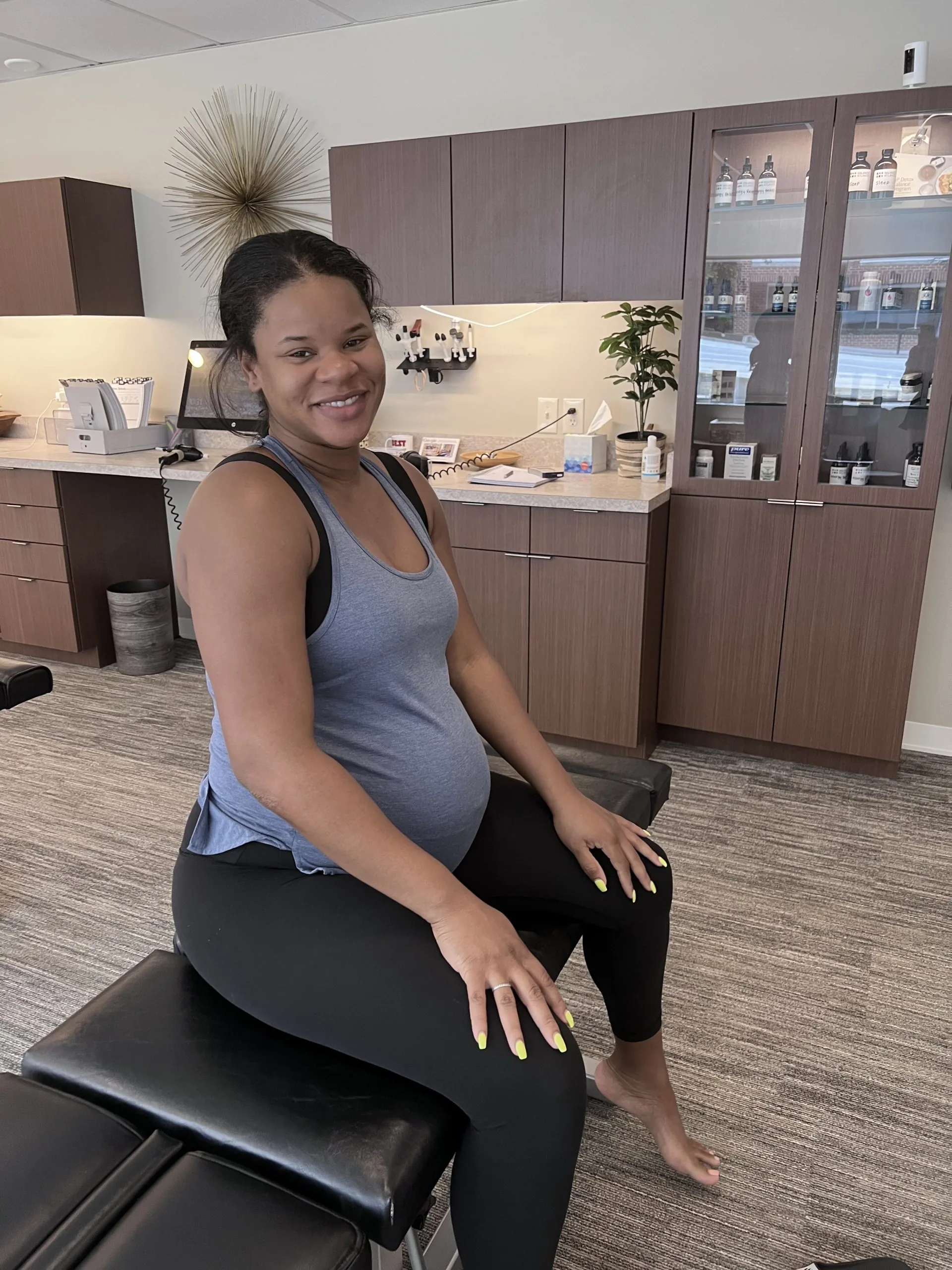
During pregnancy, a hormone called relaxin loosens the ligaments in the pelvis. This is necessary for childbirth, but it also creates instability that can cause hip and pelvic pain. The shift in your center of gravity during pregnancy adds further strain. After delivery, the pelvis and lower spine often need to be realigned. The surrounding muscles need to be rebuilt. Many women carry hip pain for months or years after having a baby simply because this recovery never happens.
Old Back Injuries
A past disc injury, a fracture, or even a bad case of whiplash that was treated but never fully rehabilitated can leave lasting restriction in the lower spine. Over time, that restriction changes how load travels through the pelvis and into the hip. Hip pain that develops years after a back injury is often linked to an incomplete recovery.
Sleep Position
Sleeping on the same side every night compresses that hip for hours at a time. Over the long run, this can trigger bursitis, tighten the hip flexors, and irritate the sacroiliac joint. Placing a pillow between your knees when sleeping on your side takes a lot of that pressure off. Dr. Caroline provides specific guidance on this as part of your care.
Sports and Overuse
Running, cycling, golf, soccer, and other sports that involve repetitive hip movement put cumulative stress on the joint and surrounding muscles. Common athletic hip conditions include hip impingement, labral tears, and tendon inflammation. These respond best to early treatment. Waiting until the pain is severe makes recovery significantly harder.
Tendinitis
The tendons around the hip, particularly at the front and back, can become inflamed from overuse or activity. This causes pain that worsens with movement and activity. Like bursitis, it responds well to shockwave therapy and soft tissue work.
Sciatica
When a nerve in the lower spine is compressed, it can send pain through the buttocks and into the leg. This often feels like hip pain, even though the source is in the back. Identifying whether pain originates from the hip itself or is referred from the spine is an important part of the evaluation.