

Disc Herniation

Herniated Disc and Bulging Disc Treatment in Atlanta

Person seen from behind holding their lower back with both hands, lumbar spine highlighted to indicate disc-related lower back pain

Disc herniation has a very specific pattern that most people recognize the moment it starts. The pain begins in the lower back, travels through the hip, and shoots down the leg in a way that is hard to ignore. Some people also notice numbness in the foot that makes it feel disconnected from the rest of the body. The standard advice is usually to rest, take anti-inflammatories, and wait it out. For some people that works. For a lot of people, it does not.

Waiting is rarely enough. A herniated or bulging disc does not just cause local pain. It compresses nerves, triggers inflammation in the surrounding tissue, and disrupts the way the entire spinal segment moves. Addressing only the pain without addressing the disc pressure, the nerve inflammation, and the spinal mechanics that led to the injury in the first place explains why so many people experience temporary relief followed by recurrence.

At Balance Atlanta in Buckhead, Dr. Caroline von Fluegge-Chen uses a combination of spinal decompression therapy, Class IV laser therapy, radial pressure shockwave therapy, chiropractic adjustments, and postural correction to address all of those dimensions.

Request Appointment
Rear view of a person in a blue athletic top holding the back of their neck with both hands, a pose commonly used to show cervical disc herniation and neck pain.

Why Disc Problems Are So Slow to Resolve

Herniated and bulging discs affect an estimated 5 percent of Americans annually. They are among the most common causes of back pain, sciatica, and neck pain with arm symptoms. More than 90 percent of herniations occur in the lumbar spine, where the discs bear the most load.

The reason disc problems are slow to resolve is that the disc itself has almost no direct blood supply. It receives nutrients and fluids through movement and pressure changes rather than through circulation. This means the disc depends on specific mechanical conditions to heal. Rest reduces pain but does not create the conditions the disc needs to recover. In many cases, sustained rest can cause the muscles supporting the spine to weaken, increasing stress on the disc when normal activity resumes.

Surgery is effective for severe cases where conservative care has genuinely failed. For most people, a targeted combination of non-surgical treatments produces better outcomes with far less risk. The key is finding the right combination, applied with enough precision and consistency to let the disc actually heal.

What is a Herniated or Bulging Disc?

The spine is made up of vertebrae separated by discs. Each disc has a tough outer ring called the annulus fibrosus and a soft gel-like center called the nucleus pulposus. The disc acts as a shock absorber and allows the spine to flex and rotate.

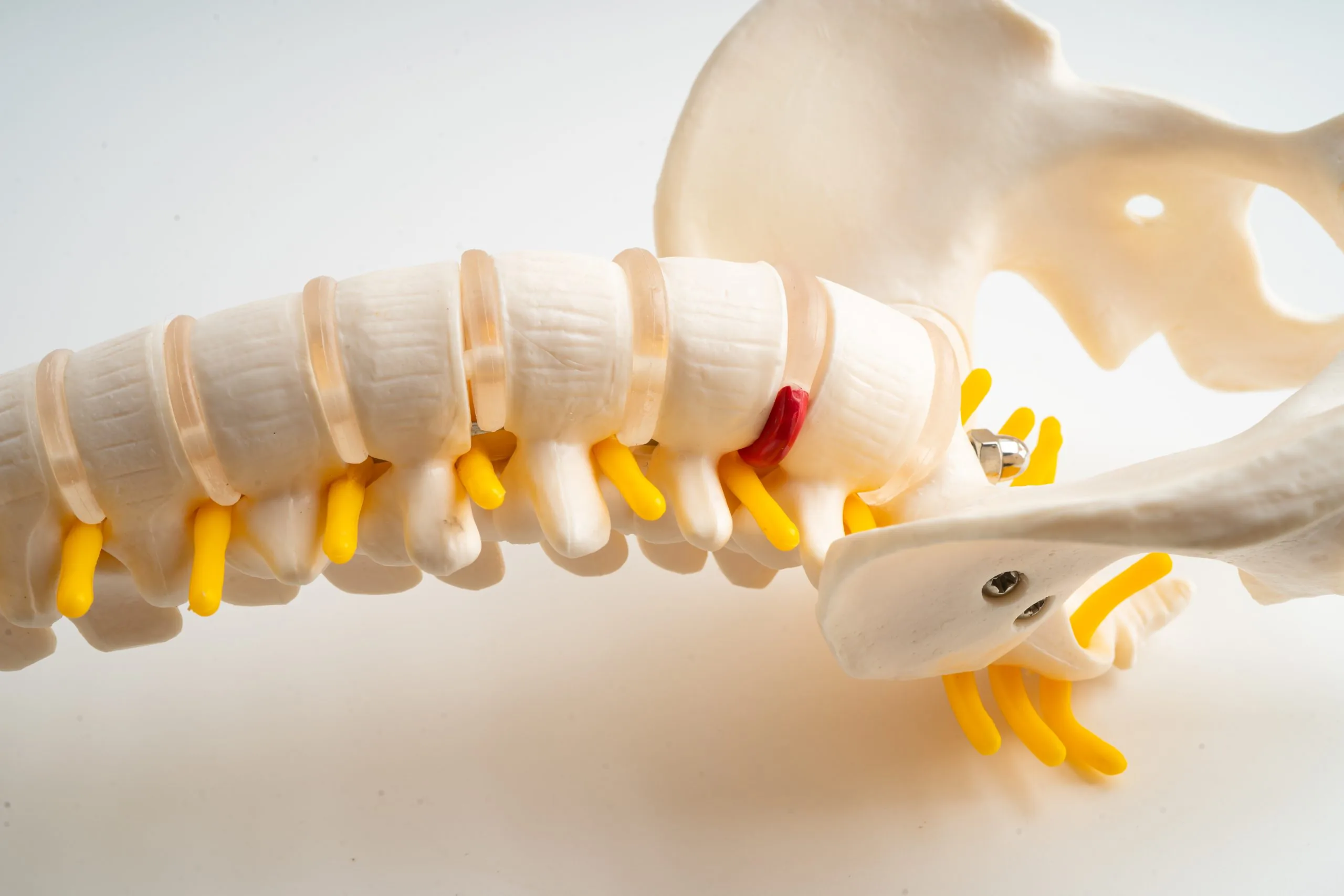
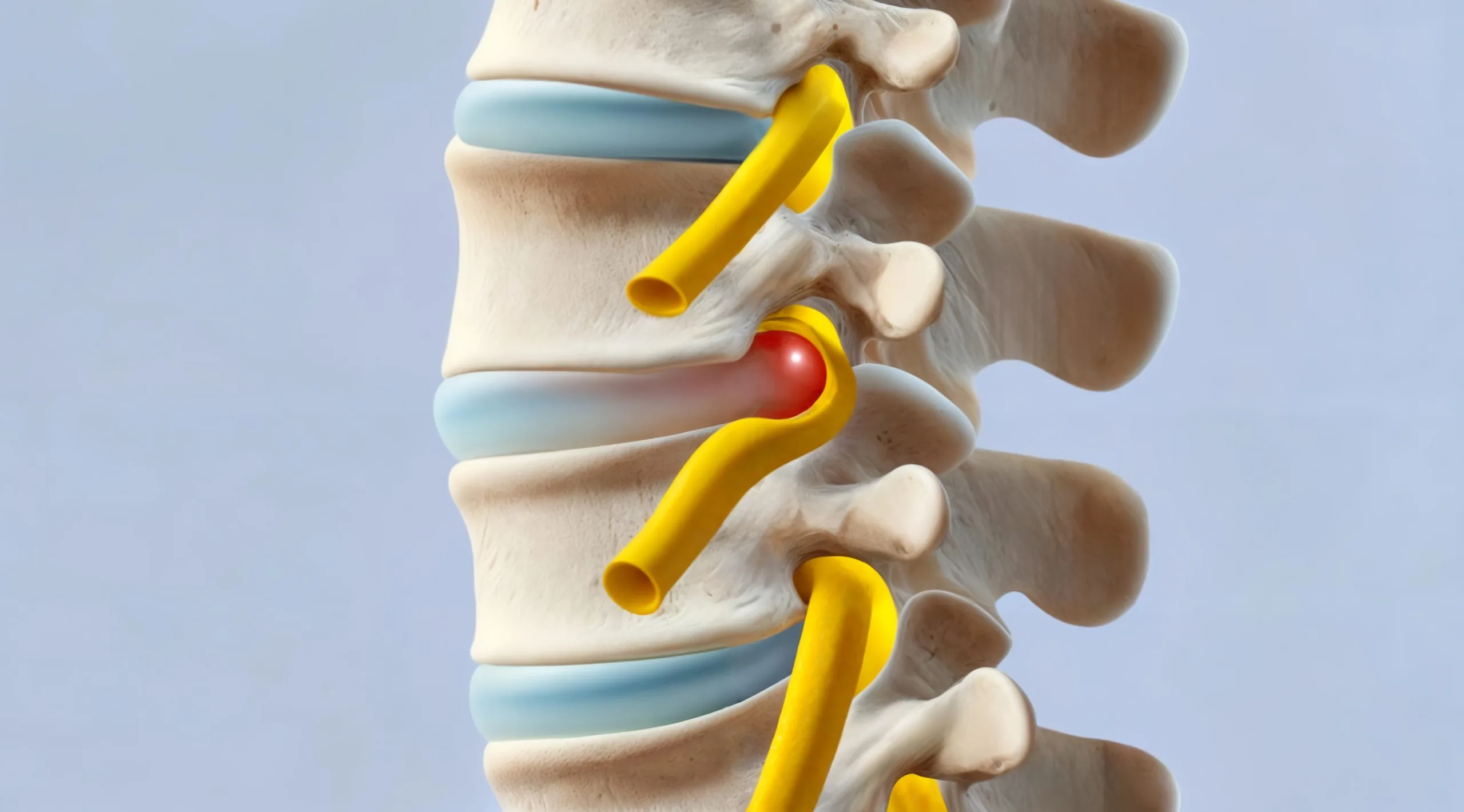
A bulging disc occurs when the outer ring weakens, and the disc extends beyond its normal boundary. The disc is intact but protruding. A herniated disc, sometimes called a ruptured or slipped disc, occurs when the soft inner material breaks through a tear in the outer ring. Both can compress nearby nerves and cause pain, though herniations typically produce more intense symptoms because the nuclear material itself is chemically irritating to nerve tissue.

Despite the common term, discs do not actually slip. They bulge, protrude, or rupture. The distinction matters because it affects which treatments are most appropriate and what recovery looks like.

Request Appointment

Common Causes of Disc Herniation and Bulging Discs

Age-Related Degeneration

Discs gradually lose water content and flexibility with age. By the time most people reach their 30s and 40s, their discs are measurably less resilient than they were. This does not mean herniation is inevitable, but it does mean that the same force that would have been easily absorbed in youth may be sufficient to cause a disc problem as the disc ages.

Repetitive Strain and Poor Mechanics

Jobs or activities that involve repeated lifting, bending, or twisting place cumulative stress on the discs. When spinal mechanics are poor, that stress is distributed unevenly, concentrating pressure on specific disc segments. Over time, this uneven loading weakens the annulus and increases the risk of herniation.

Improper Lifting

Lifting heavy objects while bending at the waist rather than the hips, or while rotating, dramatically increases disc pressure. A single lift with poor form can be sufficient to herniate a disc that was already weakened by years of cumulative stress.

Poor Posture

Sustained forward head posture, rounded shoulders, and anterior pelvic tilt all alter the load distribution through the spine. Prolonged desk work, driving, and device use create these postures repeatedly over the years. The discs in the cervical and lumbar spine bear disproportionate load in these positions.

Sedentary Lifestyle

Inactivity weakens the muscles that support the spine and reduces the movement the disc needs to exchange fluids and nutrients. A weaker, less hydrated disc is more vulnerable to herniation under load.

Excess Weight

Additional body weight increases baseline disc load, particularly in the lumbar spine. The combination of obesity and poor posture or lifting mechanics significantly increases the risk of herniation.

Trauma or Sudden Force

Falls, car accidents, or direct impacts can herniate a disc acutely. These injuries often combine disc damage with cervical or lumbar strain, requiring care that addresses both components.
Medical illustration of a herniated spinal disc bulging and pressing on a yellow spinal nerve

Symptoms of a Herniated or Bulging Disc

Symptoms depend on where the herniation is located and which nerve or nerves are being compressed.

Lower Back Pain

The most common presentation of lumbar disc herniation. Pain is typically localized to the lower back initially and often worsens with sitting, bending forward, or coughing, all of which increase disc pressure. Some people describe a sudden sharp pain followed by persistent aching.

Sciatica

When a lumbar disc compresses the sciatic nerve, pain radiates from the lower back through the buttock and into the leg, sometimes as far as the foot. It can feel sharp, burning, or electric. Numbness and tingling in the leg or foot often accompany the pain. Sciatica is the most recognized symptom of lumbar disc herniation and one of the most debilitating.

Neck Pain with Arm Symptoms

Cervical disc herniation compresses the nerve roots in the neck. Pain, tingling, and numbness can travel into the shoulder, arm, and hand following the distribution of the affected nerve. Grip weakness or decreased sensation in specific fingers helps identify which disc level is involved.

Numbness and Tingling

Pins-and-needles sensations in the leg, foot, arm, or hand reflect nerve compression or irritation at the disc level. Persistent numbness suggests ongoing compression that needs to be addressed.

Muscle Weakness

In more advanced cases, nerve compression from a herniated disc can weaken the muscles controlled by that nerve. Weakness in the leg, foot drop, or reduced grip strength indicates significant nerve involvement that benefits from prompt care.

Pain That Worsens in Specific Positions

Disc pain typically worsens with sitting and forward bending, which increase pressure on the posterior disc. It often improves with walking or lying on the back with knees bent. This positional pattern helps distinguish disc pain from other causes of back pain.

Request Appointment

How Balance Atlanta Treats Herniated and Bulging Discs

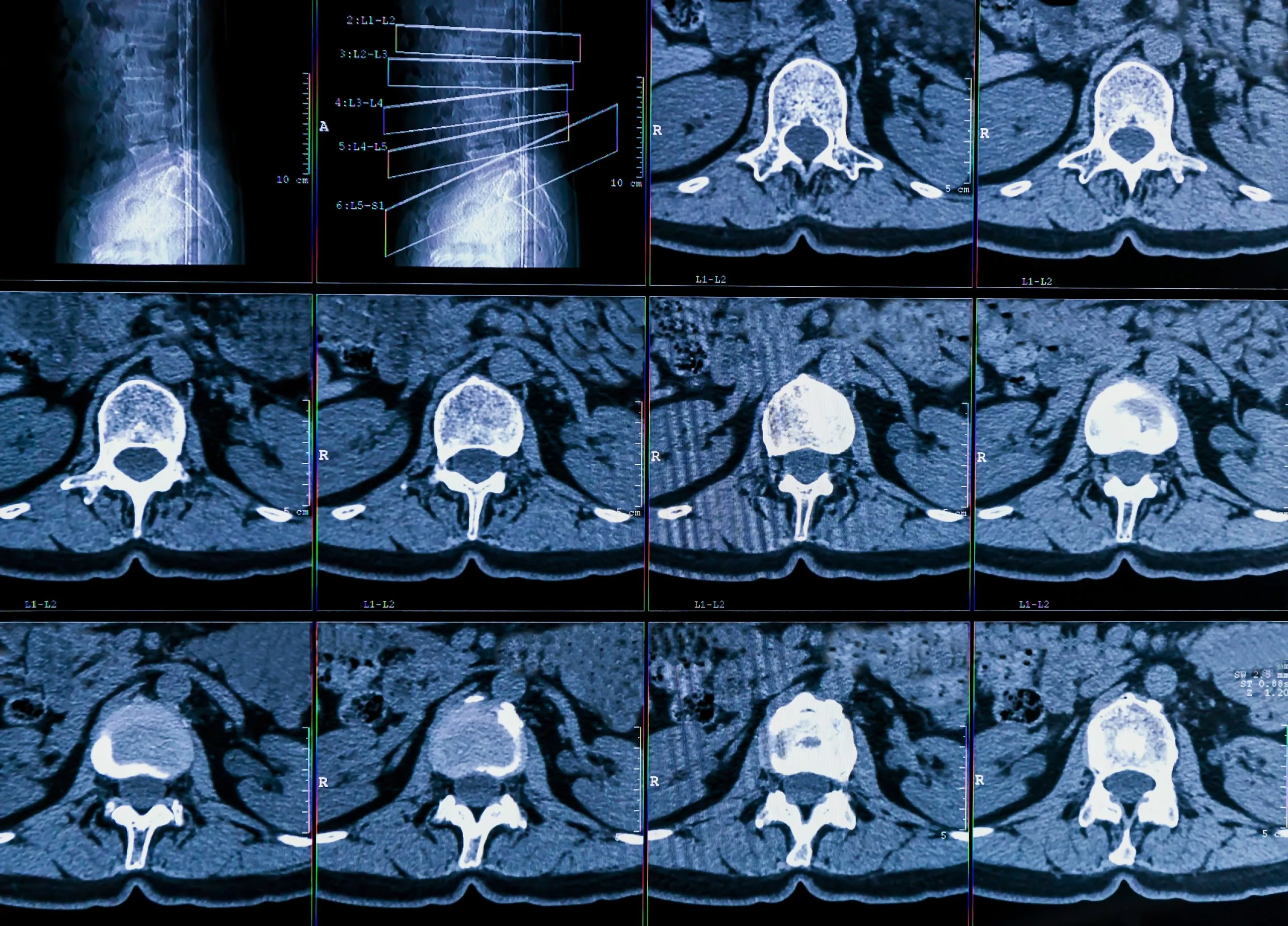
Care at Balance Atlanta begins with a thorough evaluation of the spine, posture, movement, and neurological function. Dr. Caroline identifies which disc levels are involved, what the pattern of nerve compression looks like, and which combination of treatments gives that specific patient the best path to recovery.

Spinal Decompression Therapy

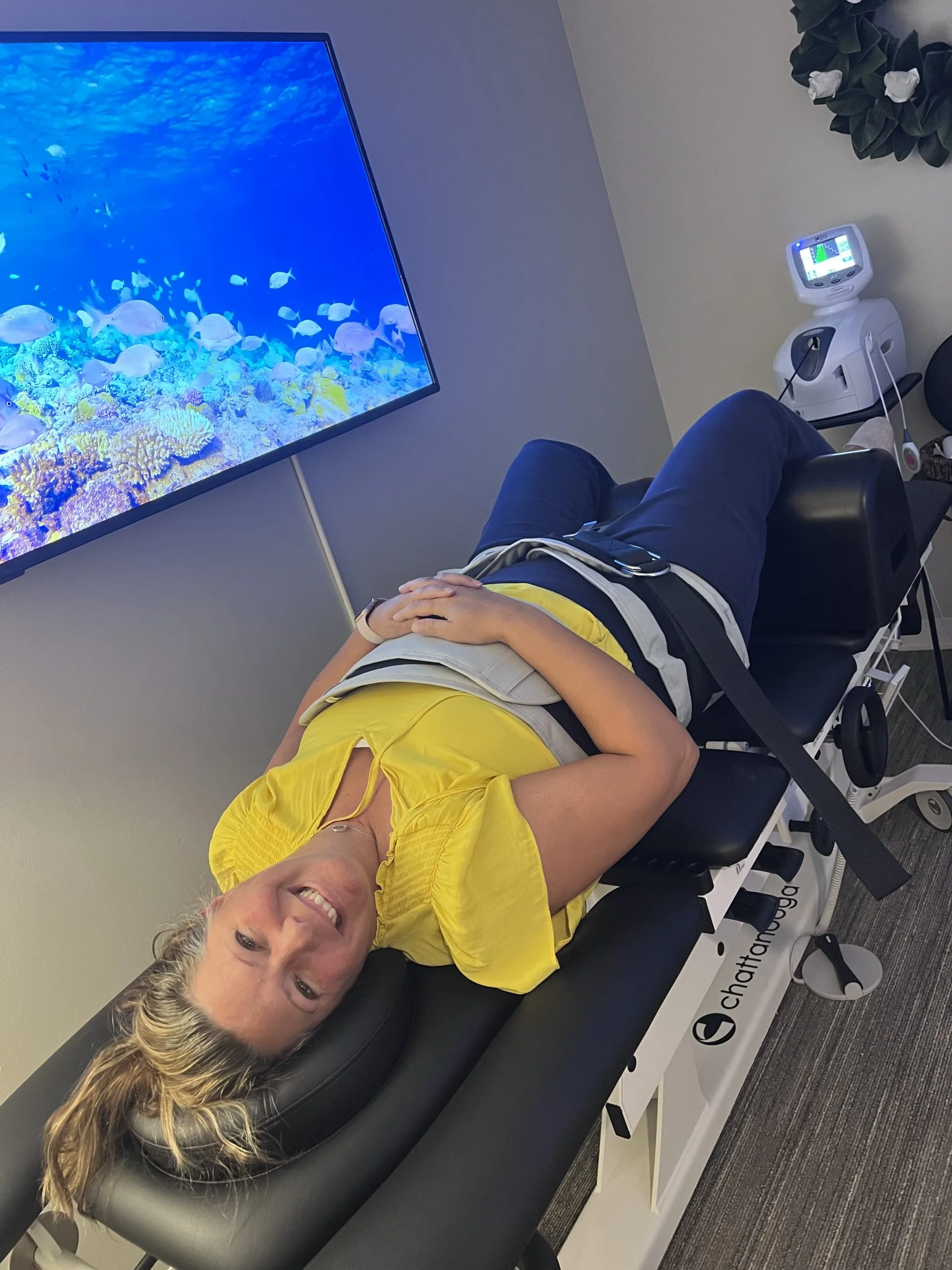
Spinal decompression is the cornerstone of disc herniation treatment at Balance Atlanta. It is a non-surgical, traction-based therapy that gently stretches the spine in a controlled, computer-regulated pattern to create negative pressure within the affected disc. This negative pressure does two important things. First, it draws herniated or bulging disc material back toward its normal position, reducing the compression on the affected nerve. Second, it creates a pressure differential that draws oxygen, nutrients, and fluids into the disc, supporting the biological healing process, which cannot occur without adequate disc nutrition. Decompression is specifically designed for disc herniations, bulging discs, degenerative disc disease, and the sciatica and radicular symptoms these produce. Sessions are comfortable and typically last about 30 minutes. Most patients notice meaningful improvement within the first 10 to 15 sessions, with more complete recovery over a full program of 20 to 30 sessions.

Class IV Laser Therapy

One of the critical dimensions of disc herniation that decompression alone does not fully address is the chemical inflammation in the nerve tissue surrounding the herniated material. The nucleus pulposus contains proteins that are chemically irritating to nerve roots. Even after disc pressure is relieved, this inflammation keeps the nerve sensitized and symptomatic. Class IV laser therapy delivers targeted light energy deep into the spinal tissues to reduce this neurological inflammation, accelerate cellular repair in the affected soft tissue, and improve circulation in the area surrounding the compressed nerve. Sessions are painless and typically take 5 to 10 minutes. Laser therapy is most effective when used in combination with decompression rather than as a standalone treatment.

Radial Pressure Shockwave Therapy

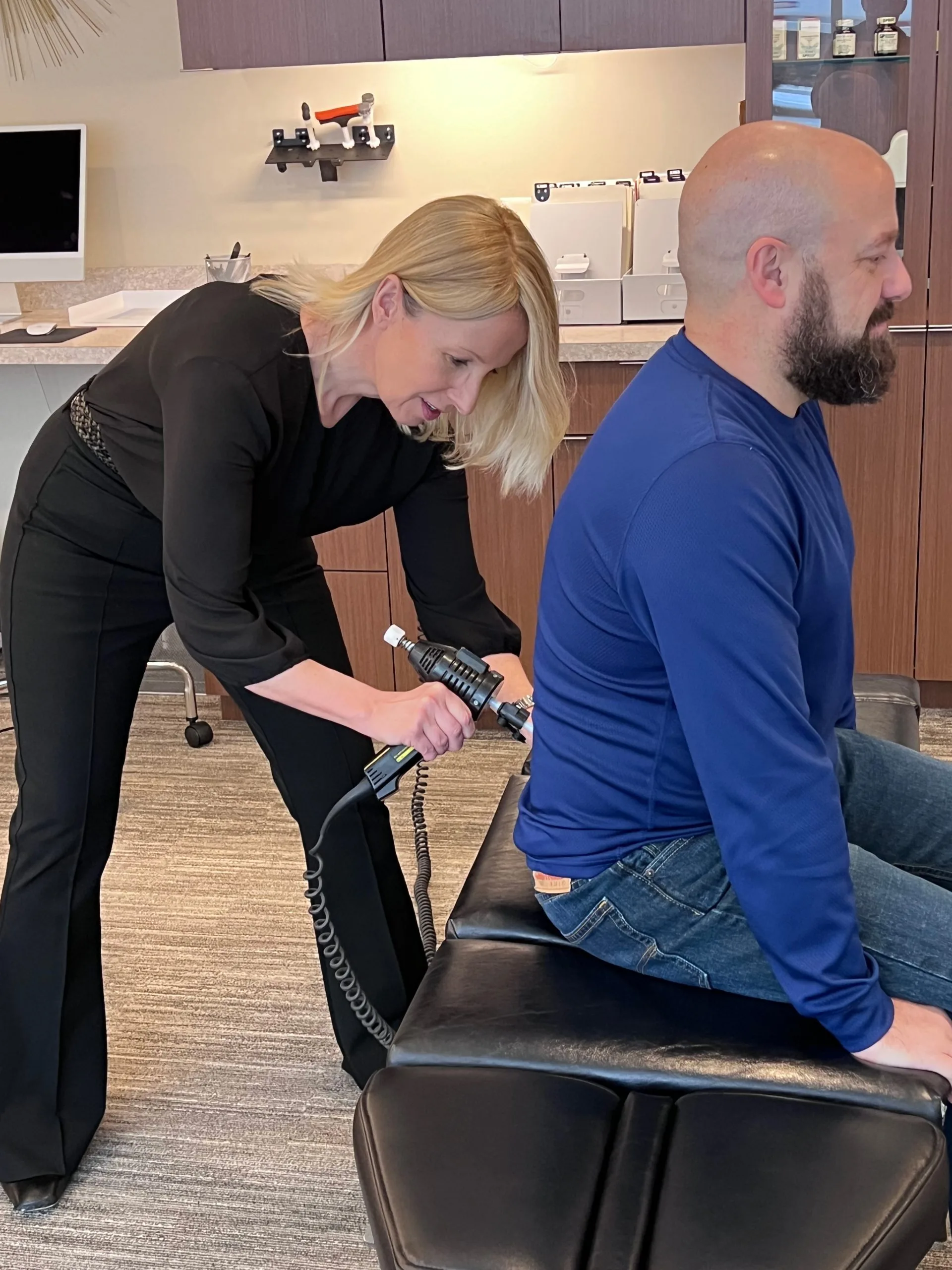
Disc herniations almost always produce secondary soft tissue changes in the surrounding musculature. The muscles supporting the affected spinal segment go into protective spasm, develop trigger points, and over time become fibrotic. These soft tissue changes contribute significantly to pain and can perpetuate symptoms even after the disc itself has improved. Shockwave therapy delivers acoustic pulses to break down fibrosis, release trigger points, and stimulate healing in the chronically restricted soft tissue around the herniated disc. It addresses the muscular and fascial component of disc pain that adjustments and decompression alone do not fully resolve.

Gentle Chiropractic Adjustments

Disc herniations alter spinal biomechanics. Adjacent segments compensate for the affected level, becoming hypermobile or restricted in ways that create their own pain and accelerate disc degeneration if left unaddressed. Gentle, specific chiropractic adjustments restore normal movement to these compensating segments, reduce the mechanical stress that was contributing to disc overload in the first place, and improve the overall spinal environment in which disc healing occurs. Techniques for patients with disc herniation are carefully selected and modified. For acute or severe herniations, low-force instrument-assisted methods or mobilization are used.

Postural Correction

Sustained poor posture is one of the primary long-term causes of disc herniation and one of the most important factors in preventing recurrence. Dr. Caroline assesses posture as part of every disc herniation evaluation and prescribes specific corrective exercises and ergonomic modifications. Correcting the forward head position, thoracic kyphosis, and lumbar lordosis alterations that develop with desk work and device use reduces the daily disc loading that both causes the injury and slows its healing.

Stretching and Rehabilitation

Specific stretches for the hip flexors, hamstrings, piriformis, and thoracic spine reduce the muscular tension that increases disc pressure. Core stabilization exercises strengthen the deep muscles that support the spine and protect the disc from reinjury. Dr. Caroline provides a specific, progressive home program that works with the in-office treatment rather than being a generic back exercise routine.

Request Appointment

Why Choose Balance Atlanta for Disc Herniation Treatment?

All Four Dimensions of Disc Herniation Addressed Together

The disc itself, the compressed nerve, the surrounding soft tissue, and the spinal mechanics that caused the injury are all contributing to symptoms. Decompression addresses the disc. Laser therapy addresses nerve inflammation. Shockwave addresses the soft tissue. Adjustments and rehabilitation address the mechanics. Treating all four simultaneously produces better outcomes than addressing any one in isolation.

Spinal Decompression as the Foundation

Most chiropractic practices offer adjustments as the primary treatment for disc herniation. Balance Atlanta uses spinal decompression as the foundation of disc care because it is the only treatment that directly addresses the disc pressure producing the symptoms. Adjustments, laser therapy, and shockwave therapy make decompression more effective. They do not substitute for it.

Most Patients Avoid Surgery

More than 90 percent of herniated disc cases improve with conservative care. Surgery is appropriate when conservative care has been genuinely exhausted and when significant, progressive nerve compromise is present. The combination of treatments at Balance Atlanta provides most patients with the best possible outcome without surgery.

Personalized Based on Evaluation Findings

Not every herniation is the same. A C5-C6 cervical herniation with arm symptoms requires a different approach than an L4-L5 lumbar herniation with sciatica. The care plan is built around what the evaluation actually shows, not a standard protocol applied to every disc complaint.

Non-Surgical and Drug-Free

For patients who are concerned about the risks and recovery time of surgery, or who want to avoid long-term dependence on pain medication, this combination of treatments offers a credible, evidence-supported path forward. Many patients who have been told that surgery is the next step experience significant and lasting improvement with this approach.

Common Questions

Have questions? We have honest answers.

We understand you’ve already been through the system—appointments, mixed answers, and limited results.That’s why Balance Atlanta takes a different approach, focusing on root causes, not just symptoms


Every plan is personalized, with clear guidance and honest communication at every step. The goal is simple: real, lasting improvements in how you feel and function every day.

Request Appointment
  • What is a herniated disc, and how is it different from a bulging disc?

    A bulging disc occurs when the disc extends beyond its normal boundary but remains intact. The outer ring is weakened, and the disc protrudes, but it has not torn. A herniated disc, also called a ruptured disc, occurs when the soft inner material breaks through a tear in the outer ring. Both can compress nerves and cause pain, but herniations typically produce more intense symptoms because the inner nuclear material is chemically irritating to the nerve roots it contacts. The terms slipped disc, ruptured disc, and herniated disc are often used interchangeably. Technically, discs do not slip. They bulge, herniate, or rupture. The correct term determines which treatment approach is most appropriate, which is why an evaluation that identifies the specific type and location is important.
  • What causes a disc to herniate?

    Most herniations result from the combination of gradual disc degeneration and a force or movement that exceeds what the weakened disc can withstand. Age reduces disc hydration and resilience. Repetitive lifting, bending, or twisting creates cumulative stress. Poor lifting mechanics, sustained poor posture, and weak supporting muscles all increase disc vulnerability. A single episode of improper lifting, a fall, or a car accident can then produce the final herniation in a disc that had been weakening for years.
  • What are the symptoms of a herniated disc?

    Lower back pain that worsens with sitting and forward bending is the most common presentation of lumbar disc herniation. When the herniated material compresses the sciatic nerve, pain radiates from the lower back through the buttock and into the leg, sometimes to the foot. Tingling, numbness, and muscle weakness in the leg or foot indicate significant nerve compression. Cervical disc herniation produces neck pain with symptoms that travel into the shoulder, arm, and hand. The specific distribution of tingling or weakness helps identify which disc level is involved. Any progressive weakness or sudden loss of bladder or bowel control in association with disc symptoms requires emergency evaluation.
  • Can chiropractic care help a herniated disc?

    Spinal decompression directly reduces the disc pressure compressing the nerve. Laser therapy reduces the nerve inflammation that keeps symptoms active even after pressure is relieved. Shockwave addresses the soft tissue restriction that perpetuates pain. Gentle adjustments restore spinal mechanics. Chiropractic care does not physically push the disc back into place. What it does is create the mechanical and physiological conditions in which the disc can heal on its own. For most patients with herniated discs, this approach produces meaningful, lasting improvement without surgery.
  • What is spinal decompression, and why is it important for disc herniation?

    Spinal decompression is a computer-regulated traction therapy that gently stretches the spine to create negative pressure within the affected disc space. This negative pressure reduces the force pushing herniated or bulging disc material against the nerve and draws fluid, oxygen, and nutrients into the disc to support healing. It is the most direct non-surgical treatment available for disc herniation because it targets the disc pressure producing the symptoms rather than simply reducing the pain those symptoms cause. Most patients need 20 to 30 sessions for lasting results. Many notice meaningful improvement within the first 10 to 15.
  • Do all herniated discs require surgery?

    More than 90 percent of herniated disc cases improve with conservative care. Surgery is appropriate when conservative treatment has been exhausted and when significant, progressive nerve compromise, such as muscle weakness that is worsening or loss of bladder or bowel control, is present. For most patients, the combination of decompression, laser, shockwave, and chiropractic adjustments produces recovery that may make surgery unnecessary. If you have been told surgery is the next step and have not yet tried spinal decompression combined with the other therapies available at Balance Atlanta, an evaluation before that decision is worth the time.
  • How does posture affect disc health?

    Posture determines how the load is distributed through the disc with every hour of daily activity. Forward head posture increases the effective weight of the head on the cervical discs significantly with each inch of forward lean. Sustained lumbar flexion, such as sitting with a rounded lower back, compresses the posterior disc and is the position most likely to cause herniation with added load. Correcting posture reduces the daily disc loading that both causes herniation and slows healing. It is one of the most important long-term factors in preventing recurrence after recovery.
  • How long does disc herniation recovery take?

    It depends on the severity of the herniation, how long symptoms have been present, and how consistently treatment is applied. Some patients with acute herniations notice significant improvement within a few weeks of beginning decompression. More established herniations with significant nerve involvement typically require six to twelve weeks of consistent treatment for meaningful and durable recovery. Dr. Caroline provides a realistic timeline at the first visit based on the evaluation findings.
  • When should disc symptoms be taken seriously?

    Any disc-related symptoms that include progressive muscle weakness, foot drop, or sudden loss of bladder or bowel control require immediate emergency evaluation. These indicate severe nerve compression that may need surgical intervention. For all other disc symptoms, including back pain, sciatica, and arm or leg tingling, the sooner evaluation and treatment begin, the better the outcomes. Disc problems addressed early, before significant nerve damage has accumulated, consistently respond better to conservative care than those left untreated for months.