Digestion

Digestive Health & Chiropractic Care

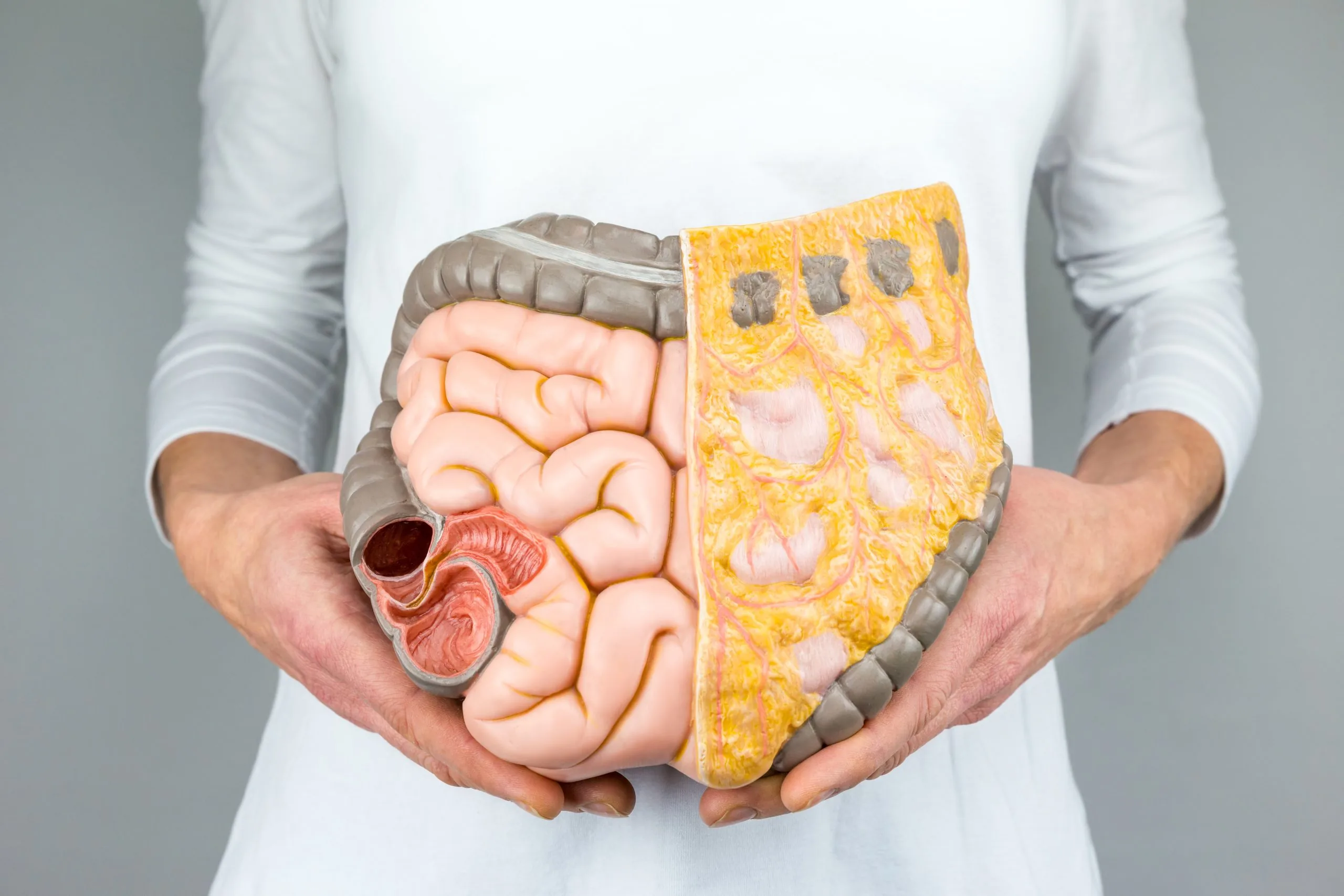
Person holding an anatomical model of the gut showing small intestine, colon, and sectioned abdominal tissue.

Bloating, reflux, constipation, cramping, and irregular digestion are common. They are also frequently dismissed. You may have been told your tests are normal, offered a medication to manage symptoms, or simply advised to watch what you eat. And yet the discomfort persists.

What is rarely discussed is the role the nervous system plays in digestion, and what happens to gut function when that system is under physical stress.

At Balance Atlanta, Dr. Caroline von Fluegge-Chen examines the connection between spinal health and digestive function. Chiropractic care does not treat gastrointestinal disease. What it does is restore the nerve signals that your digestive system depends on to work properly.

Request Appointment

The Digestive Connection Most People Miss

Digestive issues affect millions of Americans. Irritable bowel syndrome alone impacts an estimated 10 to 15 percent of the population. Acid reflux, bloating, constipation, and chronic gut discomfort are among the most common reasons people seek medical care.

Most treatment focuses on the gut itself. Diet changes, antacids, fiber supplements, probiotics, and prescription medications all address the digestive tract directly. These approaches help many people. But for others, the symptoms keep returning.

What is often missing from the conversation is the nervous system.

Digestion is not automatic in the way breathing is. Every phase of it, from the muscle contractions that move food through the intestines to the release of digestive enzymes and stomach acid, is regulated by nerve signals. Those signals travel through the spine. When spinal alignment is disrupted, the quality of those signals can be compromised.

Chiropractic care addresses that disruption. For patients whose digestive symptoms have not fully resolved with standard approaches, supporting the nervous system that runs the digestive process is a meaningful and often overlooked next step.

Request Appointment

Common Contributors to Digestive Symptoms

Digestive problems rarely have a single cause. Understanding the full picture, including factors that most providers do not assess, is the starting point for lasting improvement.

Nerve Interference from Spinal Misalignment

The nerves that regulate the stomach, small intestine, and large intestine exit through the mid and lower thoracic spine and the lumbar region. Misalignment in those areas can disrupt the nerve signals that control digestive muscle contractions, enzyme secretion, and motility. The gut receives less accurate instructions and functions less efficiently as a result.

Vagus Nerve Dysfunction

The vagus nerve is the primary communication line between the brain and the digestive system. It runs from the brain stem through the neck and into the abdomen, regulating everything from stomach acid production to the rhythmic contractions that move food through the gut. Tension and restriction in the upper cervical spine can affect vagus nerve function and have a direct impact on digestive efficiency.

Chronic Stress

Stress activates the body’s fight-or-flight response. In that state, digestion is suppressed. Blood is diverted away from the gut. Enzyme production slows. Gut motility becomes erratic. For people under chronic stress, this suppression becomes a persistent pattern that manifests as bloating, reflux, constipation, or cramping.

Poor Posture

Slouching and forward head posture compress the abdomen. That compression reduces the physical space available for the stomach and intestines to function properly. It also increases pressure inside the abdominal cavity, contributing to reflux and slowed transit.

Inflammatory Load

Diet, gut bacteria imbalance, food sensitivities, and nutritional deficiencies all drive gut inflammation. That inflammation makes the digestive lining more reactive, slows healing, and compounds the functional disruption caused by nerve interference.

Restricted Rib and Thoracic Mobility

The diaphragm is both a breathing muscle and a digestive one. Its rhythmic movement massages the abdominal organs and supports motility. Thoracic spine restriction limits how freely the diaphragm can move, reducing that mechanical benefit to the gut.


The Nervous System and Digestion

Most people understand that the brain controls thinking and movement. Fewer realize that the brain also controls digestion, every second of every day, through a network of nerves that runs directly through the spine.

The enteric nervous system, often called the second brain, lines the entire digestive tract and manages the local mechanics of digestion. But it does not operate independently. It communicates constantly with the central nervous system through the vagus nerve and the spinal nerves that exit through the thoracic and lumbar vertebrae.

When those communication pathways are clear, the digestive system receives accurate and timely signals. Stomach acid is released when needed. The muscles of the intestines contract in the right sequence. Enzymes are produced at the right time. Waste moves through at an appropriate rate.

When spinal misalignment interferes with those pathways, the signals are disrupted. The gut may over-respond or under-respond. Contractions become irregular. Acid production becomes poorly timed. The result is the familiar pattern of bloating, reflux, cramping, and inconsistency that so many patients live with.

The Vagus Nerve

The vagus nerve is the most important nerve in digestive regulation. Chiropractic adjustments to the upper cervical spine can reduce tension on the structures that surround the vagus nerve and support better brain-gut communication through this critical pathway.

Thoracic Nerve Pathways

The nerves that supply the stomach and small intestine exit through the mid-back. Restrictions in the thoracic spine can directly affect how those organs receive and respond to nerve signals. Restoring mobility in this region is a central part of digestive support.

Lumbar Nerve Pathways

The lower spine supplies the large intestine. Misalignment or restriction in the lumbar region can contribute to sluggish motility, constipation, and lower abdominal discomfort. Addressing it is particularly relevant for patients with irregular bowel habits.

Stress Response and Gut Suppression

Spinal stress keeps the nervous system in a low-grade state of activation. That activation suppresses the parasympathetic nervous system, the state in which digestion functions optimally. Reducing spinal stress through chiropractic care supports the body's return to a state where the digestive system can do its job.

Request Appointment

Biological Contributors to Anxiety and Depression

Mood disorders rarely develop from a single cause. The following biological factors are among the most common and most consistently overlooked contributors.

Bloating and Gas

Irregular gut motility allows gas to accumulate. When the intestines are not contracting efficiently, food and gas move through too slowly. Restoring nerve communication to the intestinal muscles may improve motility and reduce bloating.

Acid Reflux and Heartburn

Reflux occurs when stomach acid moves upward into the esophagus. The sphincter that prevents this is regulated by nerve signals. Vagus nerve dysfunction and postural compression of the abdomen are both contributors that chiropractic care can address.

Constipation

The large intestine requires regular, rhythmic nerve stimulation to move waste through efficiently. Lumbar spine restrictions can reduce the quality of those signals. Many patients with chronic constipation notice improvement when spinal alignment in the lower back is restored.

Irritable Bowel Symptoms

IBS involves dysregulation of gut motility and sensitivity. Nervous system dysregulation plays a significant role. Reducing the physical stress on the nervous system may support more consistent gut function and reduce the frequency of flare-ups.

Colic and Reflux in Infants

Infants with colic or reflux often have tension in the cervical spine from the birth process. Very gentle pediatric adjustments may reduce that tension, support vagus nerve function, and improve digestive comfort. Many parents report meaningful changes after just a few visits.

Nausea and Stomach Discomfort

Chronic nausea and upper abdominal discomfort without a clear structural diagnosis often involve nervous system dysregulation. Supporting the pathways that regulate stomach function may reduce the frequency and severity of these symptoms.

How We Support Digestive Health

Chiropractic Adjustments

Focused adjustments to the cervical, thoracic, and lumbar spine restore mobility, reduce nerve irritation, and support better signal quality through the pathways that regulate digestion. For patients with reflux, attention to the upper cervical spine and vagus nerve pathway is particularly important. For patients with constipation or IBS symptoms, the lumbar spine and sacral region receive specific attention.

Class IV Laser Therapy

Deep tissue laser therapy reduces inflammation in the gut and surrounding soft tissue, supports cellular repair, and helps calm chronically irritated nerves and tissue. For patients with gut inflammation or nerve irritation contributing to digestive symptoms, laser therapy supports the biological conditions for healing without medication.

Functional Medicine and Lab Testing

Lab testing identifies the internal factors driving digestive dysfunction. This may include testing for gut microbiome imbalances, food sensitivities, inflammatory markers, nutritional deficiencies affecting gut lining integrity, and hormonal factors that influence gut motility and inflammation. Understanding what is actually happening biochemically allows for targeted support rather than trial and error.

[FLAG FOR CAROLINE TO CONFIRM] If you run a specific gut health panel or use particular tests for digestive patients, the specifics can be added here to make this section more concrete and differentiated.

Nutrition and Lifestyle Guidance

What you eat, how you eat, and how your body manages stress all affect how well the gut functions. Practical guidance on anti-inflammatory nutrition, hydration, identifying trigger foods, and stress management strategies is a central part of the approach. These recommendations are based on your individual findings, not a generic gut health protocol.

Request Appointment

Why Choose This Approach for Digestive Health?

A Connection That Is Often Overlooked

The relationship between the spine, the nervous system, and the digestive system is well established in physiology but rarely discussed in standard digestive care. Addressing it gives patients access to a layer of support that most conventional and even integrative approaches miss entirely.

Non-Invasive and Drug-Free

Chiropractic adjustments, laser therapy, and nutritional support involve no medication and no invasive procedures. For patients who want to reduce their medication burden or who have not responded well to pharmaceuticals, this matters.

Care for All Ages

Infants with colic, children with reflux, and adults with chronic digestive complaints all benefit from this approach. Pediatric adjustments are extremely gentle and adapted to the child’s age and size. The principles of nervous system support apply across every stage of life.

Honest Expectations

Chiropractic care is not a cure for gastrointestinal disease. Results vary. Some patients notice meaningful changes quickly. Others see gradual improvement over consistent care. Dr. Caroline will give you an honest picture of what is realistic for your specific situation before care begins, based on what the evaluation finds.

Common Questions

Have questions? We have honest answers.

We understand you’ve already been through the system—appointments, mixed answers, and limited results.That’s why Balance Atlanta takes a different approach, focusing on root causes, not just symptoms


Every plan is personalized, with clear guidance and honest communication at every step. The goal is simple: real, lasting improvements in how you feel and function every day.

Request Appointment
  • How are digestion and the spine connected?

    Every digestive organ receives its nerve supply from the spine. The stomach, small intestine, and large intestine are all regulated by nerves that exit through the thoracic and lumbar vertebrae. The vagus nerve, which originates in the brain stem and travels through the neck, provides the primary brain-gut communication line for the upper digestive tract. When spinal alignment is disrupted, the nerves passing through those segments can be irritated or compressed. That reduces the accuracy and efficiency of the signals the digestive system depends on. The gut may respond erratically, contracting too much, too little, or at the wrong time. Chiropractic care restores spinal alignment and reduces nerve irritation. The digestive system receives clearer signals and is better positioned to function the way it is designed to.
  • Can chiropractic care help with digestive problems?

    Chiropractic care does not treat gastrointestinal disease directly. What it does is address the spinal and nervous system factors that influence how well the digestive system functions. For many patients, digestive symptoms have a significant nerve and structural component. Bloating driven by poor gut motility, reflux worsened by postural compression, constipation related to lumbar nerve irritation, and digestive sensitivity amplified by chronic nervous system stress are all areas where chiropractic care can make a meaningful difference. The degree of improvement varies by individual and depends on how much of the symptom pattern has a nerve and structural origin. An evaluation helps identify whether chiropractic care is likely to be a useful part of the approach for your specific situation.
  • What is the vagus nerve and why does it matter for digestion?

    The vagus nerve is the primary communication line between the brain and the digestive system. It runs from the base of the skull, through the neck, and down into the abdomen. It regulates stomach acid production, the muscle contractions that move food through the gut, digestive enzyme release, and the body’s ability to shift into the parasympathetic state where digestion works best. When there is tension or restriction around the upper cervical spine, the environment through which the vagus nerve travels is compromised. This can reduce the efficiency of brain-gut communication and contribute to reflux, slow motility, and chronic gut dysregulation. Chiropractic adjustments to the upper cervical spine can reduce that tension and support better vagus nerve function. For patients with upper digestive symptoms, this is often one of the most important areas to address.
  • Why might poor posture affect digestion?

    Posture affects digestion in two ways. First, slouching compresses the abdomen. That compression reduces the physical space available for the stomach and intestines to work in and increases pressure that can push stomach contents upward, contributing to reflux. Second, poor posture creates chronic tension in the thoracic spine. That tension affects the nerves that supply the digestive organs and reduces how freely the diaphragm can move. The diaphragm’s rhythmic motion helps massage the abdominal organs and supports the transit of food through the gut. When posture limits that motion, digestion slows. Restoring spinal alignment and improving posture addresses both of these mechanisms simultaneously.
  • Can spinal misalignments impact digestive organs?

    Yes, indirectly. Spinal misalignments do not physically damage digestive organs, but they can reduce the quality of nerve communication that those organs depend on. The nerves that exit through the thoracic and lumbar spine supply the stomach, intestines, liver, gallbladder, and pancreas. Restriction or misalignment at those levels can irritate those nerves and reduce the efficiency of the signals they carry. The affected organs receive less accurate instructions and may function below their normal capacity as a result. Restoring spinal mobility and alignment through chiropractic adjustments removes that source of nerve interference. The organs are then better positioned to receive and respond to the signals that regulate their function.
  • Can chiropractic care help with constipation?

    For some patients, yes. Constipation that has a nerve and motility component, rather than a purely dietary one, can respond well to chiropractic care. The large intestine is supplied by nerves from the lumbar spine and sacral region. Restriction in those areas can reduce the stimulation the colon receives, slowing transit and contributing to constipation. Adjustments that restore mobility in the lower back and sacrum may improve the nerve signals that drive intestinal contractions. This is most effective as part of a broader approach that also addresses hydration, fiber intake, and any underlying inflammatory factors. Lab testing can help identify whether nutritional deficiencies or gut microbiome imbalances are compounding the issue.
  • Can children benefit from chiropractic care for digestive issues?

    Yes. Infant colic, reflux, and constipation often have a physical component related to tension in the cervical spine from the birth process. Pediatric chiropractic adjustments are extremely gentle, using only light fingertip pressure. They are safe from birth onward. For infants with colic or reflux, gentle adjustments to the upper cervical spine may reduce tension on the vagus nerve and support better brain-gut communication. Many parents report significant improvement in their infant’s comfort and feeding within a few visits. Older children with constipation, stomach discomfort, or irregular digestion can also benefit from spinal and nervous system support. Care is always adapted to the child’s age, size, and comfort level.
  • How does chiropractic care support overall gut health?

    Gut health depends on several interconnected factors: the quality of nerve communication between the brain and the gut, the integrity of the gut lining, the balance of gut bacteria, the level of inflammation in the digestive tract, and the body’s ability to shift into the parasympathetic state where digestion is prioritized. Chiropractic care directly addresses the nervous system component. Lab testing and nutritional guidance address the inflammatory and biochemical components. Together, they cover the ground that dietary changes and probiotics alone often cannot. The goal is a gut that functions well because the systems it depends on are working properly, not one that is managed by ongoing medication or avoidance strategies.
  • Should chiropractic care replace medical treatment for digestive problems?

    No. Chiropractic care should not replace medical evaluation or treatment for gastrointestinal conditions. If you have a diagnosed condition such as Crohn’s disease, ulcerative colitis, celiac disease, or gastroparesis, medical management is essential and should continue. Chiropractic care adds a layer of nervous system and structural support that most medical treatment does not include. It works best alongside medical care, not in place of it. For patients whose symptoms are functional, meaning tests are normal but symptoms persist, chiropractic and functional medicine support often provide the most meaningful path forward.