Arm Pain

Arm Pain Treatment in Atlanta

Indoor rock climber reaching for a handhold on a vertical wall, forearm and shoulder visibly engaged while gripping colorful climbing holds

Elbow pain that flares up when you grip, lift, or swing. Arm pain that travels from the shoulder or neck. Tendon soreness that rests for a few days, then comes right back.

These are not problems that disappear on their own. They have a source. And finding that source is what determines whether treatment actually works.

At Balance Atlanta, Dr. Caroline von Fluegge-Chen evaluates the full picture, from the neck through the shoulder, elbow, forearm, and wrist, before creating a plan. Treatment combines chiropractic adjustments with Class IV laser therapy, radial pressure shockwave therapy, and trigger point work. These are the same advanced therapies used by professional sports teams, available here in Atlanta.

Request Appointment
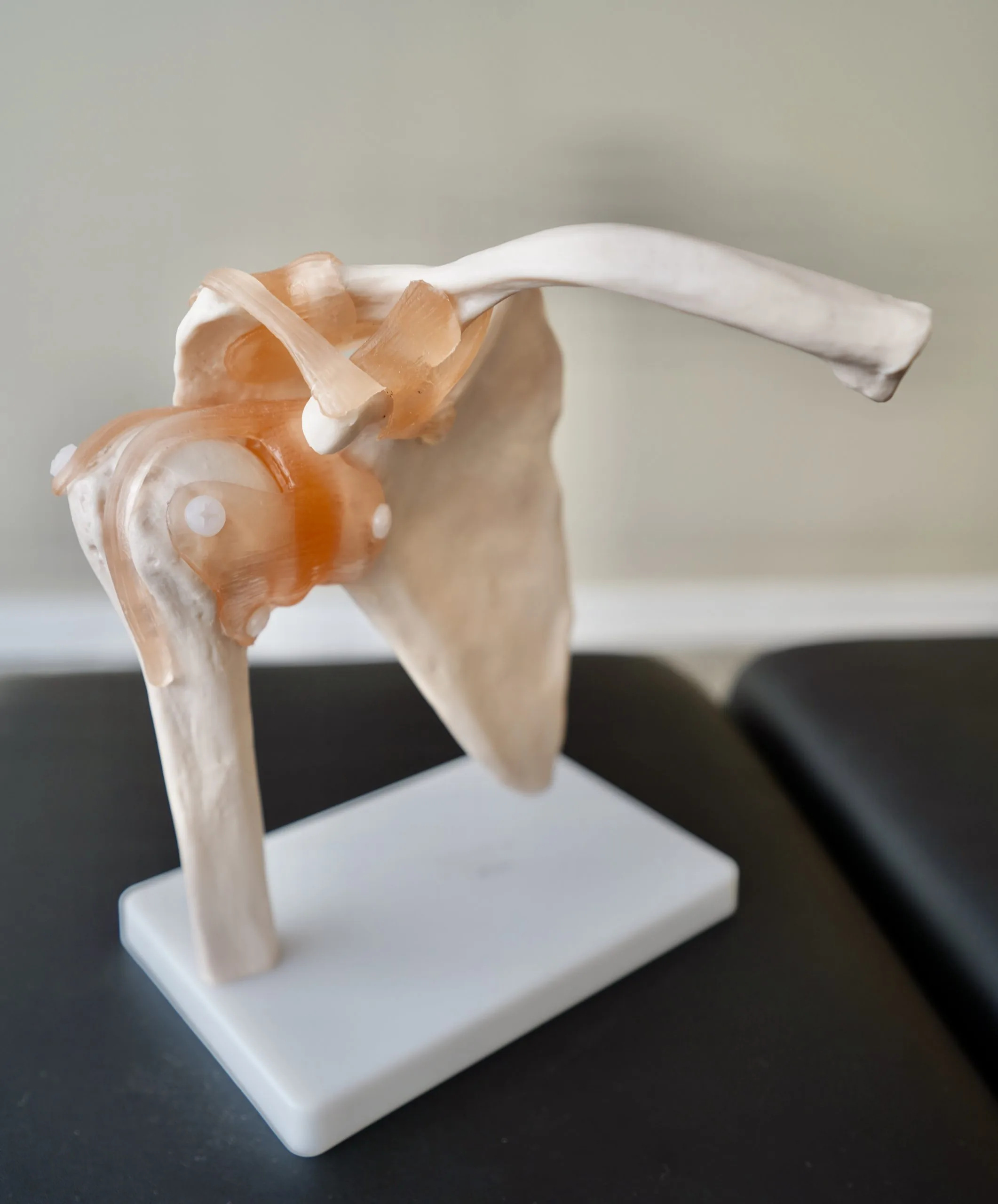
Anatomical shoulder model showing scapula, clavicle and humerus with translucent ligament overlays on a display stand

Why Arm Pain Keeps Coming Back

Arm pain from tennis elbow, golfer’s elbow, or repetitive strain rarely has a single clear cause. Most cases involve a combination of tendon irritation, restricted joint motion, nerve tension, and muscle imbalance. Treating only one of those factors is why so many people get temporary relief and then find the pain returns.

Rest helps acutely but does not address why the tissue broke down in the first place. Bracing offloads the tendon but does not restore the mechanics driving the overload. Anti-inflammatories reduce pain but do not promote the tissue repair that chronic tendon injuries need.

A chiropractic evaluation at Balance Atlanta looks at what is actually happening structurally and neurologically. The plan is built around those findings, not a standard protocol applied to everyone with elbow pain.

Request Appointment

Common Causes of Arm Pain

Arm pain can come from the elbow itself, but it can also originate further up the chain. Understanding where it starts is essential for treating it effectively.

Repetitive Strain

Typing, mouse use, gripping tools, swinging a racket, throwing, painting, and any repeated arm motion can gradually overload tendons and soft tissue. The damage accumulates over time. By the time symptoms appear, the tissue has often been under stress for weeks or months.

Tendon Overload and Degeneration

Tennis elbow and golfer’s elbow are the most common tendon conditions affecting the arm. Both involve chronic overload of the tendons that attach forearm muscles to the elbow. The tissue breaks down faster than it repairs. Without targeted treatment to stimulate healing, the condition becomes self-perpetuating.

Nerve Compression from the Neck

The nerves that supply the arm originate in the cervical spine. When a disc or a misaligned vertebra compresses one of those nerves, pain, tingling, numbness, or weakness can radiate into the shoulder, elbow, forearm, or hand. Many cases of arm pain that seem to be local are actually driven by nerve irritation higher up. Treating only the elbow in these cases produces limited results.

Joint Restriction in the Shoulder or Elbow

When a joint does not move freely, surrounding tissues compensate. That compensation often leads to overload in adjacent areas. Restricted shoulder mechanics, for example, frequently contribute to elbow pain in throwing athletes and overhead workers.

Poor Posture and Ergonomics

Forward head posture and rounded shoulders shift the load onto the neck and upper back, increasing tension on the nerves and muscles that supply the arm. Desk workers and people who spend extended time on phones or computers are particularly susceptible to this pattern.

Sports and Overuse Injuries

Baseball, tennis, golf, swimming, weightlifting, and racket sports all impose repetitive demands on specific arm tissues. When volume or mechanics exceed tissue tolerance, injury follows. Early treatment matters. The longer a tendon or joint problem is left unaddressed, the more difficult recovery becomes.

Person holding their upper arm near the shoulder with one hand, indicating arm pain.

When Arm Pain Starts in the Neck

This is one of the most important and most commonly missed aspects of arm pain evaluation. The nerves that control sensation and movement throughout the arm originate in the cervical spine. Each nerve root exits between vertebrae and travels through the shoulder, down the arm, and into the hand.

Compression or irritation anywhere along that path can produce symptoms that appear in the arm. A nerve irritated at the C6 level in the neck, for example, can produce pain and tingling in the forearm and thumb that feels exactly like a local elbow or wrist problem.

This is called cervical radiculopathy when it originates in the neck, and it is frequently missed when clinicians treat only the location of the pain rather than the source of the nerve irritation.

Dr. Caroline evaluates the full nerve pathway during every arm pain assessment. If neck involvement is contributing to symptoms, treating it is part of the plan.

Request Appointment

Biological Contributors to Anxiety and Depression

Mood disorders rarely develop from a single cause. The following biological factors are among the most common and most consistently overlooked contributors.

Tennis Elbow (Lateral Epicondylitis)

Tennis elbow affects the tendons on the outside of the elbow where the forearm extensor muscles attach. Pain typically appears with gripping, twisting, or extending the wrist. Despite the name, tennis elbow is common in painters, plumbers, carpenters, computer workers, and anyone who performs repetitive forearm and wrist movements.

The underlying issue is chronic tendon degeneration rather than acute inflammation. This is why anti-inflammatories provide only temporary relief. The tissue needs stimulation to heal, not just a reduction in swelling. Class IV laser and shockwave therapy at Balance Atlanta are specifically designed to drive that healing response.

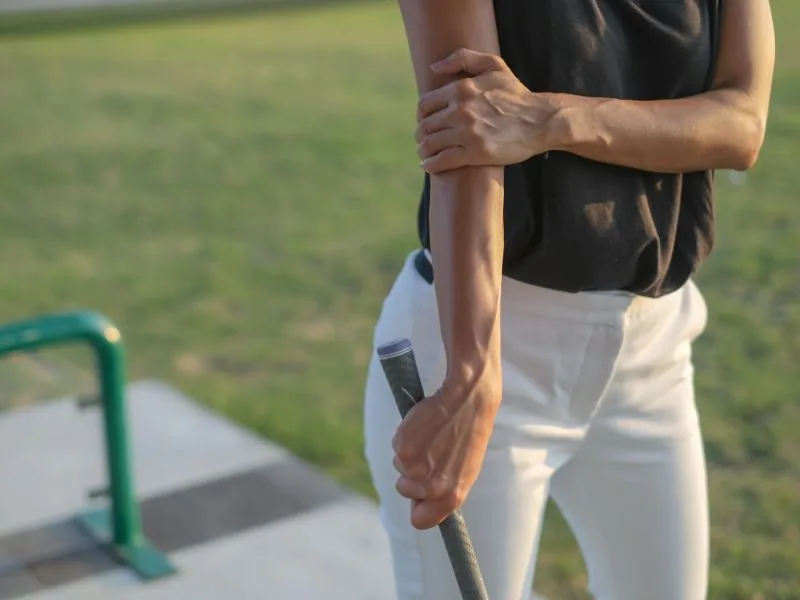
Person holding their forearm near the inner elbow while gripping a golf club, suggesting arm pain after golfing.

Golfer’s Elbow (Medial Epicondylitis)

Golfer’s elbow affects the tendons on the inside of the elbow where the forearm flexors attach. Pain occurs with gripping, wrist flexion, or turning the palm upward. It is common not only among golfers but also among anyone who repeatedly grips or flexes the wrist, including climbers, baseball players, and people in construction or other manual trades.

Like tennis elbow, golfer’s elbow involves tendon degeneration that does not resolve with rest alone. The treatment approach at Balance Atlanta targets the degenerated tissue directly while also addressing any joint restrictions or nerve tension that contribute to the problem.

Sports-Related Arm Injuries

Shoulder strains, bicep and tricep tendon irritation, forearm compartment tightness, and overuse injuries from throwing, swimming, or weightlifting all fall into this category. Athletes who push through pain often allow minor tissue damage to become a chronic injury. Getting an evaluation early produces significantly better outcomes than waiting until the problem becomes disabling.

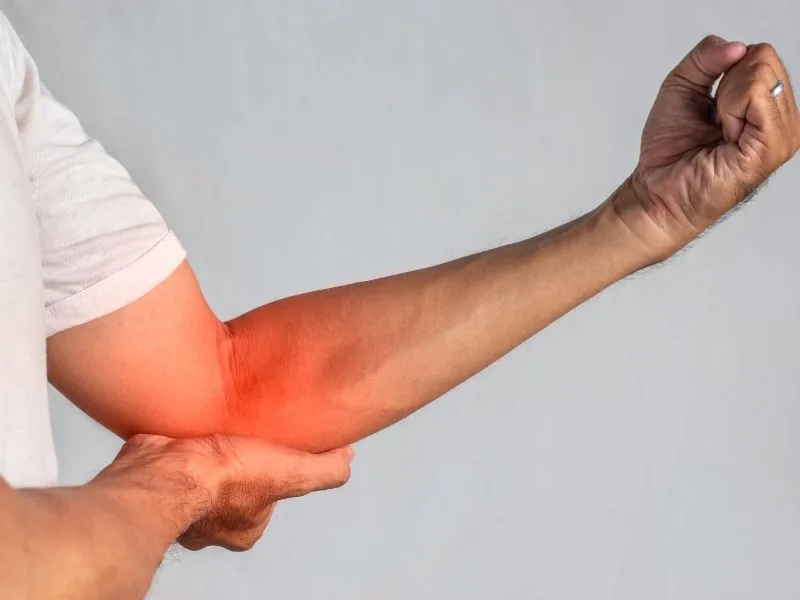
Man seated on a gym bench clutching his upper arm near the shoulder after a workout

Nerve-Related Arm Pain

Pain, tingling, numbness, or weakness that radiates down the arm suggests nerve involvement. This may originate in the cervical spine, the thoracic outlet between the shoulder and chest, or at specific compression points along the arm itself. Identifying where the nerve is being irritated is the first step. Treatment is directed at the source, not just the location of symptoms.

How Balance Atlanta Treats Arm Pain

Care at Balance Atlanta begins with a thorough evaluation. Dr. Caroline assesses the neck, shoulder, elbow, forearm, and wrist together, using orthopedic and neurological testing to identify the underlying cause of the problem. Treatment is then built around those specific findings.

Chiropractic Adjustments

Restricted joints in the cervical spine, shoulder, elbow, and wrist contribute to the nerve tension and mechanical imbalance that underlie many arm pain conditions. Gentle, precise adjustments restore normal joint motion, reduce nerve pressure, and improve how load is distributed through the arm. For patients in whom neck involvement contributes to symptoms, cervical adjustments are a central part of treatment.

Class IV Laser Therapy

Deep tissue laser therapy uses targeted light energy to stimulate cellular repair, reduce inflammation, and promote tissue regeneration in tendons, muscles, and nerves. It is particularly effective for chronic tendon conditions such as tennis elbow and golfer’s elbow, where the tissue has broken down and requires a physiological stimulus to heal. Sessions are painless and typically take 5 to 10 minutes. The same technology is used by professional sports teams for soft tissue recovery.

Radial Pressure Shockwave Therapy

Shockwave therapy uses acoustic pulses delivered to the affected tissue to break down scar tissue, stimulate blood flow, and activate the body’s natural healing response. It is one of the most effective non-surgical treatments for chronic tendinopathy and has a strong evidence base specifically for tennis elbow and golfer’s elbow. For patients who have had elbow pain for months without resolution, shockwave often produces results that other approaches have not.

Trigger Point Therapy

Tight, contracted spots in the forearm, upper arm, and shoulder muscles refer pain into the elbow and arm in patterns that closely mimic tendon pain. Releasing these trigger points directly reduces pain and restores normal muscle function. It is typically used alongside adjustments and technology-based treatments rather than in isolation.

Soft Tissue Therapy

Myofascial release and targeted soft-tissue work address the muscle tension and fascial restrictions that develop alongside repetitive strain injuries. This reduces the mechanical load on irritated tendons and improves the range of motion.

Rehabilitation Exercises

Once acute pain is managed, rebuilding the strength and movement patterns that protect the affected tissue is essential. Dr. Caroline designs specific exercise progressions based on the underlying condition and the activities the patient needs to return to. The goal is not just recovery but prevention of recurrence.

Request Appointment

Why Choose Balance Atlanta for Arm Pain?

The Full Picture, Not Just the Pain Site

Dr. Caroline evaluates the neck, shoulder, and the full arm pathway, including the elbow. Many arm pain cases have a higher-up component that a local-only evaluation misses. Treatment addresses what is actually driving the problem.

Advanced Technology Alongside Chiropractic Care

Class IV laser and radial pressure shockwave therapy are used by professional sports organizations because they produce results in chronic soft tissue injuries that rest and standard care cannot match. These tools are available at Balance Atlanta for every patient, not just elite athletes.

Non-Surgical First

Surgical options for tennis elbow, golfer’s elbow, and similar conditions carry recovery time and risks that most patients would prefer to avoid. The combination of therapies at Balance Atlanta offers many patients a genuine alternative.

Personalized Plans

No two arm pain cases are identical. Your plan is built around your evaluation findings, your activity demands, and your goals. It is not a standard protocol applied to everyone with elbow pain.

Common Questions

Have questions? We have honest answers.

We understand you’ve already been through the system—appointments, mixed answers, and limited results.That’s why Balance Atlanta takes a different approach, focusing on root causes, not just symptoms


Every plan is personalized, with clear guidance and honest communication at every step. The goal is simple: real, lasting improvements in how you feel and function every day.

Request Appointment
  • What are the most common causes of arm pain?

    Arm pain most commonly comes from overused or degenerated tendons at the elbow, nerve irritation originating in the cervical spine, restricted joint motion in the shoulder or elbow, or a combination of all three. Tennis elbow and golfer’s elbow are the most common tendon conditions. Cervical radiculopathy, where a nerve is compressed in the neck and radiates pain into the arm, is frequently overlooked when only the local area is evaluated.
  • What is tennis elbow, and how is it different from golfer's elbow?

    Both are overuse conditions involving the tendons at the elbow, but they affect different sides. Tennis elbow affects the outer elbow, where the forearm extensor tendons attach. Golfer’s elbow affects the inner elbow where the forearm flexor tendons attach. The distinction matters because treatment targets specific tissues, but the underlying mechanism is similar: chronic tendon overload leading to degeneration. Neither is limited to their namesake sports. Both are common in anyone performing repetitive forearm and wrist movements.
  • How do nerves in the neck cause arm pain?

    The nerves controlling the arm originate in the cervical spine and travel through the shoulder, elbow, forearm, and hand. When a vertebra is misaligned or a disc is pressing on a nerve root, irritation travels along the nerve pathway and produces symptoms wherever that nerve goes. Pain, tingling, or numbness may appear in the elbow or forearm, even when the actual source is in the neck. Dr. Caroline assesses the entire nerve pathway at every evaluation to determine whether neck involvement is contributing.
  • Can posture cause arm pain?

    Yes. Forward head posture and rounded shoulders increase tension on the muscles and nerves of the neck and upper back. Over time, this places an abnormal load on the structures that supply the arm. People who spend extended time at desks, on phones, or in forward-leaning positions are particularly susceptible. Chiropractic adjustments combined with postural correction and targeted exercises address this pattern directly.
  • What does chiropractic care for arm pain involve?

    It starts with a thorough evaluation of the neck, shoulder, and arm as a single unit. Adjustments target restricted joints that are contributing to nerve irritation or mechanical imbalance. Soft tissue therapy addresses tight muscles and fascial restriction. Advanced therapies like Class IV laser and shockwave are used for tendon conditions that have not responded to rest alone. Rehabilitation exercises are incorporated once the acute phase is managed. The plan is built around what the evaluation finds, not a generic arm pain protocol.
  • How do I know if my arm pain is nerve-related?

    Nerve pain in the arm often presents differently from tendon or muscle pain. It may feel sharp, burning, or electric. It frequently travels along a path from the shoulder or neck rather than staying in one spot. Tingling, numbness, or weakness in the hand or fingers, along with arm pain, strongly suggests nerve involvement. A chiropractic evaluation, including orthopedic and neurological testing, can identify whether nerve compression in the neck or elsewhere is contributing to symptoms.
  • What is shockwave therapy, and does it work for tennis elbow?

    Radial pressure shockwave therapy uses acoustic pulses to stimulate tissue healing, break down scar tissue, and increase blood flow to degenerated tendons. It is one of the most evidence-supported non-surgical treatments for chronic lateral and medial epicondylitis. For patients who have had elbow pain for months and have not responded to rest, bracing, or cortisone injections, shockwave therapy often produces meaningful improvement. Sessions are delivered to the affected tissue and typically last about 10 minutes.
  • Is chiropractic care safe for arm and elbow pain?

    Yes. Dr. Caroline evaluates each patient thoroughly before selecting techniques. Adjustments to the elbow, wrist, and cervical spine are gentle and targeted. Soft tissue work and laser therapy are non-invasive. Shockwave therapy involves brief, focused acoustic pulses and is well tolerated by most patients. Safety and appropriateness are assessed during the initial evaluation, and the approach is adapted based on each patient’s findings and comfort level.
  • How long does it take to see improvement?

    It depends on how long the problem has been present and how much tissue damage is involved. Some patients notice significant improvement within the first few sessions. Chronic tendon conditions like tennis elbow that have persisted for months typically require more time, often four to eight weeks of consistent treatment, before substantial and durable improvement is achieved. Dr. Caroline sets clear expectations at the first visit based on the evaluation findings.
  • When should arm pain be taken seriously?

    Arm pain accompanied by numbness, weakness, or tingling that does not resolve with a few days of rest should be evaluated. Pain that wakes you at night, limits normal daily activities, or has persisted beyond two to three weeks despite rest warrants a proper assessment. Arm pain accompanied by chest tightness, jaw pain, or shortness of breath requires emergency evaluation as it can signal a cardiac event. For mechanical arm pain from sport, work, or repetitive strain, an early evaluation produces better outcomes than waiting until the problem becomes chronic.