



Learning Disabilities

Train the Brain, Not Around It

Most approaches to learning disabilities focus on working around the problem. Extra time on tests. Specialized tutoring. Reading programs. Organizational strategies. These tools help. But they address the surface, not the source.

BrainCore neurofeedback goes deeper. It trains the brain areas directly involved in reading, math, auditory processing, and focus. Rather than teaching the brain to compensate, it trains the brain to function more efficiently in the areas where it has been struggling.

The improvements this produces are not workarounds. They are genuine changes in how the brain processes information. And because they come from the brain learning, they tend to last.

At Balance Atlanta, Dr. Caroline von Fluegge-Chen uses BrainCore Therapy to support children and adults with learning disabilities. The process is drug-free, non-invasive, and designed to complement whatever educational support is already in place.

Request Appointment

How Balance Atlanta Approaches Learning Disabilities with BrainCore

Every BrainCore program at Balance Atlanta begins with a brain map. Learning disabilities affect different people differently at the neurological level. The training is built around the specific patterns found in each individual.

Brain Mapping

The program begins by recording electrical activity across multiple brain regions. The map identifies which frequencies are dysregulated, where connectivity between regions is disrupted, and which patterns correspond to the specific learning challenges the person is experiencing. This is the foundation of the entire training program.

Personalized Training

Sessions target the specific brain regions and patterns identified in the map. As training progresses, the map is reviewed and the protocol is adjusted based on the brain’s response. Different learning disabilities require different training targets. The program reflects that.

Works for Children and Adults

BrainCore is effective at any age because the brain retains its capacity for change throughout life. Children benefit from early intervention that builds more efficient learning patterns before academic demands increase. Adults who have been managing learning disabilities for years often notice meaningful improvements in work performance, reading efficiency, and mental clarity. The training format adapts to age and attention span.

Complements Existing Educational Support

BrainCore does not replace tutoring, speech therapy, specialized reading programs, or individualized education plans. It works alongside all of them. Many families and individuals find that as brain efficiency improves, their child or they themselves respond better to educational support. Progress that had plateaued begins moving again. The tutoring goes further because the brain is more available for learning.

Program Length

Most people need between 20 and 40 sessions for meaningful, lasting results. Some notice improvements in focus and attention within 10 to 15 sessions. Improvements in reading, math, or processing speed typically develop over a longer course of training as the relevant brain networks become more efficient. Consistency matters. The brain needs regular feedback to consolidate what it is learning.

Why Workarounds Alone May Fall Short

Accommodations and tutoring are valuable. They give students and adults ways to succeed despite differences in how they process information. For many people, they make a real and lasting difference. But they do not change the underlying brain function.

A student who receives extra time on tests still struggles with the same processing speed.
An adult with strong organizational systems still works harder than others to accomplish the same tasks.
The gap between effort and output persists, no matter how good the workaround.
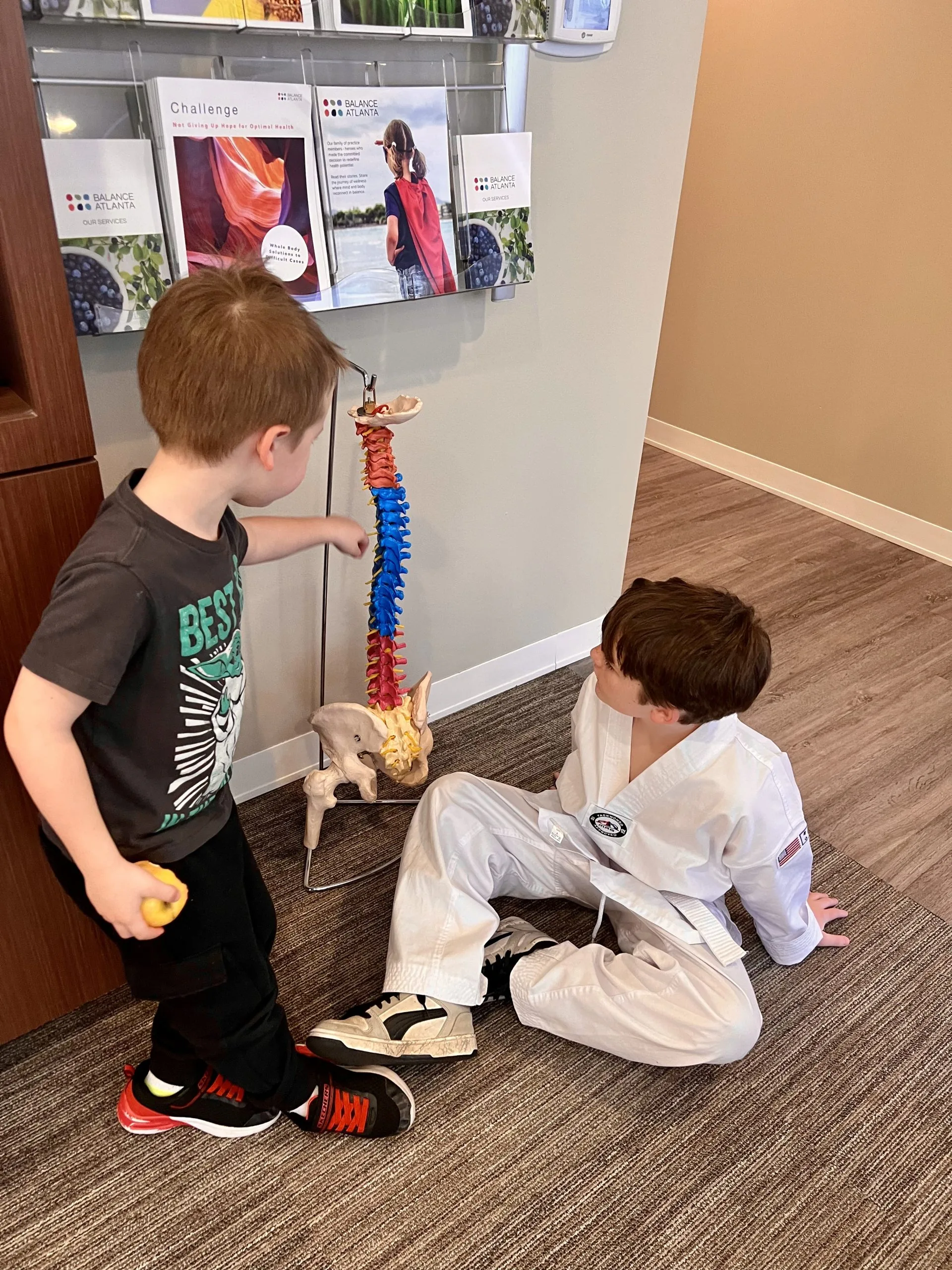
Two boys examine a colorful anatomical spine model in a clinic waiting area with brochures on the wall

This is not a failure of effort or intelligence.

It reflects the neurological reality of learning disabilities. The brain’s electrical patterns in the regions responsible for reading, processing, and attention are measurably different. Those differences make certain cognitive tasks genuinely harder. The question is whether those patterns can change. Research and clinical experience increasingly suggest they can. That is what BrainCore neurofeedback is designed to address.

Child at a desk with a colorful anatomical brain model while a clinician writes notes on a clipboard during an assessment.

What Are Learning Disabilities?

Learning disabilities are conditions that affect how the brain processes specific types of information. They are not a reflection of intelligence. Many people with learning disabilities are highly capable and creative thinkers. The challenge is not what they know or how smart they are. It is how their brain handles specific cognitive tasks.

Common learning disabilities include dyslexia, which affects reading and language processing. Dyscalculia affects mathematical understanding and number sense. Auditory processing disorder makes it harder to distinguish, sequence, and remember sounds and spoken language. Visual processing difficulties affect how the brain interprets what the eyes see. ADHD, while technically a separate condition, overlaps significantly with learning disabilities in its effects on academic and professional performance.

Each of these conditions involves atypical brainwave patterns in the regions responsible for those specific functions. Reading relies on coordinated activity between visual, auditory, and language processing areas. Math relies on different networks. Attention relies on others. When the timing and coordination between these brain regions is off, the associated skills become harder.

BrainCore brain mapping identifies which specific patterns are dysregulated for each individual. The training program targets those findings directly.

Child wearing a yellow EEG cap and smiling while seated during a brain activity assessment

The Brainwave Patterns Behind Learning Disabilities

The brain’s electrical activity is organized into distinct frequency patterns. Different patterns support different cognitive functions.

Beta waves are faster frequencies associated with active focus, problem-solving, and sustained attention. When beta activity is insufficient in the regions needed for a specific task, performing that task becomes harder and more effortful.

Theta waves are slower. They are associated with daydreaming and reduced alertness. Excessive theta activity in the frontal regions responsible for attention and executive function is consistently observed in people with ADHD and many learning disabilities. It is one of the neurological reasons why focusing requires so much effort.

Alpha waves support relaxed attention and the kind of background processing the brain needs to consolidate information. Abnormalities in alpha patterns have been linked to dyslexia and other reading difficulties.

Beyond individual frequencies, timing and connectivity between brain regions matter. Learning requires different areas of the brain to communicate rapidly and precisely. When that timing is off, information processing slows or breaks down. This is why neurofeedback focuses not only on frequency patterns but on improving coordination between brain regions. BrainCore brain mapping identifies the specific patterns present for each individual. Two people with dyslexia can have different neurological pictures.

How BrainCore Neurofeedback Supports Learning

BrainCore neurofeedback is a training process. The brain is shown its own electrical activity in real time and rewarded when it produces healthier patterns. Over sessions, those patterns strengthen and become more automatic.

The program begins with a brain map. Small sensors on the scalp record electrical activity across multiple brain regions. Nothing is transmitted into the brain. The sensors only listen. The map shows which frequencies are dysregulated, where connectivity is disrupted, and which patterns correspond to the specific learning challenges the person is experiencing.

During training sessions, the person watches a video or plays a game that responds to their brainwave activity in real time. When the brain produces more efficient, balanced patterns in the regions targeted by the protocol, it displays rewards for that activity. When it drifts toward dysregulated patterns, the feedback dims.

Sessions last approximately 30 to 45 minutes. They are drug-free, non-invasive, and painless. Children often find the video-based feedback format engaging. Most adapt quickly to the process.

Over repeated sessions, the brain learns to favor the healthier patterns. Processing in the trained regions becomes more efficient. For many people, this may translate to reading that requires less effort, math that comes more naturally, attention that is easier to sustain, and information that is easier to retain.

What BrainCore Neurofeedback Addresses in Learning Disabilities

The brain regions and networks involved in learning are specific. So are the improvements people experience as those regions develop more efficient patterns.

Reading and Language Processing

Dyslexia involves atypical coordination between the brain regions responsible for visual word recognition, phonological processing, and language comprehension. Neurofeedback training targets these regions and their connectivity. Many people notice that reading may become less effortful and that sound-letter connections may become more reliable as training progresses.

Focus and Sustained Attention

Difficulty sustaining attention is a common feature across many learning disabilities. Excessive theta activity and insufficient beta activity in frontal regions make sustained focus genuinely effortful. Training these patterns toward better balance may reduce the neurological cost of paying attention. Many students notice they can stay on task longer and complete assignments with less mental fatigue.

Working Memory

Working memory, the ability to hold and manipulate information in mind while using it, is critical for reading comprehension, multi-step math, and following complex instructions. Dysregulated brainwave patterns impair working memory function. As those patterns improve through training, working memory may often improve alongside them.

Why Choose Balance Atlanta for Learning Disability Support

BrainCore neurofeedback for learning disabilities is not widely available. Balance Atlanta is one of the few places in Atlanta where this level of neurological support can be combined with functional medicine and chiropractic care.

Most interventions for learning disabilities work around the brain’s processing differences. BrainCore trains those specific processing areas directly. The goal is genuine improvement in function, not better workarounds. The program begins with a detailed assessment of which brain regions and patterns are dysregulated. Two people with dyslexia or ADHD can have different neurological pictures. The training targets what is specifically present, not a generic protocol.

Brain function does not exist in isolation. Nutrition, gut health, sleep quality, and nervous system function all affect cognitive performance. Balance Atlanta combines BrainCore neurofeedback with functional medicine and chiropractic care. When other factors contribute to learning difficulties, they can be addressed in the same practice.

Common Questions

Have questions? We have honest answers.

We understand you’ve already been through the system—appointments, mixed answers, and limited results.That’s why Balance Atlanta takes a different approach, focusing on root causes, not just symptoms


Every plan is personalized, with clear guidance and honest communication at every step. The goal is simple: real, lasting improvements in how you feel and function every day.

Request Appointment
  • What are learning disabilities?

    Learning disabilities are conditions that affect how the brain processes specific types of information. Reading, writing, math, auditory processing, and visual processing are the most commonly affected areas. These challenges are not a reflection of intelligence. Many people with learning disabilities are highly capable individuals whose brains simply handle certain tasks differently.

    Common learning disabilities include dyslexia, which affects reading and phonological processing. Dyscalculia affects mathematical reasoning and number sense. Auditory processing disorder affects how the brain interprets spoken language. ADHD overlaps significantly with learning disabilities in its effects on attention and executive function.

    BrainCore neurofeedback does not cure learning disabilities. It trains the brainwave patterns in the regions involved in these skills, helping the brain process information more efficiently and reducing the effort required for affected tasks.

  • How do learning disabilities affect brainwaves?

    Each learning disability involves atypical electrical patterns in the brain regions responsible for the affected skill. In ADHD and many learning disabilities, excessively slow theta activity in frontal regions makes sustained attention genuinely effortful. Reduced beta activity in processing regions slows information handling.

    Dyslexia involves disrupted coordination among the visual, auditory, and language regions required for reading. Auditory processing disorder reflects timing disruptions in how the brain processes sound sequences. Dyscalculia involves inefficiency in the networks responsible for numerical processing.

    Beyond individual frequencies, the timing of communication between brain regions matters. Learning requires different parts of the brain to work together rapidly and precisely. When that timing is off, cognitive tasks that depend on that coordination become harder. BrainCore brain mapping identifies the specific patterns present for each individual before training begins.

  • How can BrainCore neurofeedback help with learning challenges?

    BrainCore trains the specific brain regions and networks involved in the affected skills. During sessions, the brain receives real-time feedback and is rewarded when it produces more efficient patterns in the targeted areas. Over repeated sessions, those patterns strengthen.

    Rather than teaching workarounds, this process improves the underlying function. Reading becomes less effortful because the brain is processing language more efficiently. Focus improves because the neural patterns that support attention are more balanced. Math becomes more accessible because numerical processing networks are functioning better.

    These improvements complement tutoring, therapy, and educational support by providing the brain with a stronger foundation for learning in those settings.

  • Is BrainCore safe for children with learning disabilities?

    BrainCore is non-invasive, drug-free, and safe for children of all ages. Sensors placed on the scalp record brainwave activity. Nothing is transmitted into the brain.

    Sessions are comfortable and engaging. Patients often enjoy video or game-based feedback formats, and many look forward to training sessions. There are no side effects and no interactions with medications.

    Because it works through the brain’s natural learning capacity, BrainCore is a low-risk option for supporting adults and children with learning disabilities.

  • What happens during a BrainCore session for learning disabilities?

    A session begins with the placement of small sensors on the scalp. This takes a few minutes and is comfortable. The sensors record brain activity. Nothing is sent into the brain.

    The person then watches a video or plays a computer game that responds to their brainwave activity in real time. When the brain produces healthier, more efficient patterns in the targeted regions, it displays rewards that. When it drifts toward dysregulated patterns, the feedback dims.

    Over sessions, the brain learns to favor the more efficient patterns. Sessions last about 30 to 45 minutes.

  • How many sessions are needed?

    Most people need between 20 and 40 sessions for meaningful, lasting results. Some begin to notice improvements in focus and attention within 10 to 15 sessions. Improvements in reading, math, or processing speed typically develop over a longer course of training.

    Learning disabilities involve patterns that develop over time. Retraining the brain is a gradual process. Consistency matters more than speed. Each session builds on the last. Once healthier patterns are established, they tend to hold. Occasional maintenance sessions may be helpful during particularly demanding academic or work transitions.

  • Can BrainCore help with focus and attention?

    Difficulty sustaining attention is one of the most common features across learning disabilities. Excessive slow theta activity in frontal regions makes staying focused genuinely effortful rather than a matter of willpower.

    BrainCore training targets these patterns, increasing the brain’s capacity to sustain beta activity associated with focus and reducing the theta overactivity that pulls attention away. Many students notice they can stay on task longer, complete assignments with less mental fatigue, and follow classroom instruction more effectively as training progresses.

  • Does BrainCore replace educational support?

    BrainCore does not replace tutoring, speech therapy, individualized education programs, or any other form of educational support. It works alongside all of them.

    What it does is strengthen the brain’s foundational capacity for learning. When brain efficiency improves, the educational support already in place often becomes more effective. Students absorb tutoring more readily. Skills taught in therapy sessions transfer more reliably. Progress that had plateaued begins moving again.

    Think of it as improving the brain’s readiness to learn, so everything else has better conditions to work in.

  • Can adults with learning disabilities benefit from BrainCore?

    Learning disabilities do not disappear in adulthood. Many adults develop effective coping strategies that carry high cognitive costs. They work harder than others to accomplish the same tasks and often describe running on a smaller mental energy reserve.

    BrainCore is effective for adults because the brain retains its capacity for neuroplasticity throughout life. Adults commonly notice improvements in reading efficiency, working memory, processing speed, and the ability to sustain focus at work. The training format is adapted for adult attention spans and schedules.

    For adults who have been managing learning disabilities for decades without formal support, the improvements in both performance and daily effort can be significant.

  • Are the results from BrainCore long-lasting for learning disabilities?

    Results are often lasting because they come from the brain learning more efficient patterns, not from external management of the condition. Once healthier patterns are consolidated through training, the brain tends to maintain them. This is the same mechanism as any learned skill.

    Some people benefit from occasional maintenance sessions during particularly demanding periods, such as major academic transitions or career changes that place new demands on the affected cognitive systems. Most report that improvements in focus, processing, and learning performance continue well after the program ends.

Disclaimer

BrainCore Therapy and neurofeedback services are intended to support overall wellness, brain health, stress management, focus, relaxation, and quality of life. While some individuals may experience improvement in symptoms or functioning, results vary from person to person, and no specific outcome or cure can be guaranteed.

BrainCore Therapy is not intended to diagnose, treat, cure, or prevent any medical or mental health condition. Information provided on this website, during consultations, or throughout care is for educational and wellness purposes only and should not be considered medical advice.

BrainCore Therapy is not a substitute for medical care, psychiatric care, psychological counseling, or treatment provided by a licensed physician, psychiatrist, psychologist, or other qualified healthcare professional. Patients should continue taking prescribed medications unless otherwise directed by their prescribing physician.

If you are experiencing a medical emergency, severe psychiatric symptoms, suicidal thoughts, or any urgent health concern, seek immediate medical attention or contact emergency services.

Always consult your physician or qualified healthcare provider regarding any medical or mental health concerns, diagnoses, medications, or treatment decisions before beginning or changing any healthcare program, including neurofeedback therapy.