


Autism

Support the Brain’s Capacity for Calm and Connection

Person holding a fork with a small tomato over a bowl of lettuce, appearing hesitant to eat it.

You have already done a lot. Speech therapy, occupational therapy, and behavioral support. You know your child’s challenges well. You know what helps and what does not.

BrainCore neurofeedback does not replace any of that. It works alongside it.

The brain’s ability to regulate itself affects everything else your child is working on. Focus, emotional stability, sensory tolerance, and social engagement. When the brain learns to regulate more effectively, it becomes more ready to learn from the therapies already in place.

At Balance Atlanta, Dr. Caroline von Fluegge-Chen uses BrainCore Therapy to support children and teens on the autism spectrum. The process is drug-free, non-invasive, and entirely safe. In a published study involving 37 children with ASD, 89 percent showed improved symptom ratings after neurofeedback training. It does not cure autism. It helps the brain function with greater calm and greater consistency.


Request Appointment

How Balance Atlanta Approaches ASD with BrainCore

Every BrainCore program at Balance Atlanta begins with a brain map. ASD presents differently in every person. The training is built around the specific patterns found in each individual, not a standard autism protocol.

Brain Mapping

The program starts by recording electrical activity across multiple brain regions. The map reveals which frequencies are dysregulated, where connectivity is disrupted, and which patterns are most likely driving the individual’s specific challenges. This gives Dr. Caroline a precise starting point.

Personalized Training

Sessions target the specific patterns identified in the map. As training progresses, the map is reviewed, and the protocol is adjusted based on the brain’s response. What changes across sessions reflect what the brain is actually doing, not what a standard protocol assumes.

A Program That Complements Other Therapies

BrainCore does not replace speech therapy, occupational therapy, applied behavior analysis, or any other form of support your child is receiving. It works alongside all of them. Many families find that as brain regulation improves, their child becomes more receptive to other therapies. Progress that had plateaued begins moving again.

Patient, Consistent Process

ASD is a complex, long-term condition. Neurofeedback is not a quick fix. Most individuals need 20 to 40 sessions for meaningful, lasting change. Some families notice improvements in sleep and emotional regulation relatively early. Broader improvements in communication, social engagement, and flexibility typically develop over a longer period. Consistency is essential.

Nutritional Support

At Balance Atlanta, neurofeedback is offered alongside functional medicine care. Nutritional status, gut health, and inflammation all affect brain function and can influence how well the brain responds to neurofeedback training. Where nutritional support is relevant, it is incorporated into the broader care plan.

Why Families Come to BrainCore After Years of Other Therapies

Most families who explore BrainCore for their child with ASD are not new to the process. They have been working with therapists and specialists for years. They have seen real progress. They have also hit ceilings.

Progress in speech therapy slows when the child cannot sustain focus long enough to practice.
Behavioral strategies work less consistently when anxiety or emotional dysregulation is high.
Social skills groups are harder to transfer to real life when the brain is overwhelmed.
Girl with wide eyes drawing with a pencil at a classroom table, colored markers on the table and another child blurred in the background.

These are not failures of the therapies or the child.

They often reflect an underlying neurological pattern that has not yet been addressed. The brain’s electrical activity patterns in ASD are measurably different from neurotypical patterns. BrainCore targets those patterns directly, creating conditions in which the rest of the work your child is already doing can go further.

Two adults kneel behind two children holding up peace signs in a clinic reception area.

What is the Autism Spectrum?

Autism spectrum disorder is a developmental condition that affects communication, social interaction, sensory processing, and behavior. The word spectrum is significant. ASD presents very differently from person to person.

Some individuals have significant communication challenges. Others are highly verbal but struggle with social reciprocity. Sensory sensitivities vary widely. So do areas of strength; many people on the spectrum have exceptional abilities in specific domains.

What connects most presentations of ASD at the neurological level is atypical patterns of brain connectivity and brainwave activity. Some regions of the brain are overconnected, producing overwhelm and repetitive patterns. Others are underconnected, making it harder to integrate information across different areas. These connectivity differences shape how the brain processes sensory input, regulates emotion, and sustains attention.

Neurofeedback does not change the fundamental nature of ASD. It works with the brain’s own regulatory capacity to reduce the dysregulation that makes daily functioning harder than it needs to be.

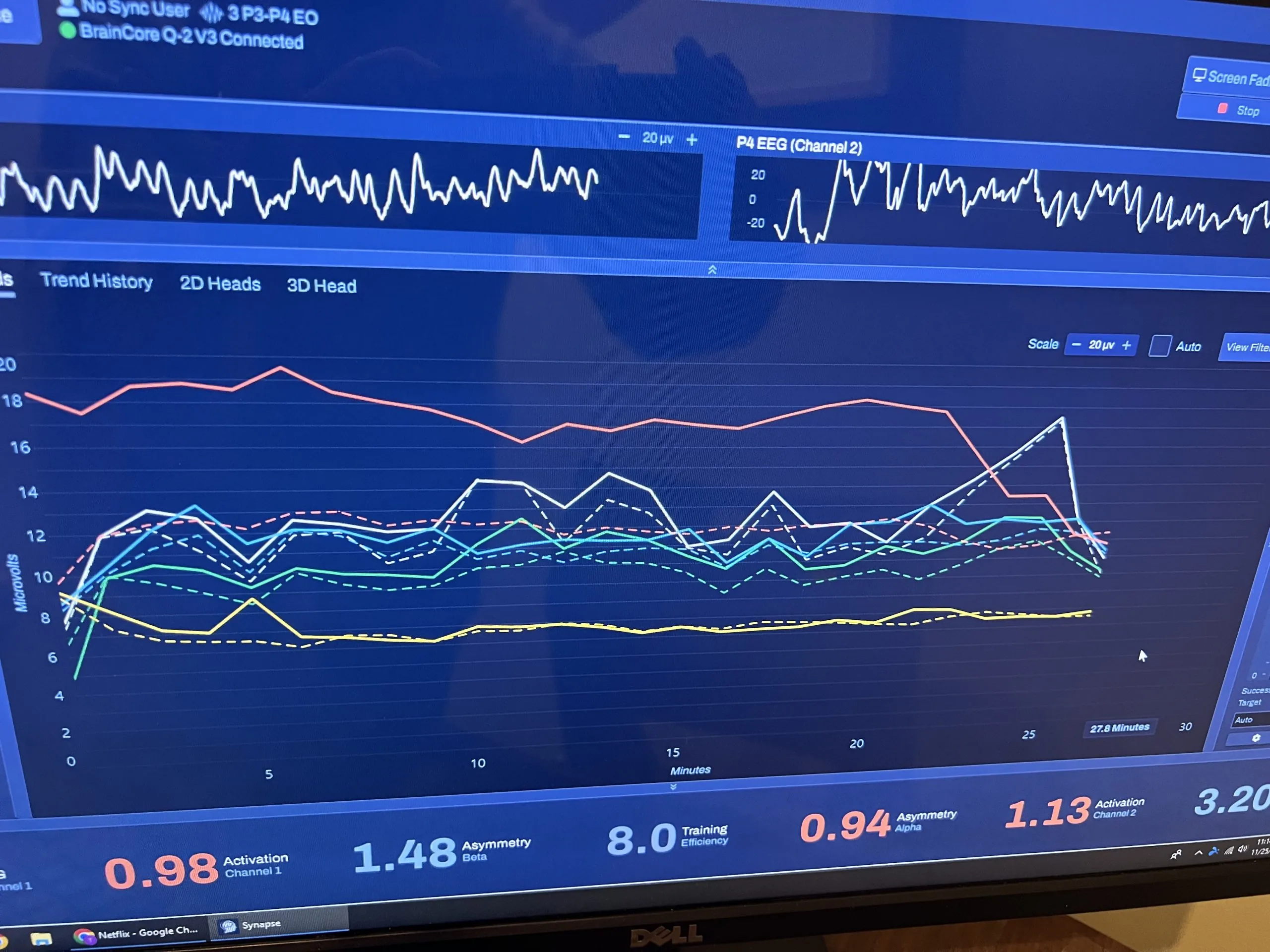
EEG waveforms and multicolored trend lines displayed on a monitor, showing brain activity metrics used in braincore therapy for autism.

Brainwave Patterns Associated with ASD

The brain produces electrical activity in distinct patterns called brainwaves. Different patterns reflect different mental states and different types of brain processing.

Research in ASD consistently shows alterations in these patterns. Many individuals on the spectrum show elevated theta activity, which is associated with inattention and difficulty filtering out irrelevant information. Alpha activity, linked to calm, focused awareness and the ability to relax, is often reduced. Beta activity, associated with active attention and processing, may also be atypical.

Beyond individual frequency patterns, the connectivity between brain regions is often disrupted. Some areas communicate too intensely. Others communicate too weakly. This disrupted connectivity underlies many of the core challenges of ASD, including difficulties with social communication, sensory integration, and emotional regulation.

BrainCore brain mapping identifies these specific patterns for each individual. No two people with ASD have exactly the same neurological picture. The training program is built around what is actually present, not a generic ASD protocol.

How BrainCore Neurofeedback Works

Person seen from behind scratching their neck and upper back.

BrainCore neurofeedback is a learning process. The brain is shown its own activity in real time and rewarded when it produces healthier patterns. Over repeated sessions, those patterns strengthen.

The program begins with brain mapping. Small sensors placed on the scalp record electrical activity across multiple brain regions. Nothing is transmitted into the brain. The sensors only listen. The resulting map shows which patterns are dysregulated and where.

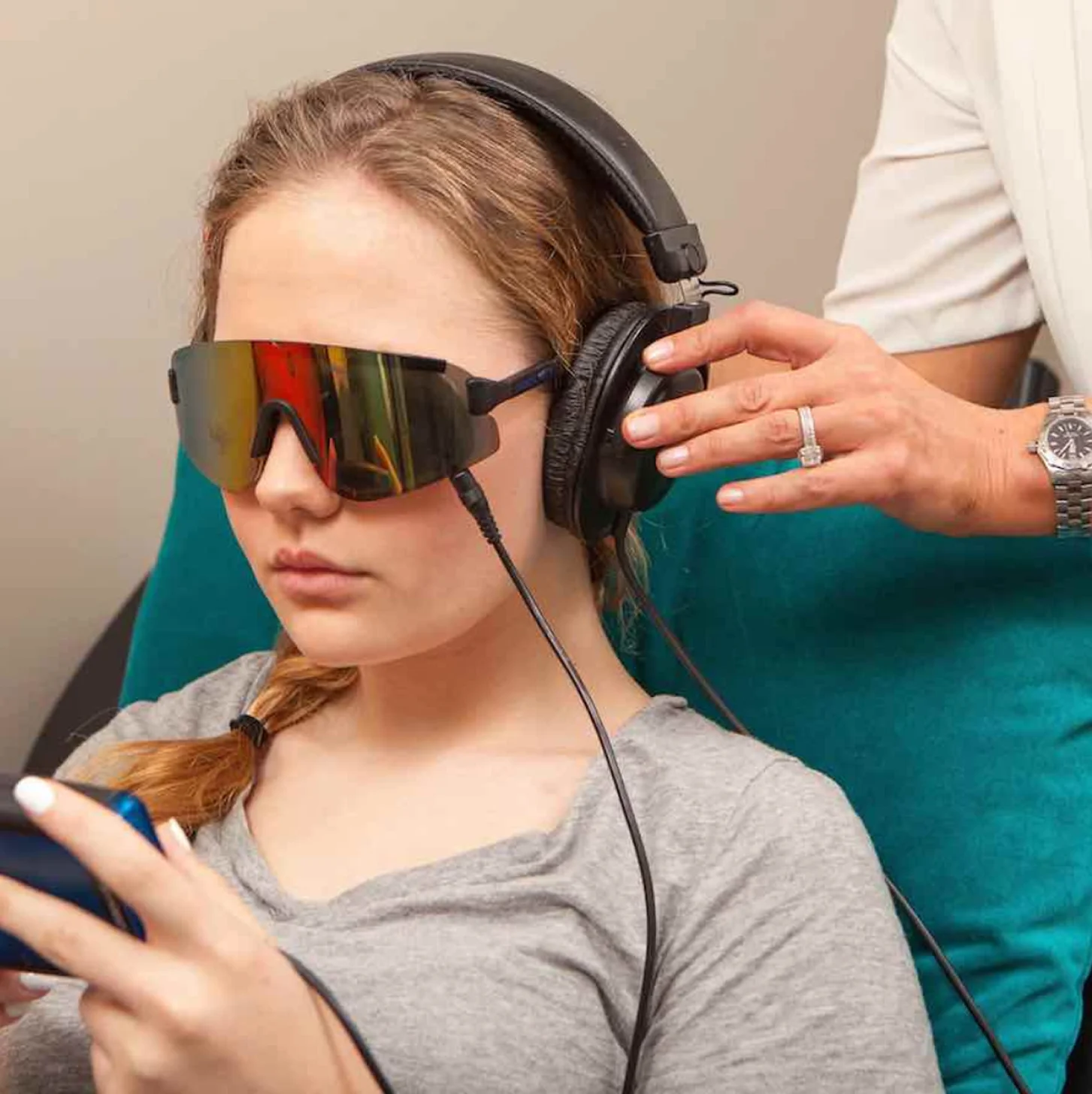
During training sessions, the individual watches a video or plays a simple game. The display responds to their brainwave activity in real time. When the brain produces more balanced patterns, it displays rewards that. When it drifts toward dysregulated patterns, the feedback dims or pauses.

Sessions last about 30 to 45 minutes. They are comfortable, quiet, and drug-free. Many children adapt to the format quickly. Some find the sessions genuinely enjoyable. There is no pain and no side effects.

The brain responds to this feedback the same way it responds to any learning signal. It begins to favor the patterns that produce the reward. Over 20 to 40 sessions, those patterns consolidate. The brain becomes better at self-regulation without ongoing external support.

What Families May Notice After BrainCore Neurofeedback

The improvements families report reflect the areas where dysregulated brain activity most affects daily life. These are changes observed over a course of training, not immediate effects.

Reduced Anxiety and Emotional Outbursts

Anxiety is extremely common in ASD. Overactive brainwave patterns keep the nervous system in a state of chronic stress, lowering the threshold for emotional overwhelm. As those patterns calm with training, many families notice fewer, shorter meltdowns and a quicker return to baseline after difficult moments.

Better Focus and Attention

Elevated theta activity makes it hard to filter out irrelevant information and sustain attention on what matters. As theta patterns normalize, focus often improves. Children who previously struggled to stay on task for more than a few minutes may begin to sustain attention for longer periods, making other forms of learning more productive.

Improved Emotional Regulation

The brain’s ability to manage and recover from emotional experiences depends partly on its regulatory patterns. As brainwave balance improves, emotional responses may become more proportionate. Transitions, changes in routine, and sensory challenges can become more manageable.

What the Research Shows

Neurofeedback has been studied as a support for ASD for more than two decades. The evidence base is growing.

One significant study was conducted by Dr. Robert Coben and Dr. Ilean Padolsky. Their research involved 37 children with autism spectrum disorder. After neurofeedback training, 89 percent of participants showed improved ASD symptom ratings as measured by the ATEC scale, as reported by parents.

The ATEC scale covers a broad range of ASD-related challenges. The study measured improvements in speech, language, communication, sociability, sensory perception, cognitive awareness, physical health, mood, behavior, memory, and focus. Improvements were seen across all of these areas.

Neurofeedback does not cure autism. The research supports it as a meaningful complement to existing treatment, one that may reduce symptom severity and improve daily functioning. That is a realistic and valuable goal.

Gray paper silhouette of a head with colorful crumpled paper balls above it representing thoughts or ideas.

Disclaimer

BrainCore Therapy and neurofeedback services are intended to support overall wellness, brain health, stress management, focus, relaxation, and quality of life. While some individuals may experience improvement in symptoms or functioning, results vary from person to person, and no specific outcome or cure can be guaranteed.

BrainCore Therapy is not intended to diagnose, treat, cure, or prevent any medical or mental health condition. Information provided on this website, during consultations, or throughout care is for educational and wellness purposes only and should not be considered medical advice.

BrainCore Therapy is not a substitute for medical care, psychiatric care, psychological counseling, or treatment provided by a licensed physician, psychiatrist, psychologist, or other qualified healthcare professional. Patients should continue taking prescribed medications unless otherwise directed by their prescribing physician.

If you are experiencing a medical emergency, severe psychiatric symptoms, suicidal thoughts, or any urgent health concern, seek immediate medical attention or contact emergency services.

Always consult your physician or qualified healthcare provider regarding any medical or mental health concerns, diagnoses, medications, or treatment decisions before beginning or changing any healthcare program, including neurofeedback therapy.