



Train the Brain to Regulate Itself

Medication for ADHD may work while it is active. When it wears off, the symptoms potentially return. That is not a flaw in the medication. It is simply what medication does. It manages. It does not train.

BrainCore neurofeedback takes a different approach. Rather than altering brain chemistry from the outside, it trains the brain to regulate itself. Through repeated sessions, the brain learns to produce healthier patterns of activity on its own.

At Balance Atlanta, Dr. Caroline von Fluegge-Chen uses BrainCore Therapy to help children and adults with ADHD and ADD build the focus, impulse control, and calm their brains have struggled to sustain. The American Academy of Pediatrics recognizes neurofeedback as a Level 1 best support for ADHD. The research behind it spans decades.

Request Appointment

How Balance Atlanta Approaches ADHD with BrainCore

Every BrainCore program at Balance Atlanta starts with evaluation rather than assumption. ADHD looks different in every person. The brainwave patterns behind it vary significantly. A protocol that addresses one person’s pattern may not address another’s.

Brain Mapping

The program starts with a BrainCore brain map. Scalp sensors record electrical activity from multiple brain regions. The map shows which frequencies are elevated or suppressed, where the dysregulation is occurring, and which patterns are most likely driving the symptoms. This gives Dr. Caroline a precise starting point rather than a generalized assumption about ADHD.

Personalized Neurofeedback Training

Training sessions are built around the brain map findings. The protocol targets the specific patterns identified as dysregulated for that individual. As training progresses, the map is reviewed, and the protocol is adjusted based on the brain’s response. Progress is tracked rather than assumed.

Sessions Designed for Real Life

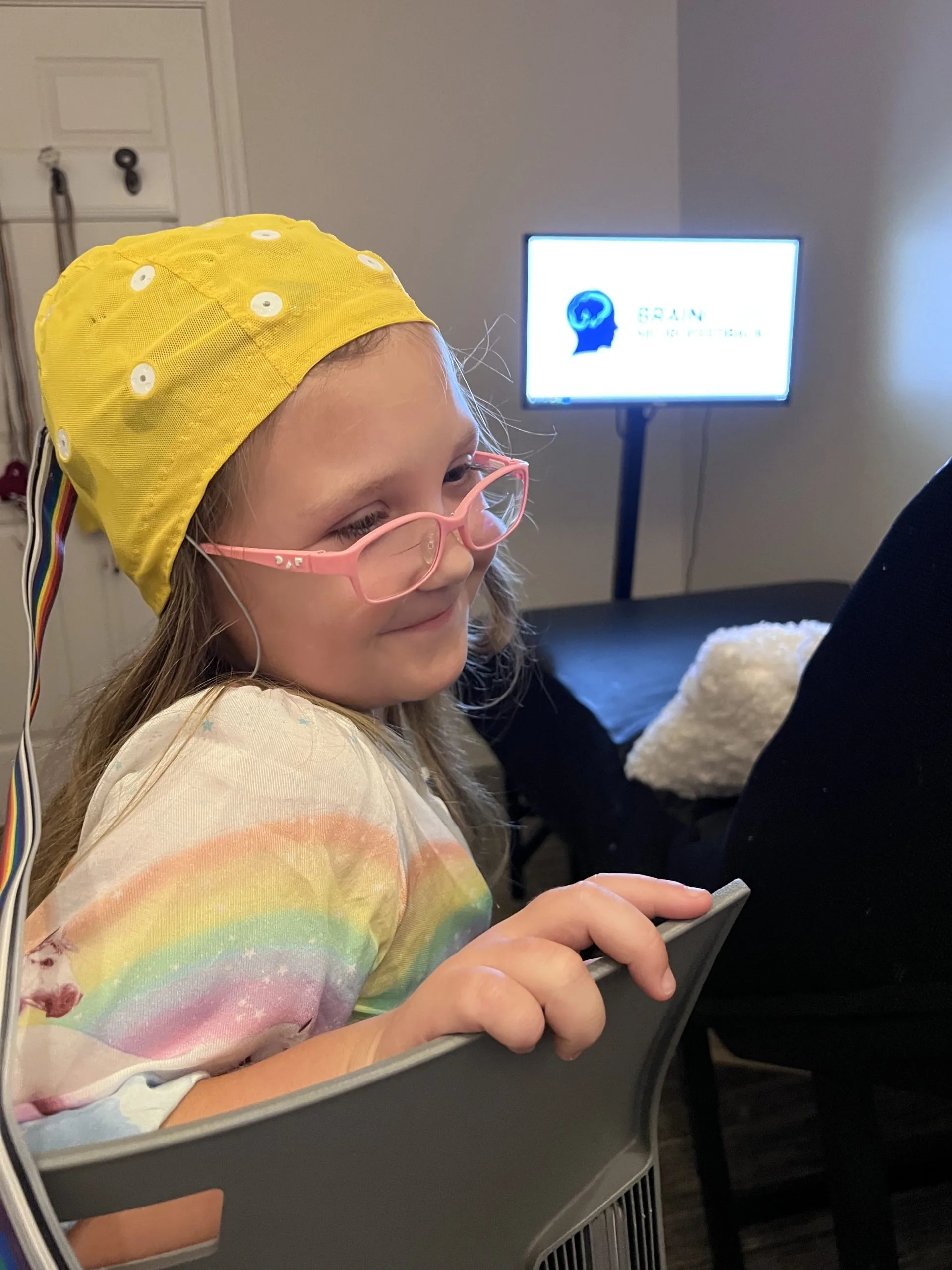
Sessions last 30 to 45 minutes and are structured to be comfortable and engaging. For children, training often feels more like a game than a therapy session. For adults, it fits naturally into a regular schedule. The experience is entirely non-invasive. No equipment is implanted, nothing is sent into the brain, and no medication is involved.

A Program Built for Lasting Change

Most people with ADHD need 20 to 40 sessions for lasting results. Some notice changes within the first 10 to 15 sessions. Settling at bedtime, holding attention longer, and less emotional reactivity are often among the first things people notice. Because neurofeedback works through learning rather than chemical alteration, the changes tend to hold after the program ends. Occasional booster sessions can reinforce results when needed.

Coordination with Other Care

BrainCore can be used on its own or alongside medication, therapy, or other support. Many families use it to complement existing treatment. Others explore it as a step toward reducing medication under medical supervision. Dr. Caroline works with families and adults to build a plan that fits their specific goals.

Why ADHD Is More Than a Behavior Problem

ADHD affects an estimated 10 percent of school-age children in the United States. It continues into adulthood for many of them. It is a pattern of brain activity that makes sustained attention, impulse control, and behavioral regulation genuinely harder than they are for most people.

It is not a discipline problem. The child who cannot sit still is not choosing to be difficult.
It is not a sign of low intelligence. The adult who loses focus in meetings is not being careless.
It is not poor motivation. These brains are simply working differently, and that difference is measurable.
Man kneeling with his arm around a young girl, both smiling in a clinic treatment room with therapy equipment visible.

Standard treatment focuses primarily on stimulant medication.

Medication can be effective, but it addresses symptoms only while it is in the system. Many families and adults want something that goes further. BrainCore neurofeedback addresses the brainwave patterns that drive ADHD symptoms directly. The changes it produces are neurological, not chemical.

Child wearing a yellow EEG cap with sensor leads, wearing pink glasses and holding a device, with a monitor showing a brain logo in the background.

What is ADD and ADHD?

ADHD, or Attention Deficit Hyperactivity Disorder, is a neurodevelopmental condition. It affects the ability to sustain attention, control impulses, and regulate activity level.

ADD is an older term still widely used. It describes presentations where inattention is the main feature and hyperactivity is less obvious. Both fall under the ADHD umbrella in current clinical language. For practical purposes, the distinction matters less than understanding what is happening in the brain.

ADHD presents differently from person to person. Some people are visibly restless and impulsive. Others appear quiet while their attention drifts constantly. Some struggle mostly in structured settings, such as classrooms or offices. Others find most environments difficult.

What connects all presentations is the underlying neurology. The brain regions responsible for planning, focus, emotional regulation, and follow-through are not communicating as efficiently as they should. That inefficiency shows up in the brain’s electrical activity patterns. Those patterns are measurable. And they are trainable.

The Brainwave Patterns Behind ADHD

The brain produces electrical activity in distinct frequency patterns. Different frequencies reflect different mental states.

Beta waves are faster frequencies. They are linked to focus, alertness, and active thinking. Theta waves are slower. They are associated with daydreaming, distraction, and drifting attention.

Research consistently shows that many people with ADHD produce too much slow theta activity and too little fast beta activity in the brain regions responsible for attention. The brain defaults toward distraction rather than focus. Effort alone cannot fully compensate because the underlying pattern keeps pulling attention away.

There is a second pattern worth knowing about. Some people with ADHD also have excessive fast-wave activity in certain brain regions. This produces racing thoughts, impulsivity, and a mind that will not quiet down. The brain is not just understimulated. Parts of it are overactive.

This is why ADHD looks so different from person to person. It is also why stimulant medication helps some people and worsens symptoms in others. The actual pattern of dysregulation varies. BrainCore brain mapping identifies which patterns are present before any training begins. The program is then built around what that specific brain actually shows, not a standard ADHD template.

How BrainCore Neurofeedback Works

BrainCore neurofeedback is a training process. The brain is shown its own activity in real time and rewarded when it produces healthier patterns. Over sessions, those patterns strengthen. The brain learns to sustain them on its own.

The process starts with brain mapping. Small sensors are placed on the scalp to record electrical activity. Nothing is transmitted into the brain. The sensors only listen. The map shows which brainwave patterns are dysregulated and where, giving a clear picture of what needs to change.

During training sessions, the person watches a video or plays a simple game. The display responds directly to their brainwave activity. When the brain produces focus-related patterns, the game rewards that. When attention drifts toward less productive patterns, the feedback dims or pauses.

Sessions last about 30 to 45 minutes. They are comfortable, non-invasive, and for children, often genuinely enjoyable. There is no pain, no medication, and no side effects.

This process works through neuroplasticity. That is the brain’s natural ability to reorganize itself based on experience. It is the same mechanism behind learning any skill. And like any learned skill, the results tend to hold after training ends.

What BrainCore Neurofeedback Addresses

ADHD affects attention, behavior, and daily functioning across every area of life. The following patterns reflect what neurofeedback training is designed to support.

Difficulty Sustaining Attention

Struggling to stay focused on tasks, conversations, or instructions. Losing the thread of what is being said or read. Starting things without finishing them. These are the most consistent symptoms of ADHD and reflect the underlying imbalance between theta and beta activity.

Impulsivity

Acting or speaking before thinking. Interrupting others. Making decisions without considering consequences. Impulsivity creates social and academic difficulties that compound over time.

Hyperactivity and Restlessness

An inability to stay still, or a constant sense of internal restlessness, even when external movement is controlled. For some people, this is visible. For others, it shows up as a racing mind that will not slow down.

Why Choose Balance Atlanta for ADHD Neurofeedback

Neurofeedback for ADHD is not a new idea. It has been studied for decades. The American Academy of Pediatrics endorses it as a Level 1 best support for ADHD, the same level as medication and behavioral therapy. More than four decades of research support its use in improving attention, reducing impulsivity, and calming hyperactivity.

BrainCore Therapy uses clinical-grade brain mapping and structured protocols within a defined program framework. It is not a general biofeedback tool applied loosely. The assessment identifies the specific dysregulated patterns. The program targets them.

ADHD does not exist in isolation. Nutrition, gut health, sleep quality, and nervous system function all affect how the brain regulates attention and behavior. Balance Atlanta combines BrainCore neurofeedback with functional medicine and chiropractic care. The full picture of what is affecting brain function can be addressed in one practice.

Person seated on an exam table in a clinic treatment room wearing a pink sweater; cabinets, anatomy models, and a framed floral print visible.

Common Questions

Have questions? We have honest answers.

We understand you’ve already been through the system—appointments, mixed answers, and limited results.That’s why Balance Atlanta takes a different approach, focusing on root causes, not just symptoms


Every plan is personalized, with clear guidance and honest communication at every step. The goal is simple: real, lasting improvements in how you feel and function every day.

Request Appointment
  • What is ADHD, and how is it different from ADD?

    ADHD stands for Attention Deficit Hyperactivity Disorder. It is a neurodevelopmental condition that affects focus, impulse control, and behavioral regulation. It is one of the most commonly diagnosed conditions in children and continues into adulthood for many people.

    ADD is an older term. It describes presentations in which inattention is the main feature, with hyperactivity less prominent. Both fall under the ADHD umbrella in current clinical language. For practical purposes, the distinction matters less than understanding what is actually happening in the brain.

    Neither ADHD nor ADD reflects low intelligence, poor character, or inadequate parenting. Both reflect measurable differences in how the brain regulates attention, impulse, and behavior. Those differences respond to training.

  • How does ADHD relate to brainwaves?

    The brain produces electrical activity in distinct frequency bands. Beta waves are faster and are linked to focus and active thinking. Theta waves are slower and are associated with daydreaming and drifting attention.

    Research consistently shows that many people with ADHD produce too much slow theta activity and too little beta activity in the brain regions responsible for attention. The brain defaults toward distraction. Effort helps, but it cannot fully override a pattern that keeps pulling attention away.

    A second pattern is also common. Some people with ADHD have excessive fast-wave activity in certain regions. This produces racing thoughts and impulsivity. The brain is not just understimulated. Parts of it are overactive simultaneously.

    This explains why ADHD looks so different across individuals. It is also why stimulant medication helps some people and worsens symptoms in others.

    BrainCore brain mapping identifies which patterns are present before any training begins. The program is built around those specific findings, not a generic ADHD assumption.

  • How can BrainCore neurofeedback help with ADHD?

    BrainCore trains the brain to produce healthier activity patterns through real-time feedback and reward. During sessions, the brain receives an immediate signal when it generates focus-related patterns. Over repeated sessions, those patterns strengthen and become more automatic.

    The mechanism is neuroplasticity. That is the brain’s natural ability to reorganize itself based on experience. Because the improvements come from the brain learning rather than a chemical managing it, they tend to persist after the program ends.

    In practical terms, people who complete a BrainCore program commonly report improvements in sustained attention, impulse control, emotional regulation, sleep, and daily functioning. The degree varies by individual, but the direction is consistent across research and clinical experience.

  • Is BrainCore neurofeedback safe for children?

    BrainCore neurofeedback is non-invasive and has no side effects. Small sensors placed on the scalp record the brain’s electrical activity. Nothing is transmitted into the brain. The sensors only listen.

    Training sessions use video games or animations that respond to the child’s brainwave activity. Most children find this engaging rather than clinical. The process is entirely comfortable. There is no pain, no medication, and no risk of adverse reactions.

    The American Academy of Pediatrics classifies neurofeedback as a Level 1 best support for ADHD, the same level as medication and behavioral therapy. For families who want a drug-free option, or who want to complement existing treatment, this is a clinically supported choice.

  • Can adults with ADHD benefit from BrainCore?

    The brain retains its capacity for change throughout life. Adults who complete BrainCore programs commonly report improvements in work performance, sustained focus, organization, emotional regulation, and mental clarity.

    Many adults with ADHD have spent years developing workarounds that take enormous effort to maintain. Neurofeedback reduces the neurological burden that makes those compensations necessary. When the brain regulates itself more effectively, daily function becomes less effortful.

    Adults often notice improvements in starting and completing tasks, following through on commitments, and managing the frustration that comes with executive function difficulties. Many report that relationships and work performance improve as the program progresses.

  • How many sessions are needed?

    Most people with ADHD need between 20 and 40 sessions for lasting results. That range reflects how severe the underlying dysregulation is and how the individual brain responds to training.

    Some people notice changes within the first 10 to 15 sessions. Settling at bedtime, holding attention longer, and less emotional reactivity are often the first things people notice. These are early signs that the brain is responding. They are not the end of the process.

    Consistency matters. Each session builds on the last. Gaps in the schedule slow progress because the brain needs regular feedback to consolidate what it is learning. Once the program is complete and the new patterns are established, they tend to hold over time. Occasional booster sessions are available if life changes create some regression.

  • What happens during a BrainCore session?

    A session begins with the placement of small sensors on the scalp. This takes a few minutes and is comfortable. The sensors record brainwave activity. Nothing is transmitted into the brain.

    The person then watches a video or plays a computer game that responds in real time to their brain activity. When the brain produces patterns associated with focus and calm, it displays rewards that. When less productive patterns emerge, the feedback dims or pauses.

    The brain responds to this signal the same way it responds to any feedback. It gradually learns to favor the patterns that produce the reward.

    Sessions last about 30 to 45 minutes. For children, the experience typically feels more like a game than a medical appointment. Most people find sessions comfortable, and many find them relaxing.

  • How does BrainCore compare to ADHD medication?

    Medication and neurofeedback work through different mechanisms. Understanding the distinction helps families and adults make informed decisions.

    Stimulant medication increases the availability of dopamine and norepinephrine in the brain. This improves focus and reduces hyperactivity while the medication is active. When it wears off, symptoms return. For many people, this works well. For others, side effects or a desire to reduce chemical dependence create reasons to look further.

    BrainCore trains the brain’s own regulatory mechanisms. It does not alter brain chemistry directly. It teaches the brain to produce healthier patterns of electrical activity through learning. Because the changes are neurological rather than chemical, they tend to persist after training ends.

    The two approaches are not mutually exclusive. Many families use neurofeedback alongside medication. Others use it as a standalone approach. Some use it with the goal of reducing medication dose over time under medical supervision. The right choice depends on the individual, their history, and their goals.

  • Are the results from BrainCore permanent?

    The improvements from BrainCore tend to be long-lasting. They come from the brain learning, not from a substance managing it. Once the brain has practiced and consolidated healthier regulatory patterns, it tends to maintain them. Think of it like learning to ride a bike. The skill stays even when you stop practicing.

    Significant life stressors, illness, or major changes can sometimes disrupt progress. Occasional booster sessions are available and can be useful for reinforcing results. Most people who complete a full program report that their gains hold well over time.

  • Is BrainCore neurofeedback supported by research?

    Neurofeedback has been studied as a support for ADHD for more than four decades. Research shows consistent improvements in attention, impulse control, and hyperactivity in both children and adults.

    The American Academy of Pediatrics classifies neurofeedback as a Level 1 intervention for ADHD. That puts it at the same level of evidence as medication and behavioral therapy. This classification reflects the breadth and consistency of the research.

    BrainCore applies these principles within a structured, protocol-driven program that begins with individual brain mapping. Results vary by person and depend on consistency and the degree of underlying dysregulation. The foundation is evidence-based. And the AAP endorsement gives families meaningful assurance when evaluating their options.

Disclaimer

BrainCore Therapy and neurofeedback services are intended to support overall wellness, brain health, stress management, focus, relaxation, and quality of life. While some individuals may experience improvement in symptoms or functioning, results vary from person to person, and no specific outcome or cure can be guaranteed.

BrainCore Therapy is not intended to diagnose, treat, cure, or prevent any medical or mental health condition. Information provided on this website, during consultations, or throughout care is for educational and wellness purposes only and should not be considered medical advice.

BrainCore Therapy is not a substitute for medical care, psychiatric care, psychological counseling, or treatment provided by a licensed physician, psychiatrist, psychologist, or other qualified healthcare professional. Patients should continue taking prescribed medications unless otherwise directed by their prescribing physician.

If you are experiencing a medical emergency, severe psychiatric symptoms, suicidal thoughts, or any urgent health concern, seek immediate medical attention or contact emergency services.

Always consult your physician or qualified healthcare provider regarding any medical or mental health concerns, diagnoses, medications, or treatment decisions before beginning or changing any healthcare program, including neurofeedback therapy.