


Pinched Nerve

Pinched Nerve Treatment

A pinched nerve produces a very specific kind of discomfort that is hard to mistake for anything else. The sharp shooting pain down your arm, the tingling in your leg that comes and goes without explanation, the numbness that makes part of your hand feel like it belongs to someone else. These are not general aches. They are precise signals from your nervous system telling you that something is compressing a nerve somewhere along its path.

The tricky part is that where you feel the symptom is rarely where the problem originates. A nerve being compressed in the neck can cause pain and tingling that radiates down into the fingers. A nerve irritated in the lower back can send sensations into the foot. This is why treating the location of the symptom without identifying the source tends to produce only short-term relief. The nerve needs the pressure removed, which means identifying exactly where and why the compression is occurring.

The problem is that most treatments address the pain without removing the pressure. Medication reduces how much you feel. The compression stays. The symptoms come back because the cause was never treated.

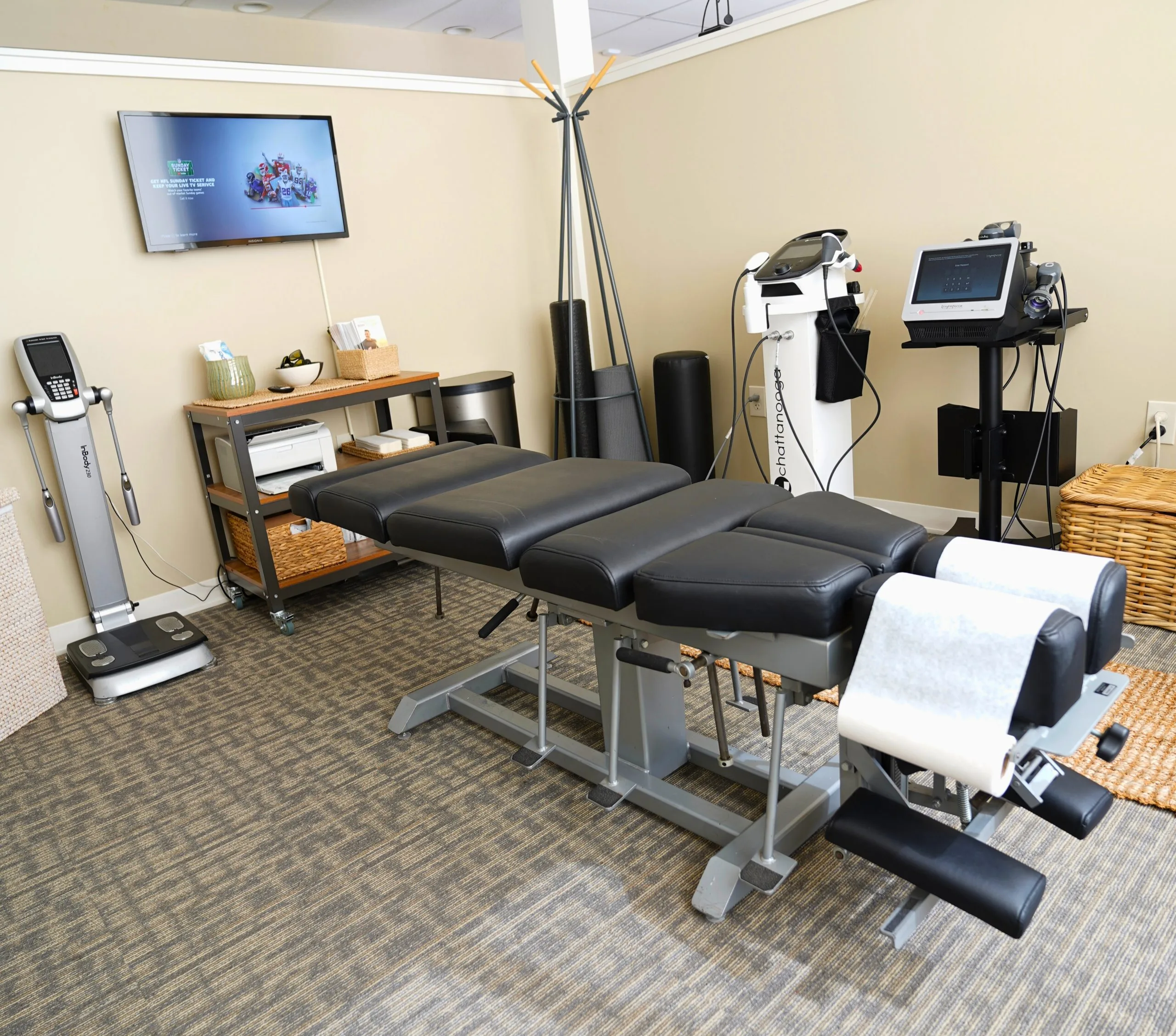
At Balance Atlanta, Dr. Caroline von Fluegge-Chen finds exactly where the nerve is being pressed. She then uses spinal decompression, chiropractic adjustments, Class IV laser therapy, and trigger point work to remove that pressure. When the pressure is gone, the nerve can heal. That is when the symptoms actually stop.


Request Appointment

How Common are Pinched Nerves?

About 20 percent of adults will experience a pinched nerve at some point. Among people with neck pain, between 2 and 4 percent have a pinched nerve. Among people with low back pain, that rises to 6-12 percent. About 60 percent of people with a herniated disc experience pinched nerve symptoms.

These numbers matter because they show how often nerve pain is connected to spinal problems. The spine is where most pinched nerves originate. Discs that bulge, joints that are stiff, muscles that are in spasm, all of these can press on a nerve as it exits the spine.

That is why treatments that focus only on the site of pain rarely produce lasting results. The pressure is usually somewhere else. Finding it is what makes treatment work.

What is a Pinched Nerve?

Your nerves carry signals between your brain and the rest of your body. They tell your muscles to move. They carry sensations like touch, temperature, and pain. When a nerve is working normally, you do not notice it at all.

A pinched nerve happens when something presses on the nerve from the outside. That pressure squeezes the nerve and disrupts its signals. You experience this as pain, tingling, numbness, or weakness, depending on which nerve is affected and how severely it is being compressed.

The pressure can come from a disc that has bulged out of its normal position. It can come from a bone spur, a small bony growth the body forms in response to wear. It can come from tight muscles pressing on the nerve from the side. It can come from a joint that is out of alignment, narrowing the space the nerve passes through.

The type of pressure determines the right treatment. This is why a thorough evaluation matters more than a generic approach.

Request Appointment

Where Pinched Nerves Happen

In the Neck

A nerve in the neck that is being pressed on sends pain, tingling, or numbness into the shoulder, arm, or hand. You might feel it as a sharp shooting pain down the arm, weakness when gripping something, or fingers that feel constantly numb. Turning your head may make it worse. This is one of the most common presentations Dr. Caroline evaluates.

In the Lower Back

A nerve in the lower back that is compressed sends pain down through the buttock and into the leg. This is called sciatica. The pain can be sharp, burning, or electric. It might reach all the way to the foot. Sitting often makes it worse. Standing or walking sometimes provides temporary relief.

In the Upper Back

Less common, but a compressed nerve in the mid-back can cause pain or a band of discomfort that wraps around the ribcage. It is sometimes mistaken for a lung or heart issue.
Two people taking a close selfie in a clinic reception area with decorative starburst wall art during a chiropractic visit.

What a Pinched Nerve Feels Like

The symptoms depend on which nerve is affected and how much pressure is on it. These are the most common patterns.

Sharp, Shooting Pain

Pain that travels along the path of the nerve is often described as electric, burning, or shooting. It tends to follow a predictable line, like down the arm or down the leg.

Tingling or Pins and Needles

A constant or intermittent sensation, often in the hand, arm, foot, or leg. Many people describe waking up with tingling that does not go away. This reflects the disrupted signal from the compressed nerve.

Numbness

A loss of feeling in a specific area. The hand may feel partially asleep. A section of the leg or foot may feel distant. Numbness is a sign that the nerve compression is more significant and warrants prompt evaluation.

Muscle Weakness

Difficulty gripping, dropping things, or noticing that one arm or leg feels weaker than the other. This reflects the nerve's reduced ability to send clear signals to the muscles it controls.

Pain That Worsens with Certain Positions

Sitting often worsens lower back nerve pain. Turning the head to one side often worsens neck nerve pain. Identifying which positions make symptoms worse or better helps pinpoint where the compression is occurring.

Symptoms That Come and Go

Early-stage nerve compression often produces intermittent symptoms. The nerve is being irritated but not yet severely compressed. Intermittent symptoms that are getting more frequent or lasting longer are a sign that the compression is increasing and the right time to seek care.

Request Appointment

Biological Contributors to Anxiety and Depression

Mood disorders rarely develop from a single cause. The following biological factors are among the most common and most consistently overlooked contributors.

A Bulging or Herniated Disc

The discs between your vertebrae act as cushions. They have a tough outer layer and a soft center. When the outer layer weakens or cracks, the soft center can push outward and press on a nearby nerve. This is one of the most common causes of pinched nerve pain in both the neck and lower back.

Bone Spurs

Over time, the body sometimes forms small bony bumps near joints in response to wear and stress. These are called bone spurs. They can narrow the space where nerves exit the spine, squeezing the nerve as it passes through.

A Narrowing Spinal Canal

Some people develop a condition where the canal that runs through the spine gradually narrows. This puts pressure on the nerves inside it. It tends to develop slowly and is more common in older adults.

Tight or Spasming Muscles

A muscle that is in spasm or chronically tight can press directly on a nerve. This is common in the neck and lower back. Stress, poor posture, overuse, and old injuries all contribute to chronic muscle tension that irritates nerves.

Man seated on a couch holding his right shoulder and neck while wearing glasses and a light blue shirt

Misaligned Joints

When a vertebra is slightly out of its normal position, it can reduce the space that the nearby nerve passes through. Even small misalignments create ongoing nerve irritation. This is why chiropractic adjustments are often one of the most effective treatments for pinched nerves.

Injury or Accident

A car accident, fall, or sports injury can shift a disc, strain the surrounding muscles, or shift a vertebra enough to press on a nerve. Sometimes the symptoms appear immediately. Other times they develop days after the incident.

Repetitive Stress

The same motion repeated hundreds of times a day, or holding the same position for hours, gradually creates wear on the structures around the nerve. Desk workers, drivers, and people in physically demanding jobs are all at higher risk for this type of nerve compression.

Poor Posture

Slouching, forward head posture from screen use, and sitting with a rounded lower back all compress the spine over time. This narrows the spaces where nerves exit and creates the chronic pressure that leads to nerve symptoms.

How Balance Atlanta Treats Pinched Nerves

Every care plan starts with a thorough evaluation. Dr. Caroline checks your spine, posture, and nerve function. She performs specific tests to narrow down the source of the compression. Treatment is built around what the exam actually shows.

Spinal Decompression Therapy

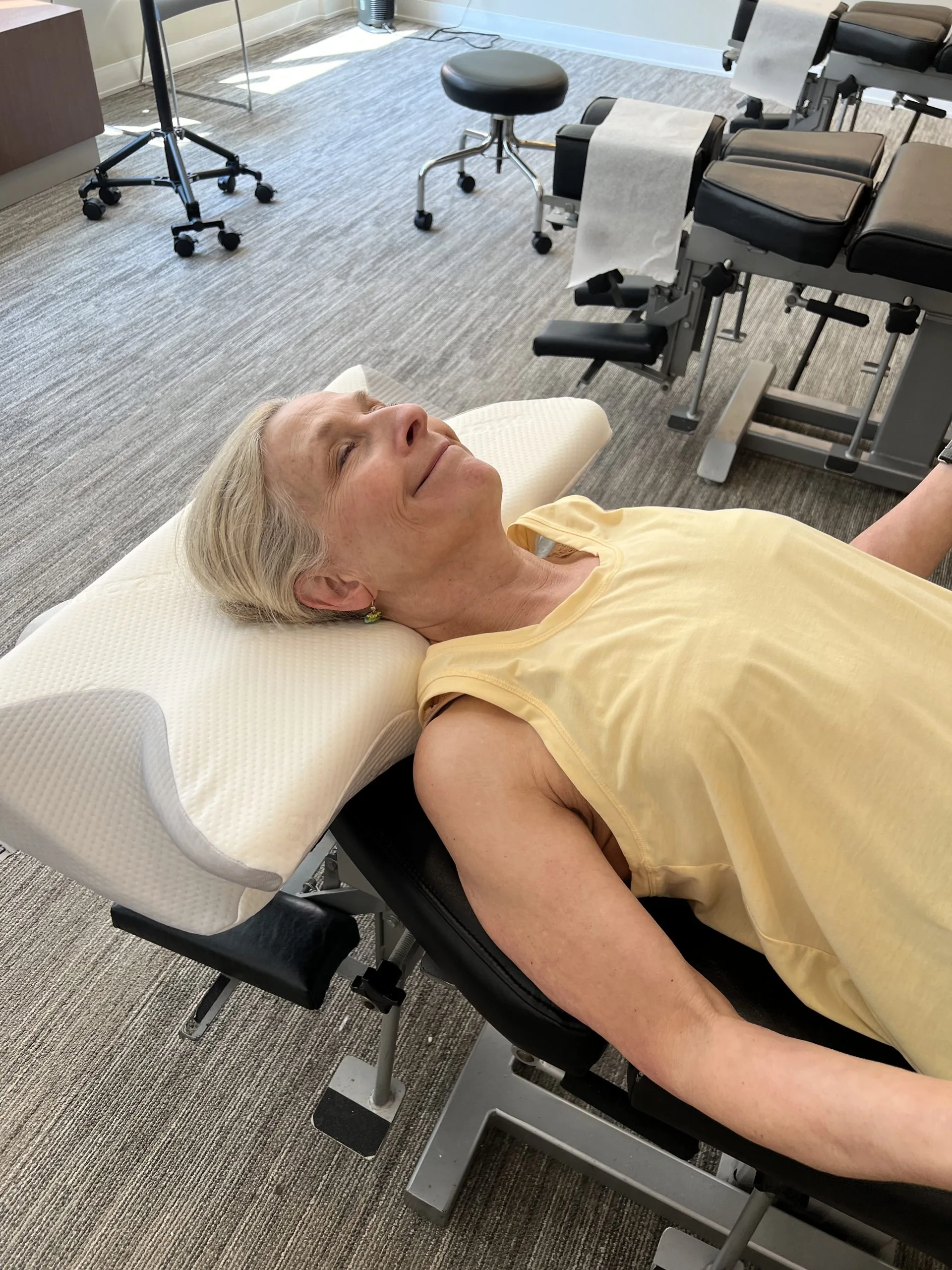
This is one of the most effective non-surgical treatments for a nerve being pressed on by a disc or a narrowed joint space. The treatment gently stretches the spine in a controlled way. This creates a small amount of negative pressure in the disc space. That draws the disc material back toward its normal position and takes pressure off the nerve. It is painless. Most sessions take about 30 minutes. Many patients notice a reduction in leg or arm symptoms within the first several sessions.

Chiropractic Adjustments

When a vertebra is out of its normal position, a precise adjustment moves it back. This restores the nerve’s normal space and removes the mechanical irritation that was pressing on it. Adjustments for pinched nerves are always gentle and carefully targeted. The technique used depends on the location of the compression and the individual patient. Some people need light, instrument-assisted methods. Others do well with a more direct approach.

Class IV Laser Therapy

When a nerve is compressed for any length of time, the surrounding tissue becomes inflamed. That inflammation increases pressure and slows healing. Laser therapy uses focused light energy to reduce that inflammation directly, deep in the tissue, without medication and without pain. It also speeds up the repair process within the damaged nerve tissue. Laser therapy works best alongside decompression and adjustments because reducing inflammation helps those treatments produce better results.

Trigger Point Therapy

Tight muscle knots near the spine can press on nerves from the side. They also reduce blood flow to the area, which slows healing. Direct manual pressure on these knots releases them. This takes pressure off the nerve, improves circulation, and reduces the overall tension that has been maintaining the problem. For many patients, releasing the key muscle knots around the compressed nerve produces a noticeable reduction in symptoms relatively quickly.

Postural Correction

If poor posture is contributing to the compression, correcting it prevents the problem from returning. Dr. Caroline gives you specific exercises to improve your posture and guidance on how to set up your daily environment, desk, sleeping position, and driving posture in ways that prevent the pressure from recurring.

Stretching and Strengthening

Specific stretches reduce the muscle tension that is compressing the nerve. Strengthening the muscles that support the spine reduces the amount of stress on the discs and joints in the first place. Dr. Caroline builds a home program designed around your specific situation, not a generic routine.

Request Appointment

Why Choose Balance Atlanta for Pinched Nerve Treatment?

Finding the Source, Not Just Treating the Symptoms

Pain medication reduces how much you feel the compression. It does not remove it. The nerve stays squeezed. The symptoms come back. Dr. Caroline’s evaluation identifies exactly where the nerve is being pressed and what is pressing on it. Treatment addresses that specific source.

Spinal Decompression as the Foundation

Most practices offer adjustments as the primary treatment for pinched nerves. Spinal decompression is more targeted for disc-related compression. It directly reduces the disc pressure that is squeezing the nerve. For patients with a herniated or bulging disc, it is often what produces the most significant improvement.

Four Treatments That Each Do Something Different

Decompression relieves pressure on the disc and the nerve. Laser reduces the inflammation that adds to the compression. Adjustments correct joint misalignment, allowing compression to occur. Trigger point therapy releases the muscle tension pressing on the nerve from the side. Together, they address the full picture of what is causing the symptoms.

No Surgery, No Injections

Most pinched nerves do not require surgery. Surgery has real risks and a significant recovery period. The approach at Balance Atlanta in Buckhead gives you a credible non-surgical option. Many patients who were considering injections or were told surgery might be needed find lasting relief through this combination of treatments.

A Plan for Long-Term Recovery

Postural correction, strengthening, and ergonomic changes are built into the care plan. These protect the recovery you achieve in treatment and reduce the chances of the nerve being compressed again. The goal is not just to feel better right now. It is to stay better.

Common Questions

Have questions? We have honest answers.

We understand you’ve already been through the system—appointments, mixed answers, and limited results.That’s why Balance Atlanta takes a different approach, focusing on root causes, not just symptoms


Every plan is personalized, with clear guidance and honest communication at every step. The goal is simple: real, lasting improvements in how you feel and function every day.

Request Appointment
  • What is a pinched nerve?

    A pinched nerve happens when something presses on a nerve from the outside. The pressure disrupts the nerve’s signals. Depending on where it is and how compressed it is, you might feel sharp pain, tingling, numbness, or muscle weakness. The pain often travels along the nerve pathway, which is why it shows up in the arm, leg, or foot, even when the actual problem is in the spine.
  • What causes a pinched nerve?

    The most common causes are a disc that has moved out of its normal position and is pressing on a nerve, a joint that is out of alignment and narrowing the space the nerve passes through, tight muscles pressing on the nerve from the side, or small bony growths from years of wear. Poor posture, repetitive movements, old injuries, and accidents can all trigger or worsen nerve compression.
  • How do I know if I have a pinched nerve?

    The hallmark is symptoms that follow a specific path. Sharp or burning pain that travels from the neck into the arm, or from the lower back down the leg. Tingling in the hand or foot. Numbness in a specific part of the arm or leg. Muscle weakness on one side. These patterns strongly suggest that a nerve is being compressed somewhere along its path. Dr. Caroline uses physical and neurological testing to pinpoint exactly where the compression is happening. Knowing the source is what makes treatment effective.
  • Can a pinched nerve heal without surgery?

    In most cases, yes. Surgery for a pinched nerve is usually considered only when conservative treatment has genuinely not worked and when the nerve is significantly damaged. The majority of patients respond well to spinal decompression, adjustments, and laser therapy. These treatments relieve pressure and provide the nerve with the conditions it needs to heal on its own. If you have been told surgery might be necessary and have not yet tried spinal decompression combined with the other treatments available at Balance Atlanta, an evaluation is worth the time before making that decision.
  • What does spinal decompression do for a pinched nerve?

    Spinal decompression gently stretches the spine to create space between the vertebrae. This reduces the pressure on the disc that is pressing on the nerve. The disc material is drawn back toward its normal position. The nerve has more room and less pressure. It is not a dramatic treatment. It is slow, gentle, and controlled. Most people find it comfortable. The results build over a course of sessions. For disc-related nerve compression in the neck or lower back, it is one of the most effective non-surgical treatments available.
  • How does laser therapy help a pinched nerve?

    When a nerve is compressed, the surrounding tissue becomes inflamed. That inflammation increases pressure and makes the nerve more sensitive. Laser therapy uses light energy to reduce that inflammation directly in the tissue. It also helps the nerve tissue itself repair more quickly. It is painless, and the sessions are short. It works best as part of a combination plan because reducing inflammation makes the other treatments more effective and speeds up recovery.
  • Can lifestyle changes help a pinched nerve?

    Yes, significantly. Sitting with better posture, taking regular breaks from screens, avoiding positions that worsen symptoms, and doing the specific stretches and exercises Dr. Caroline recommends all reduce pressure on the nerve between treatment sessions. Sleep position also matters. Dr. Caroline provides guidance on all of these as part of your care plan.
  • How long does recovery take?

    It depends on how long the nerve has been compressed and how severe the compression is. Some people notice improvement within the first few sessions. More chronic or severe cases typically take four to eight weeks of consistent care to see meaningful lasting change. Dr. Caroline sets realistic expectations for your first visit based on the evaluation findings.
  • When does a pinched nerve need emergency attention?

    Most pinched nerve symptoms, while painful and uncomfortable, are not emergencies. But the following symptoms require immediate medical evaluation. Loss of bladder or bowel control. Rapid and severe leg weakness. Numbness in the groin or inner thighs. These can indicate serious spinal cord involvement that needs urgent attention. For everything else, earlier treatment produces better outcomes. The longer a nerve stays compressed, the more difficult it becomes to fully reverse the damage.