Carpal Tunnel

Carpal Tunnel Syndrome and Wrist Pain Treatment

Chiropractor's hands on a patient's upper back and neck performing a manual adjustment focused on the shoulders and base of the neck.

That tingling in your fingers at night, the numbness that wakes you up, the grip that just doesn’t feel right anymore. It’s easy to assume something is wrong with your wrist. But these aren’t wrist symptoms. The nerves from your neck may be causing the discomfort.

The median nerve runs from the cervical spine through the shoulder, elbow, and forearm before passing through the carpal tunnel in your wrist. Compression anywhere along that path can produce symptoms that look and feel exactly like carpal tunnel syndrome. Treating only the wrist, which is what most approaches do, is why so many people get partial relief and then the symptoms come back.

At Balance Atlanta in Buckhead, Dr. Caroline von Fluegge-Chen evaluates the full nerve pathway. She uses chiropractic adjustments, Class IV laser therapy, radial pressure shockwave therapy, cervical spinal decompression, and trigger point work to address what is actually compressing the nerve. The goal is lasting relief, not another round of bracing.

Request Appointment

Why Carpal Tunnel Keeps Coming Back

Carpal tunnel syndrome is one of the most common nerve compression conditions in the United States. It affects an estimated 4 to 10 million Americans. Women are three times more likely to develop it than men, partly because the carpal tunnel is anatomically smaller in women.

Most people try bracing, rest, anti-inflammatories, or cortisone injections. These can reduce symptoms temporarily. They do not fix the underlying nerve compression. When the brace comes off or the injection wears off, the pressure on the nerve remains.

What produces lasting relief is identifying where along the nerve pathway compression is actually occurring and treating those specific locations. That requires evaluating more than just the wrist.

Request Appointment

What Causes Carpal Tunnel and Wrist Pain

Wrist pain and hand symptoms can develop from several different sources, sometimes in combination. Understanding which ones apply to your situation is the starting point for effective treatment.

Repetitive Strain

Typing, mouse use, assembly work, gripping tools, sewing, or any repetitive hand motion puts ongoing stress on the tendons, muscles, and soft tissues around the wrist. Over time, this causes inflammation inside the carpal tunnel, increasing pressure on the median nerve. It accumulates gradually, which is why people are often surprised when symptoms appear.

Poor Wrist Position

Bending or extending the wrist for extended periods, common during computer work, sleeping with the wrist curled, or certain manual tasks, narrows the carpal tunnel and increases nerve pressure. Even small adjustments in wrist position can significantly change how much stress the median nerve is under throughout the day.

Cervical Spine Compression

This is the most commonly missed contributor to carpal tunnel symptoms. The median nerve originates in the cervical spine at the C6 and C7 levels. When discs in the neck are compressed, bulging, or degenerated, they can irritate these nerve roots before the nerve ever reaches the wrist. The symptoms that result, tingling, numbness, and weakness in the hand, are indistinguishable from wrist-level carpal tunnel. Treating only the wrist when the neck is the actual source produces incomplete results.

Soft Tissue Tension

Tight muscles in the forearm, upper arm, shoulder, chest, and neck can physically constrict the space around the median nerve at multiple points along its path. This is called the double-crush phenomenon when compression occurs at more than one location. Addressing soft-tissue tension throughout the arm and shoulder, not just at the wrist, is essential for complete relief.

Previous Injuries

Old wrist sprains, fractures, or dislocations change the mechanics of the wrist joint in ways that can increase pressure inside the carpal tunnel long after the original injury has healed. A structural evaluation assesses whether past injuries contribute to current symptoms.

Health Related Factors

Diabetes, thyroid dysfunction, pregnancy, obesity, and inflammatory conditions all increase the risk of carpal tunnel syndrome by affecting nerve health, fluid retention, or the inflammatory environment around the wrist. These factors do not cause carpal tunnel on their own, but can make the nerve more vulnerable to compression and slower to recover. Functional medicine evaluation at Balance Atlanta addresses these systemic factors alongside the structural treatment.

Person holding and pressing their wrist with the opposite hand, suggesting wrist pain or carpal tunnel discomfort.

Symptoms of Carpal Tunnel and Wrist Pain

Symptoms typically develop gradually and may affect one or both hands, though the dominant hand is usually affected first.

Numbness and Tingling

The classic symptom. Affects the thumb, index finger, middle finger, and the thumb side of the ring finger. The pinky finger is supplied by a different nerve, so symptoms there suggest a different diagnosis. Tingling is often worse at night or first thing in the morning.

Pain in the Wrist, Palm, or Forearm

Aching or burning pain that can travel up from the wrist into the forearm. In cases where cervical involvement is contributing, the pain can extend into the shoulder or neck.

Grip Weakness

Difficulty holding a coffee mug, opening a jar, or gripping a steering wheel. Dropping things without warning. The hand feels unreliable. This reflects weakness in the thenar muscles of the thumb, which are supplied by the median nerve.

Symptoms That Wake You at Night

Many people with carpal tunnel are woken by hand numbness or tingling. Shaking or wringing the hand to get relief is a characteristic pattern. Night symptoms happen because the wrist tends to flex during sleep, increasing tunnel pressure.

Decreased Sensation

A feeling that fingers are swollen even when they are not. Reduced sensitivity to heat, cold, or light touch in the affected fingers. This reflects the nerve's reduced ability to transmit sensory signals.

Loss of Confidence in the Hand

Avoiding activities or relying on bracing to get through the day. This is a sign the condition has progressed enough to affect how you live. It also indicates that conservative care, started now, is still the most appropriate path forward.

Request Appointment

Biological Contributors to Anxiety and Depression

Mood disorders rarely develop from a single cause. The following biological factors are among the most common and most consistently overlooked contributors.

The Cervical Spine

The median nerve roots exit the spine between the vertebrae at C6 and C7 in the neck. Bulging or degenerated discs at these levels, or misalignment in the cervical vertebrae, can irritate the nerve root and send symptoms all the way into the hand. This is why neck pain, arm pain, and hand tingling often occur together. When cervical involvement is present, cervical spinal decompression therapy directly addresses the disc pressure producing the nerve irritation.

The Shoulder and Thoracic Outlet

Tight muscles at the front of the shoulder and in the area between the collarbone and first rib can compress the brachial plexus, the nerve network that includes the median nerve. This is called thoracic outlet syndrome and produces symptoms nearly identical to carpal tunnel. Adjustments to the shoulder and upper thoracic spine, combined with soft tissue work, address this region.

The Elbow and Forearm

Tight muscles in the pronator teres, a muscle in the forearm, can compress the median nerve as it passes through that area. This is called pronator teres syndrome. Trigger point therapy and adjustments to the elbow release the compression at this level.

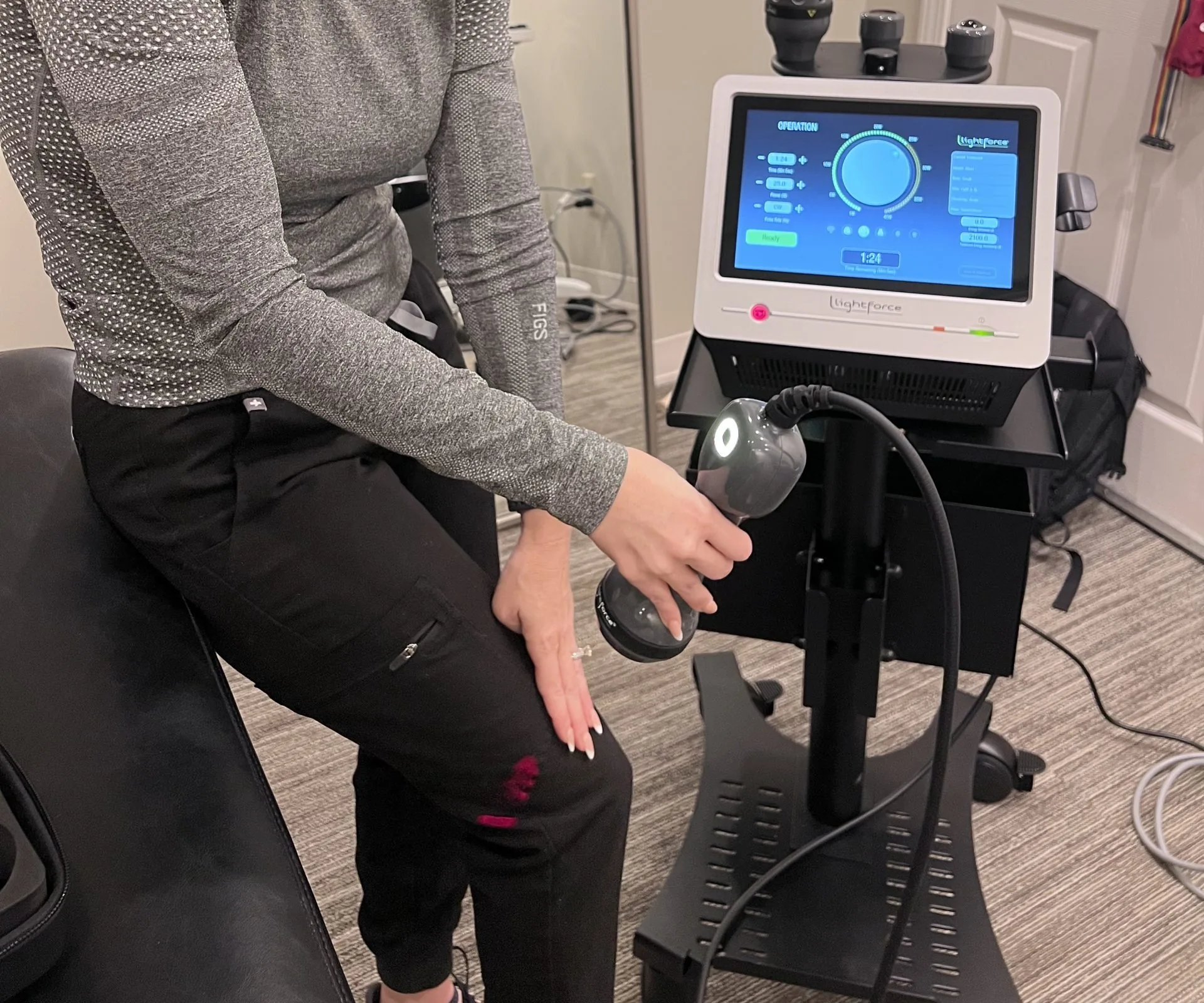
Therapeutic LightForce XLi laser machine with touchscreen and multiple hand applicators, shown for chiropractic treatment of wrist pain and carpal tunnel.

The Wrist

Inside the carpal tunnel, inflammation and swelling around the tendons directly press on the median nerve. Adjustments to the wrist bones, laser therapy to reduce inflammation, and shockwave therapy to break down chronic soft tissue changes address the wrist-level component of the compression.

How Balance Atlanta Treats Carpal Tunnel and Wrist Pain

Care begins with a thorough evaluation. Dr. Caroline uses orthopedic and neurological testing to assess the wrist, elbow, shoulder, and cervical spine together. The findings determine where compression is occurring and which treatments address those specific locations.

Chiropractic Adjustments to the Wrist, Elbow, and Shoulder

Precise, gentle adjustments to the wrist bones restore normal joint mechanics and reduce pressure inside the carpal tunnel. Adjustments to the elbow address the pronator teres region, where the median nerve can be secondarily compressed. Shoulder adjustments improve how force is distributed through the arm and reduce the tension that travels down into the forearm and wrist. Each adjustment targets a specific location along the nerve pathway based on the evaluation.

Cervical Spinal Decompression

When the evaluation identifies cervical disc involvement as a contributor to hand symptoms, spinal decompression therapy addresses it directly. Decompression gently stretches the cervical spine to reduce pressure on compressed or bulging discs and relieve irritation of the nerve roots. For patients whose symptoms are driven in part or largely by the neck, this is often the treatment that yields the most significant improvement.

Class IV Laser Therapy

Deep tissue laser therapy delivers targeted light energy to the wrist and forearm, along nerve pathways, to reduce inflammation, accelerate cellular repair, and improve circulation in compressed or irritated tissues. It is particularly effective for the chronic inflammation inside the carpal tunnel that develops with long-standing repetitive strain. Sessions are painless and brief. Many patients notice reduced tingling and improved hand sensation within the first few treatments.

Radial Pressure Shockwave Therapy

Shockwave therapy uses acoustic pulses to break down scar tissue and fibrotic changes in the soft tissues around the wrist and along the forearm, stimulate healing in chronically irritated tendons, and improve blood flow to tissues that have become stagnant. For patients with long-standing symptoms or significant soft-tissue involvement, shockwave therapy targets structural changes within the tunnel that other treatments cannot fully reach.

Trigger Point Therapy

The forearm flexors, pronator teres, and muscles of the upper arm and shoulder develop tight, contracted spots that refer pain and tingling into the wrist and hand in patterns that closely mimic carpal tunnel symptoms. Releasing these trigger points directly reduces the soft-tissue tension throughout the arm that contributes to median nerve compression. It also frees up the range of motion in the forearm and wrist that restrictions were limiting.

Postural Correction

Forward head posture and rounded shoulders create chronic tension throughout the neck, shoulders, and arms, increasing pressure on the median nerve along its entire pathway. Dr. Caroline assesses posture as part of every carpal tunnel evaluation and prescribes targeted corrective exercises alongside ergonomic guidance.

Stretching and Rehabilitation

Specific stretches for the wrist flexors, forearm, and thoracic spine reduce the chronic tissue tension that contributes to nerve compression. Strengthening exercises for the muscles that support the wrist and shoulder improve the mechanical environment in which the nerve moves. Dr. Caroline provides a specific home program that complements the in-office treatment, rather than generic hand exercises applied to every wrist complaint.

Request Appointment

Why Choose Balance Atlanta for Carpal Tunnel Treatment?

The Full Pathway, Not Just the Wrist

Dr. Caroline evaluates the cervical spine, shoulder, elbow, forearm, and wrist together. Many patients who have been treated for wrist-level carpal tunnel without lasting results have a cervical or soft tissue component that was never identified. Treating the actual source produces results that wrist-only treatment cannot.

A Combination of Therapies That Works

Adjustments, cervical decompression, Class IV laser, shockwave, trigger point therapy, and postural correction each address a different dimension of median nerve compression. Together, they produce outcomes that any single approach cannot match. This is the difference between managing carpal tunnel and resolving it.

Non-Surgical and Drug-Free

Surgery for carpal tunnel, while sometimes necessary, carries recovery time and risks that most patients would prefer to avoid. The combination of therapies at Balance Atlanta provides many patients with a genuine non-surgical alternative. Even patients who have been told that surgery is the next step often experience significant improvement with this approach.

Personalized Based on What the Evaluation Actually Shows

Not every carpal tunnel case involves the same contributing factors. Some have significant cervical disc involvement. Some are primarily driven by forearm soft tissue. Some have both wrist and shoulder components. The treatment plan reflects the actual findings, not a standard protocol applied to every hand complaint.

Common Questions

Have questions? We have honest answers.

We understand you’ve already been through the system—appointments, mixed answers, and limited results.That’s why Balance Atlanta takes a different approach, focusing on root causes, not just symptoms


Every plan is personalized, with clear guidance and honest communication at every step. The goal is simple: real, lasting improvements in how you feel and function every day.

Request Appointment
  • What is carpal tunnel syndrome?

    Carpal tunnel syndrome occurs when the median nerve is compressed as it passes through the carpal tunnel, a narrow passageway in the wrist formed by bones and ligaments. The median nerve controls sensation in the thumb, index finger, middle finger, and part of the ring finger, as well as movement in several thumb muscles. When it is compressed, the nerve cannot transmit signals normally. Tingling, numbness, pain, and weakness in those fingers and the hand are the result. The symptoms are often worse at night because the wrist tends to flex during sleep, further narrowing the tunnel.
  • What causes wrist pain and tingling besides carpal tunnel?

    Several conditions produce symptoms nearly identical to those of carpal tunnel syndrome. Cervical radiculopathy, which is nerve root compression in the neck from a herniated or degenerated disc, is one of the most common. Thoracic outlet syndrome, in which nerve bundles are compressed between the collarbone and first rib, is another. Pronator teres syndrome, tendonitis, arthritis in the wrist, and de Quervain’s tenosynovitis all produce wrist pain or hand symptoms with different underlying causes. Dr. Caroline uses orthopedic and neurological testing to distinguish between these conditions. Knowing which one, or which combination, is responsible determines which treatments will actually help.
  • How do I know if my wrist pain is from carpal tunnel?

    Classic carpal tunnel produces tingling or numbness specifically in the thumb, index finger, middle finger, and thumb side of the ring finger. The pinky finger is unaffected because it is supplied by a different nerve. Symptoms are often worse at night or first thing in the morning, and shaking or rubbing the hand often provides temporary relief. If your pinky finger is involved, if pain is more prominent than tingling, or if symptoms extend into the shoulder or neck, other causes should be evaluated alongside the wrist. A clinical examination, including neurological testing at the wrist, elbow, and cervical spine, is the most reliable way to understand where compression is occurring.
  • Can the neck cause carpal tunnel symptoms?

    Yes, and this is one of the most frequently missed aspects of hand and wrist symptoms. The median nerve originates from the C6 and C7 nerve roots in the cervical spine. When discs at these levels are compressed, bulging, or degenerated, they can irritate the nerve root and cause tingling, numbness, and weakness that radiate into the hand. The symptoms are often indistinguishable from wrist-level carpal tunnel, which is why treating only the wrist produces incomplete results in these cases. Cervical spinal decompression at Balance Atlanta directly addresses disc-related nerve root irritation in the neck when evaluation identifies it as a contributing factor.
  • Can chiropractic care help carpal tunnel syndrome?

    Chiropractic care addresses carpal tunnel at multiple levels rather than focusing only on the wrist. Adjustments to the wrist, elbow, shoulder, and cervical spine reduce joint restriction and nerve pressure along the full pathway. Cervical decompression addresses disc-related compression in the neck. Laser therapy and shockwave therapy reduce inflammation and tissue changes inside the tunnel. Trigger point work releases soft tissue tension throughout the forearm and upper arm. Together, this combination addresses more of what is actually compressing the nerve than any single treatment or wrist-focused approach can achieve.
  • Can poor posture contribute to carpal tunnel?

    Forward head posture and rounded shoulders create chronic tension throughout the neck, shoulder, and arm. This tension increases pressure on the median nerve at multiple points along its pathway from the neck to the wrist. People who sit at desks for hours, use phones frequently with their head forward, or carry tension in their shoulders are particularly vulnerable. Postural correction is part of every carpal tunnel treatment plan at Balance Atlanta. Improving posture reduces daily stress on the nerve pathway that treatment aims to resolve, and it is one of the most important factors in preventing symptoms from returning.
  • Are chiropractic adjustments safe for the wrist?

    Wrist adjustments are gentle and precisely targeted. Dr. Caroline evaluates joint health and health history before selecting appropriate techniques. For patients with significant inflammation or sensitivity, gentler mobilization or soft-tissue approaches are used during the acute phase before progressing to direct joint manipulation. The approach adapts to what the wrist can comfortably tolerate at each stage of care.
  • How long does it take to see improvement?

    It depends on how long symptoms have been present and how many contributing factors are involved. Some patients notice a significant reduction in nighttime tingling and hand discomfort within the first few visits. Cases with long-standing symptoms, cervical disc involvement, or significant soft tissue changes typically require four to eight weeks of consistent care before meaningful and durable improvement is established. Dr. Caroline provides a realistic timeline at the first visit based on the evaluation findings. The goal is steady, measurable progress rather than vague expectations.
  • What lifestyle changes help with carpal tunnel?

    Taking regular breaks from repetitive hand and wrist activity makes a meaningful difference, especially if breaks include brief forearm and wrist stretches. Avoiding positions that bend the wrist for extended periods, including during sleep, reduces the sustained pressure on the nerve. Ergonomic adjustments to keyboard height, mouse position, and screen placement reduce the postural patterns that contribute to nerve tension. Maintaining good shoulder and neck posture throughout the day reduces pressure on the nerve upstream of the wrist.
  • When should wrist pain be taken seriously?

    Wrist pain or hand symptoms that persist beyond a few days, wake you regularly at night, affect your ability to grip or perform normal tasks, or come with numbness and weakness should be evaluated. The longer nerve compression continues without treatment, the greater the risk of permanent nerve damage and loss of hand function. Early evaluation and treatment consistently produce better outcomes than waiting. If you have been told that surgery is the next step and have not yet explored the comprehensive non-surgical approach available at Balance Atlanta, an evaluation before that decision is worth the time.