


Scoliosis

Scoliosis Care and Management

A scoliosis diagnosis has a way of making your spine feel like something to be afraid of. There is a medical term attached to it now, images of a curved spine, and many unanswered questions about what this means for your life going forward. That uncertainty is uncomfortable and completely understandable.

Here is what is important to know early. A lateral curve in the spine does not automatically mean a life of limitation. Many people with scoliosis are active, feel good, and manage their condition well with the right support. The curve itself may not fully resolve, but the pain, stiffness, fatigue, and anxiety about progression can all be meaningfully addressed. The goal is not a perfect spine on an X-ray. The goal is a body that feels strong, moves well, and does not hold you back.

Chiropractic care does not straighten the spine. That is not the goal, and we will never claim otherwise. The goal is more realistic and useful: reduce the discomfort the curve causes, keep the spine as mobile as possible, strengthen the muscles that support it, and monitor for any changes over time.

At Balance Atlanta, Dr. Caroline von Fluegge-Chen uses gentle chiropractic adjustments, Class IV laser therapy, trigger point work, and specific exercises to help people with scoliosis feel better and function well. The approach is always adapted to the individual curve and the individual person.

Request Appointment

What is Scoliosis?

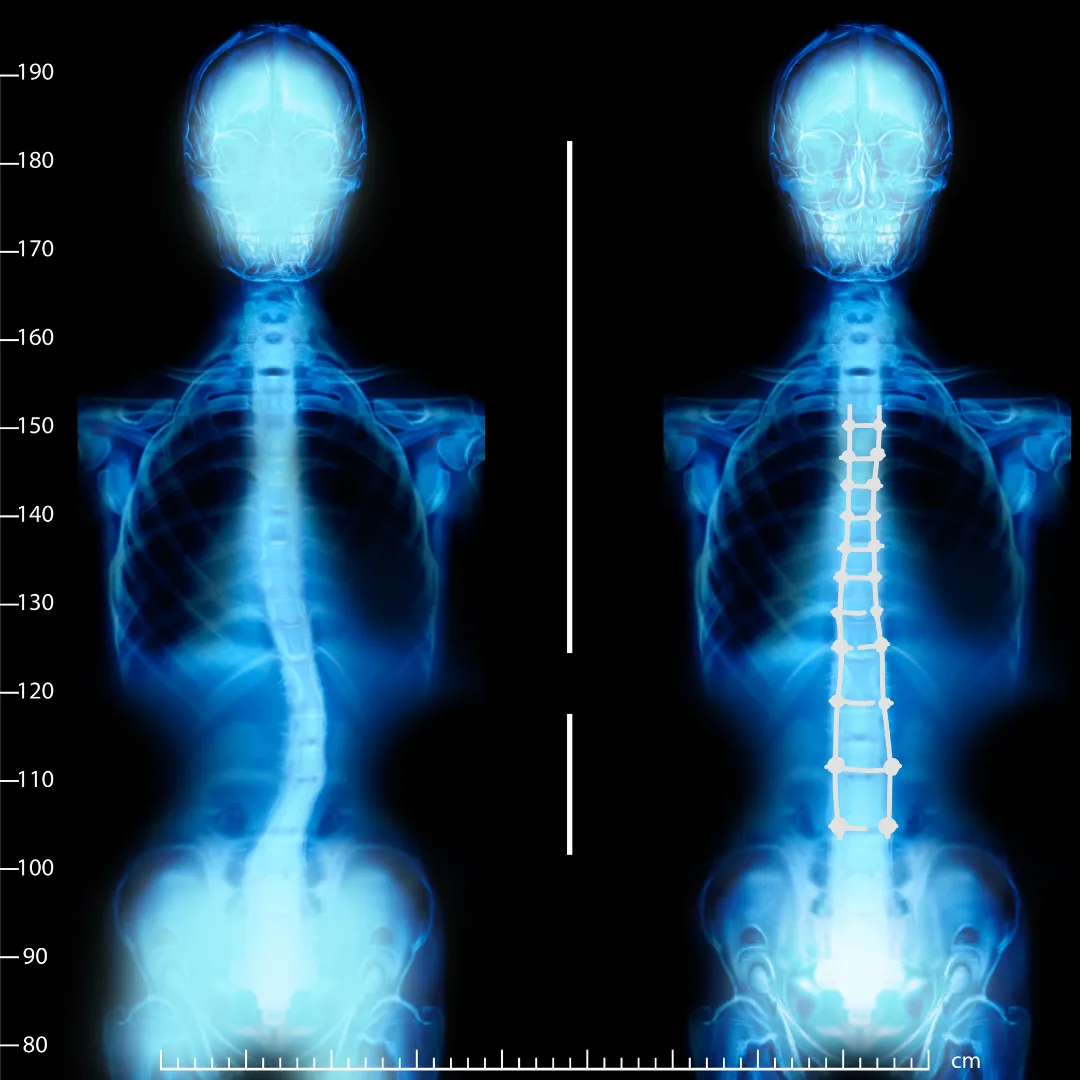
Scoliosis is a sideways curve in the spine. A healthy spine has natural curves when viewed from the side, but it should be straight when viewed from behind. In scoliosis, the spine curves to the left or right and sometimes twists slightly as well.

The curve is measured in degrees. Small curves under 20 degrees are usually monitored but may need little active treatment. Curves between 20 and 40 degrees are more likely to cause symptoms and may benefit from bracing in growing children alongside supportive care. Curves over 40 to 50 degrees may be evaluated for surgical options.

Most people with scoliosis have mild to moderate curves. They are not in the surgical range. They are managing day-to-day discomfort, muscle fatigue, and concern about progression.

Request Appointment

Types and Patterns of Scoliosis

Scoliosis is classified both by its cause and by where the curve occurs in the spine.

Idiopathic Scoliosis

The most common type. Idiopathic means the cause is unknown. It typically develops during adolescence, often between ages 10 and 15, during growth spurts. Girls are more likely than boys to develop a progressive curve. There is thought to be a genetic component, as it often runs in families.

Congenital Scoliosis

Present from birth due to abnormal development of the spine before birth. Some vertebrae may be incompletely formed or fused. This type is identified early, often in infancy or childhood, and is typically managed with close monitoring.

Neuromuscular Scoliosis

Develops as a result of conditions that affect the muscles or nerves controlling the spine, such as cerebral palsy, muscular dystrophy, or spinal cord injuries. The muscles on one side of the spine are weaker, allowing the curve to develop over time.

Degenerative Scoliosis

Develops in adults, typically after age 50, as the discs and joints of the spine wear down unevenly. Also called adult-onset scoliosis. It often causes back pain and can progress slowly over the years. Chiropractic care, laser therapy, and specific exercises are particularly helpful for managing the discomfort this type produces.

Thoracic Curve

A curve in the upper back. The most common location for idiopathic scoliosis in adolescents. Often causes one shoulder blade to sit higher than the other.

Lumbar Curve

A curve in the lower back. May cause one hip to appear higher. Often associated with low back pain in adults.

Thoracolumbar Curve

A curve that spans the transition between the upper and lower back.

Double Major Curve

Two curves, one in the upper back and one in the lower back, form an S-shape when viewed from behind. The two curves often partially balance each other, which can make scoliosis less visible from the outside.

Signs That May Indicate Scoliosis

Scoliosis is sometimes discovered at a school screening or a routine check-up. Other times, a person or their family notices physical changes first. These are the most common signs.

Uneven Shoulders

One shoulder sits noticeably higher than the other. A strap or collar that sits differently on each side.

One Shoulder Blade More Prominent

When bending forward, one shoulder blade sticks out more. This is called the Adam's forward bend test and is often used in school scoliosis screenings.

Uneven Hips

One hip appears higher or more prominent. Clothing hangs unevenly. One trouser leg seems longer than the other.

A Visible Curve in the Back

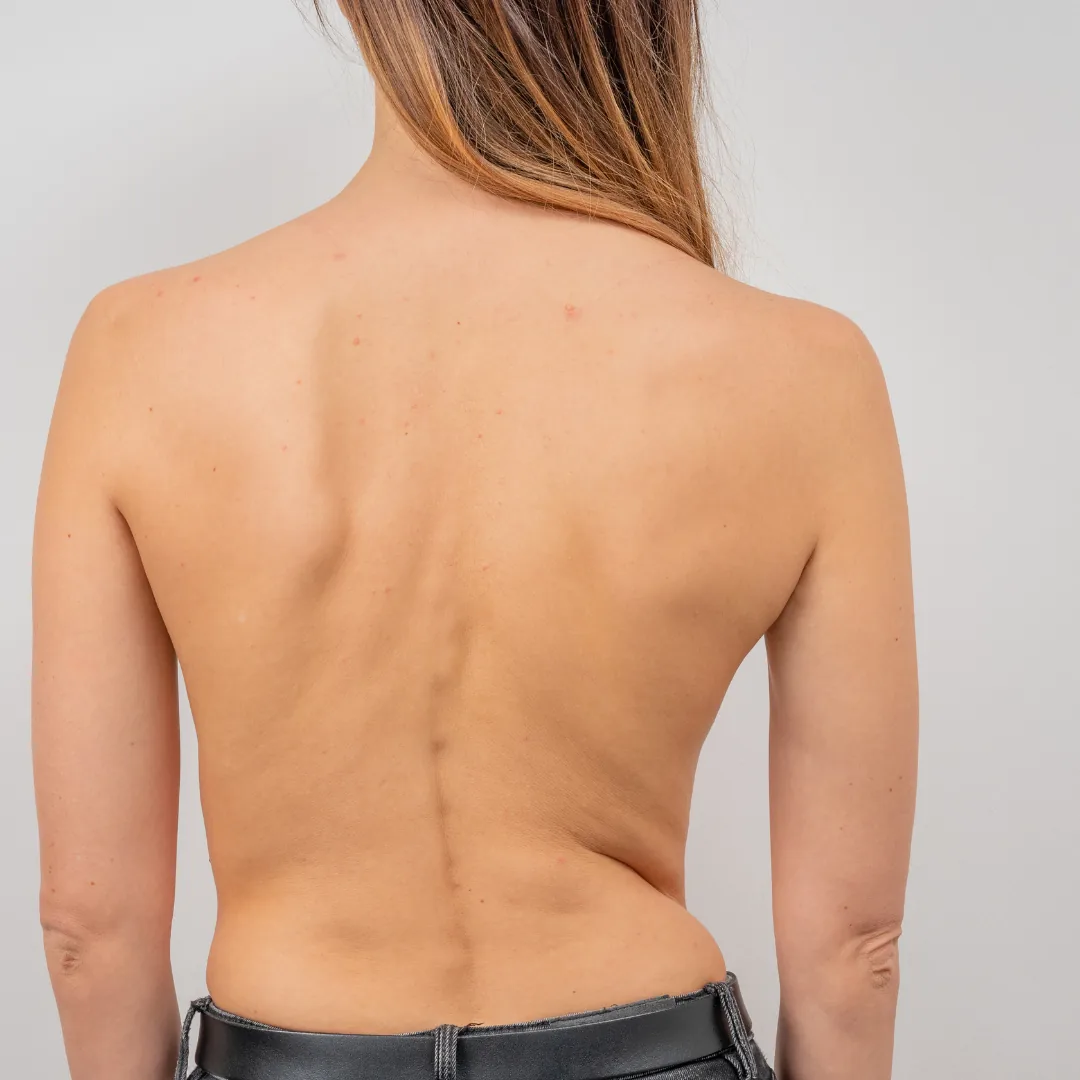
The spine appears to curve to one side when looking at the back. This may be most visible when the person bends forward.

Back Pain or Fatigue

Especially in adults with degenerative scoliosis and in teens with larger curves. The muscles on one side of the spine work harder to compensate for the imbalance, leading to chronic fatigue and soreness.

Reduced Flexibility or Range of Motion

Difficulty bending or twisting. The spine may feel stiff or locked on one side.

Request Appointment

Biological Contributors to Anxiety and Depression

Mood disorders rarely develop from a single cause. The following biological factors are among the most common and most consistently overlooked contributors.

Muscle Imbalance

Because the spine curves to one side, the muscles along the spine are not evenly balanced. The muscles on the concave side, the inside of the curve, become short and tight. The muscles on the convex side, the outside, become stretched and fatigued. Both sets of muscles hurt in different ways and for different reasons. Treatment addresses both sides.

Joint Stress

A curved spine puts uneven pressure on the joints between the vertebrae. Some joints carry more load than they should. Over time, this can accelerate wear on those joints and increase pain. Keeping the spine mobile helps distribute the load more evenly and slows this process.

Nerve Irritation

In larger curves or when the spine also rotates, the spaces where nerves exit the spine can become narrowed. This can cause pain, tingling, or numbness that travels into the arms or legs. Monitoring for this is an important part of scoliosis management.

Fatigue

Compensating for a spinal curve takes constant muscular effort. Many people with scoliosis feel tired in the back and core more quickly than others. Targeted

How Balance Atlanta Supports Scoliosis

Dr. Caroline begins with a thorough evaluation. She assesses the curve, the postural patterns it has created, the muscle imbalances on each side of the spine, and how the curve affects movement and daily function. Treatment is built around these specific findings. The approach is always gentle. Scoliosis requires adapted techniques. Standard high-force adjustments are not appropriate for most scoliosis patients. Everything is calibrated to the individual curve and the individual person.
Gentle Chiropractic Adjustments

Adjustments for scoliosis are not about forcing the spine straight. They are about restoring as much normal movement as possible to the joints that have become stiff and restricted due to the curve. When a joint moves better, it carries load more evenly, hurts less, and allows the muscles around it to function more normally. Techniques are always selected based on the location and severity of the curve. Instrument-assisted methods, low-force manual techniques, and specific directional mobilizations are used rather than traditional high-velocity adjustments.

Class IV Laser Therapy

The muscles on both sides of a scoliotic curve carry abnormal levels of tension and inflammation. Laser therapy delivers light energy deep into the tissue to reduce that inflammation, speed up cellular repair, and improve blood flow in the affected area. For adults with degenerative scoliosis and significant joint inflammation, laser therapy is particularly useful. Sessions are short and completely painless.

Trigger Point Therapy

The chronically shortened muscles on the concave side of the curve almost always develop trigger points, tight, painful knots that refer discomfort to other areas and further restrict movement. Direct release of these trigger points reduces pain and restores a range of motion that the tight tissue has been limiting. Many patients notice a significant reduction in their baseline soreness after trigger point work.

Postural Correction and Body Mechanics

Scoliosis creates postural compensation patterns throughout the entire body. The head, shoulders, hips, and feet all shift to accommodate the curve. Over time, these compensations create their own problems. Dr. Caroline identifies the specific postural patterns each patient has developed and provides guidance on modifying daily positions and movements to reduce the secondary strain those patterns create.

Targeted Stretching

Specific stretches for the short, tight muscles on the inside of the curve reduce the constant pull those muscles are placing on the spine. This does not change the curve, but it reduces the compression and discomfort the tightness creates. Dr. Caroline provides a home stretching program designed around the specific side and location of each patient’s curve.

Core and Stabilization Exercises

Strong, balanced core muscles are the best support system for a curved spine. They reduce joint load, decrease muscle fatigue, and help the spine function as well as possible given its structure. The exercises Dr. Caroline prescribes are specific to scoliosis, not generic core routines. They focus on building balanced support without overloading the already-tight side.

Ongoing Monitoring

One of the most important aspects of scoliosis management is tracking the curve over time. For growing children and teens, curves can change during growth spurts. For adults, degenerative changes can cause slow progression. Regular assessments let Dr. Caroline catch any changes early and adjust the care plan accordingly. Early awareness of progression enables earlier intervention, which consistently yields better outcomes.

Request Appointment

Why Choose Balance Atlanta for Scoliosis Care?

What Chiropractic Can and Cannot Do

Chiropractic care does not straighten a scoliotic spine. Anyone who claims otherwise is overpromising. What it can do is reduce the pain, stiffness, and muscle fatigue caused by the curve, keep the spine moving as well as possible, and monitor for progression. For most people with scoliosis, that is genuinely life-changing even if the curve stays the same.

Techniques Adapted to Scoliosis

Standard chiropractic adjustments are not appropriate for many patients with scoliosis. The approach at Balance Atlanta uses gentle, adapted techniques that are suitable for curved and sometimes rotated spines. Nothing is forced. Everything is calibrated to the specific curve pattern and the patient’s comfort.

Caring for the Whole Spine, Not Just the Curve

Scoliosis affects the muscles, joints, posture, and movement patterns of the entire body, not just the curved segment. Treatment addresses all of these, including compensatory tension in areas not directly part of the curve but suffering because of it.

Care at Any Age and Any Stage

A child just diagnosed with a mild curve needs different care than an adult with degenerative scoliosis, causing daily back pain. Dr. Caroline adapts the approach to the person in front of her, their age, their curve, their symptoms, and their goals.

Coordination with Medical Care When Needed

For children and teens with progressing curves, chiropractic care works alongside orthopedic monitoring and bracing, not instead of it. Dr. Caroline communicates with other providers when relevant and refers for further evaluation when the examination findings suggest it is needed.

Common Questions

Have questions? We have honest answers.

We understand you’ve already been through the system—appointments, mixed answers, and limited results.That’s why Balance Atlanta takes a different approach, focusing on root causes, not just symptoms


Every plan is personalized, with clear guidance and honest communication at every step. The goal is simple: real, lasting improvements in how you feel and function every day.

Request Appointment
  • What is scoliosis?

    Scoliosis is a sideways curve of the spine. When you look at someone’s back, a healthy spine should appear straight from top to bottom. In scoliosis, the curve is to the left, right, or both. The spine may also rotate slightly. Curves are measured in degrees. Small curves may cause few symptoms. Larger curves can cause back pain, muscle fatigue, and visible changes in posture.
  • What causes scoliosis?

    In most cases, the cause is unknown. This is called idiopathic scoliosis, the most common type. It tends to develop during growth spurts in adolescence and may run in families. Other causes include abnormal spinal development before birth, neuromuscular conditions that affect muscle control, and age-related wear on the discs and joints. Poor posture does not cause scoliosis, though it can affect how comfortable someone with scoliosis feels.
  • Can scoliosis be cured?

    In the vast majority of cases, the curve itself is a permanent structural feature of the spine. Surgery can reduce large curves but is typically reserved for severe cases. Chiropractic care, exercises, and bracing in children do not straighten the curve. What they do is manage the effects of the curve, reduce pain and stiffness, slow progression, and help the person stay active and comfortable. For most people, that is the realistic and achievable goal.
  • Does scoliosis cause pain?

    Not always, and not necessarily. Many people with mild scoliosis have no significant pain. Those with larger curves or degenerative scoliosis are more likely to experience chronic back pain, muscle fatigue, and stiffness. The pain typically comes from the muscles working unevenly to support the curved spine and from increased stress on the joints. Both of these are directly addressed by chiropractic care and targeted exercises.
  • Can scoliosis get worse over time?

    It can, particularly in two situations. First, in children and teens during growth spurts, curves can increase rapidly. This is why regular monitoring during adolescence is important. Second, in adults, age-related degeneration of the discs and joints can cause a slow progression of an existing curve. Staying active, maintaining core strength, and receiving regular monitoring through chiropractic care all reduce the rate of progression and catch any changes early.
  • Is scoliosis treatment different for children and adults?

    Yes. Children and teens with progressive curves may be candidates for bracing to slow progression during growth. Chiropractic care focuses on keeping the spine mobile, reducing discomfort, and monitoring alongside any bracing program. For adults, especially those with degenerative scoliosis, the focus is on managing pain, reducing joint inflammation, strengthening supporting muscles, and slowing the degeneration that drives progression. The techniques used are adapted accordingly.
  • Can chiropractic care help scoliosis?

    Yes, within realistic expectations. Gentle adjustments improve joint mobility and reduce the stiffness and discomfort that restricted joints create. Trigger point therapy addresses the painful muscle knots that develop from years of uneven loading. Laser therapy reduces inflammation in chronically irritated joints and muscles. Targeted exercises strengthen the support system around the curved spine. Together, these reduce pain, improve function, and support a more active daily life. Chiropractic care does not straighten the curve. That expectation needs to be clear. But for the pain and stiffness that scoliosis causes, it is one of the most effective and appropriate non-surgical approaches available.
  • Is it safe to receive chiropractic adjustments with scoliosis?

    Yes, when the techniques are adapted appropriately. Standard high-force adjustments are not used for most scoliosis patients. Dr. Caroline uses gentle, low-force, instrument-assisted techniques specifically designed for curved spines. The approach is always calibrated to the individual patient. Nothing is forced into positions the spine cannot comfortably reach.
  • What lifestyle habits help with scoliosis?

    Regular low-impact movement keeps the spine mobile and the surrounding muscles strong. Swimming, walking, and yoga are often particularly well-suited for scoliosis. Core strengthening reduces the fatigue from compensating for the curve. Sleeping positions matter, and Dr. Caroline can advise on which positions reduce morning stiffness. Avoiding prolonged sitting without breaks reduces the compression on the joints. Small, consistent habits make a significant cumulative difference.
  • Does scoliosis always need surgery?

    No. Surgery is typically considered only for curves that are severe, progressing rapidly, and affecting heart or lung function. The vast majority of people with scoliosis are not surgical candidates and can live well-managed, active lives with conservative care. If you have been diagnosed with scoliosis and surgery has been mentioned, understanding your curve size and progression rate is important context for that conversation.