Hip Pain

Hip Pain Treatment

Hip pain has a way of becoming the background noise of your entire day. Getting out of a chair, walking to the car, and trying to find a comfortable sleeping position at night. It starts as an inconvenience and gradually becomes something you are constantly working around. Rest brings some relief, but the pain returns because rest alone does not address what is driving it.

The hip is a complex joint that absorbs an enormous amount of force with every step, and when something is off in how it moves or in how the surrounding muscles support it, the joint pays the price. What feels like a hip problem is sometimes a low back problem. What feels like a muscle problem is sometimes a joint problem. Getting the right answer matters because the wrong treatment for the wrong diagnosis tends to lead right back to where you started.

That is because hip pain is rarely just a hip problem. Your pelvis, lower spine, and surrounding muscles all affect how your hip moves and how much stress it carries. When any of those are tight, misaligned, or weak, your hip takes on more than it should. Treating only the hip, without addressing what is driving the problem, is why so many people get short-term relief and then end up right back where they started.

At Balance Atlanta, Dr. Caroline von Fluegge-Chen evaluates the hip, pelvis, and lower spine together before developing a treatment plan. She then uses chiropractic adjustments, spinal decompression, Class IV laser, shockwave therapy, and trigger point work to address the actual cause. The goal is real, lasting improvement, not another round of managing symptoms.

Request Appointment

Why Hip Pain Keeps Coming Back

About 20 percent of adults over 60 deal with hip pain. Osteoarthritis is the most common cause in that group. Roughly 10 percent of all adults experience hip pain at some point. It is one of the leading reasons for hip replacement surgery, with over 450,000 procedures performed in the United States each year.

Many of those surgeries come after years of pain that was managed but never properly resolved. The hip is directly connected to the lower spine through the pelvis. When the lower back is misaligned, the sacroiliac joints are not moving properly, or the core and hip muscles are weak, the hip pays the price. These are correctable problems. Addressing them early protects the joint and often avoids more drastic intervention down the road.

Request Appointment

What Is Causing Your Hip Pain

The hip is a major joint that supports your body weight and connects to both your pelvis and lower spine. Pain can come from the joint itself or from structures around it and above it.

Osteoarthritis

The most common cause of hip pain in adults over 50. The cartilage inside the hip joint wears down over time. As it thins, the bones begin to rub together. The result is pain, stiffness, and reduced movement, especially in the morning or after sitting for a while. Chiropractic care helps by keeping the joint moving, reducing the mechanical stress that speeds up wear, and strengthening the muscles that support the hip.

Bursitis

Small fluid-filled sacs called bursae cushion your hip joint. When they become inflamed, you get sharp pain in the outer hip and thigh. It is often worse when you walk or lie on that side. This type of pain responds very well to shockwave therapy and trigger point work.

Sitting All Day

Sitting for long periods tightens the hip flexors at the front of the hip and weakens the glutes at the back. It also tilts the pelvis forward and compresses the lower spine. Over time, this combination puts constant strain on the hip. Many desk workers develop hip pain slowly, without any injury, simply because of this daily pattern.

Sacroiliac Joint Dysfunction

The sacroiliac joints, often called the SI joints, connect the spine to the pelvis. When they are not moving properly, they cause lower back and buttock pain that often feels like hip pain. This is one of the most commonly missed causes of hip discomfort, and Dr. Caroline checks for it in every hip evaluation.

Tight Hip Flexors and Weak Glutes

When the muscles at the front of the hip are too tight and the muscles at the back are too weak, the hip does not move as it should. The joint takes on more stress than it is designed to handle. Correcting this imbalance is one of the most important parts of preventing hip pain from coming back.

Weak Core

Your core muscles hold the pelvis stable when you walk, stand, and move. When they are weak, the pelvis shifts with each step. The hip absorbs the extra load. A weak core is not always the main cause of hip pain, but it almost always makes it worse. Core strengthening is built into every hip care plan at Balance Atlanta.

Pregnancy and Postpartum Changes

During pregnancy, a hormone called relaxin loosens the ligaments in the pelvis. This is necessary for childbirth, but it also creates instability that can cause hip and pelvic pain. The shift in your center of gravity during pregnancy adds further strain. After delivery, the pelvis and lower spine often need to be realigned. The surrounding muscles need to be rebuilt. Many women carry hip pain for months or years after having a baby simply because this recovery never happens.

Old Back Injuries

A past disc injury, a fracture, or even a bad case of whiplash that was treated but never fully rehabilitated can leave lasting restriction in the lower spine. Over time, that restriction changes how load travels through the pelvis and into the hip. Hip pain that develops years after a back injury is often linked to an incomplete recovery.

Sleep Position

Sleeping on the same side every night compresses that hip for hours at a time. Over the long run, this can trigger bursitis, tighten the hip flexors, and irritate the sacroiliac joint. Placing a pillow between your knees when sleeping on your side takes a lot of that pressure off. Dr. Caroline provides specific guidance on this as part of your care.

Sports and Overuse

Running, cycling, golf, soccer, and other sports that involve repetitive hip movement put cumulative stress on the joint and surrounding muscles. Common athletic hip conditions include hip impingement, labral tears, and tendon inflammation. These respond best to early treatment. Waiting until the pain is severe makes recovery significantly harder.

Tendinitis

The tendons around the hip, particularly at the front and back, can become inflamed from overuse or activity. This causes pain that worsens with movement and activity. Like bursitis, it responds well to shockwave therapy and soft tissue work.

Sciatica

When a nerve in the lower spine is compressed, it can send pain through the buttocks and into the leg. This often feels like hip pain, even though the source is in the back. Identifying whether pain originates from the hip itself or is referred from the spine is an important part of the evaluation.

Person using a purple resistance band looped around the foot to perform a seated hip stretch on a mat

Symptoms Worth Paying Attention To

Groin Pain

Pain in the groin or deep inside the front of the hip often points to the hip joint itself. Pain that worsens with leg rotation is a common sign.

Outer Hip and Thigh Pain

Pain along the outside of the hip and thigh, especially when walking or lying on that side, is often bursitis or tightness in the iliotibial band, the thick tissue running down the outer thigh. This pattern responds well to the treatments at Balance Atlanta.

Buttock Pain

Deep buttock pain that is hard to pin down can come from the sacroiliac joint, a tight piriformis muscle, or a nerve being compressed in the lower spine. An examination is the only reliable way to tell which one.

Stiffness After Rest

If your hip is stiff after sitting or lying down but loosens up as you move around, that is a classic pattern of hip arthritis or inflammation. The joint needs movement to stay lubricated and functional.

Less Range of Motion

If it is getting harder to rotate your leg, pull your knee toward your chest, or reach your foot to put on a shoe, the hip joint is becoming restricted. That restriction needs direct treatment.

Pain That Goes Into the Leg

If hip pain travels down into your thigh, knee, or lower leg, a nerve is likely involved. That points back to the spine as part of the problem, and both areas need to be evaluated.

Request Appointment

How Balance Atlanta Treats Hip Pain

Every care plan starts with a thorough evaluation. Dr. Caroline checks your hip, pelvis, sacroiliac joints, and lower spine all at once. She looks at how you move, how strong your muscles are, your posture, and your gait. Treatment is based on what she actually finds.

Chiropractic Adjustments

Gentle, targeted adjustments to the hip joint restore normal movement and reduce the abnormal stress that causes pain. Pelvic adjustments address the sacroiliac joints and pelvic alignment that affect how the hip loads. Lower spine adjustments correct the spinal contributors that either refer pain into the hip or alter how the whole leg moves. Treating the hip alone, without also adjusting the pelvis and spine, leaves the underlying drivers in place. Dr. Caroline addresses all three areas based on what the evaluation shows.

Spinal Decompression Therapy

When a compressed or bulging disc in the lower spine is contributing to hip or leg pain, spinal decompression therapy treats it directly. This gentle stretching technique takes pressure off the affected disc and nerve, reducing the pain radiating into the hip and leg. For patients whose hip symptoms have a spinal component, decompression is often what produces the most noticeable improvement.

Class IV Laser Therapy

Laser therapy uses targeted light energy to reduce inflammation, speed up healing, and improve blood flow in the treated area. For hip bursitis, tendinitis, and arthritic joints, it addresses the inflammatory side of the pain directly, without medication. Sessions are short and completely painless. Laser works especially well early in the treatment process when inflammation is highest, and as a complement to shockwave therapy for more chronic conditions.

Radial Pressure Shockwave Therapy

Shockwave therapy delivers precise pulses of energy into damaged tendons and bursae. It breaks down the scar tissue and chronic changes that build up in long-standing hip conditions, triggers the body to heal tissue that has stopped healing on its own, and produces lasting pain relief. For outer hip bursitis, gluteal tendon pain, and iliopsoas tendinitis, shockwave is one of the most effective treatments available. Most patients see improvement within the first few sessions.

Trigger Point Therapy

Muscles around the hip, including the piriformis, gluteus medius, hip flexors, and the outer thigh, develop tight, painful spots called trigger points. These spots refer pain into the hip, buttock, and thigh and limit how freely the joint can move. Releasing these trigger points directly reduces pain and restores range of motion. For patients with bursitis in particular, releasing tightness in the outer thigh muscles reduces friction over the bursa, which keeps the inflammation active.

Postural Correction and Gait Analysis

How you stand and walk determines how much stress your hip experiences with every step. A forward-tilted pelvis, uneven gait, or one leg landing differently than the other all load the hip in ways that cause or worsen pain. Dr. Caroline evaluates both posture and movement in every hip assessment and provides specific exercises and guidance to correct the patterns contributing to your pain.

Stretching and Rehabilitation

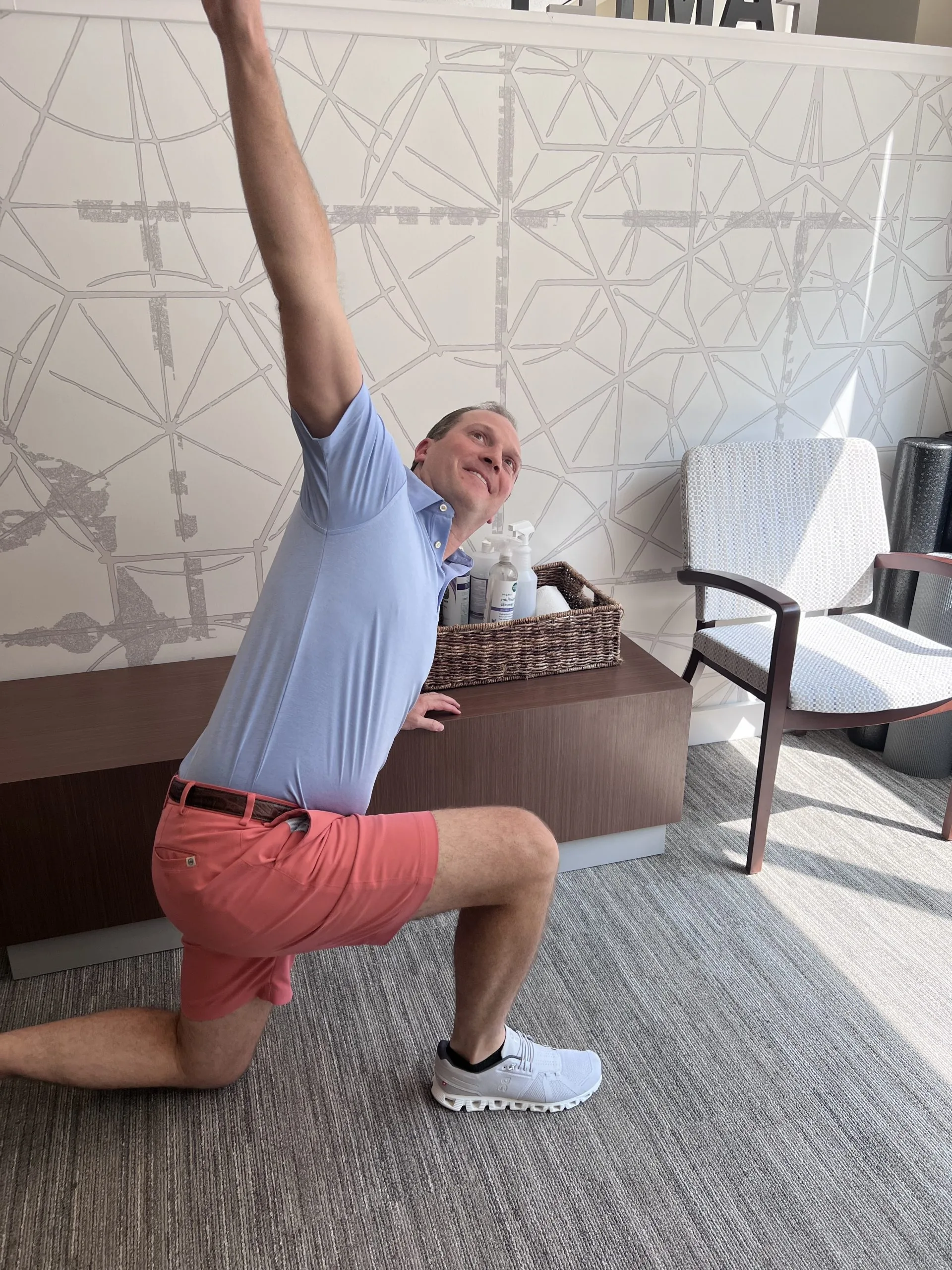
Stretching the hip flexors, strengthening the glutes, and building core stability are the foundations of hip rehabilitation. Dr. Caroline creates a specific home program for each patient based on their evaluation findings. The exercises target the exact muscles that are contributing to each person’s pain, not a generic routine.

Request Appointment

Why Choose Balance Atlanta for Hip Pain?

The Full Picture, Not Just the Hip

Hip pain from a sacroiliac problem needs different treatment than hip pain from a disc or from bursitis. Dr. Caroline evaluates all of the possibilities before deciding on a plan. Treating the right cause gets better results than applying the same approach to everyone.

Fixing the Cause, Not Just the Symptom

The spine, pelvis, core, and hip work together as one system. Treating the hip without correcting the spinal and muscular contributors that put stress on it yields only short-term relief. The approach here addresses the whole picture.

Advanced Therapies That Each Do Something Different

Laser reduces inflammation. Shockwave heals damaged tissue. Trigger point work releases muscular tension. Decompression takes pressure off the spine. Each treatment targets a different part of the problem. Together, they produce outcomes that adjustments alone cannot.

Non-Surgical and Drug-Free

For anyone managing hip pain with medication, thinking about injections, or wondering if surgery is next, the combination of treatments available at Balance Atlanta in Atlanta offers a credible, non-invasive alternative. Many patients who were told surgery was coming first find significant improvement here.

Built to Last

The rehabilitation and postural work in your care plan are designed to protect the gains made in treatment. Stronger supporting muscles, better movement patterns, and a body that is no longer working against itself all reduce the chances of the pain returning.

Common Questions

Have questions? We have honest answers.

We understand you’ve already been through the system—appointments, mixed answers, and limited results.That’s why Balance Atlanta takes a different approach, focusing on root causes, not just symptoms


Every plan is personalized, with clear guidance and honest communication at every step. The goal is simple: real, lasting improvements in how you feel and function every day.

Request Appointment
  • What are the most common causes of hip pain?

    Osteoarthritis, bursitis, sacroiliac joint problems, tight hip flexors, gluteal tendon inflammation, and referred pain from the lower spine are the most frequent causes. Athletes often deal with hip impingement, labral tears, or overuse injuries. Pregnant and postpartum women commonly experience hip and pelvic pain from the hormonal and structural changes that come with pregnancy and delivery. Because the hip connects to both the pelvis and the lower spine, pain in the hip region often has contributing factors in those areas too. Dr. Caroline looks at all of it together.
  • Can back problems cause hip pain?

    Yes, often. A compressed disc, a pinched nerve, or a problem with the sacroiliac joint in the lower spine can all send pain into the hip, buttock, and thigh. The sciatic nerve runs right through the back of the hip, so when it is irritated in the spine, the pain shows up as hip and leg pain. When hip symptoms travel into the thigh or leg, the spine needs to be evaluated as part of the picture.
  • Why does sitting all day cause hip pain?

    Sitting for long periods does two things that hurt the hip. First, it tightens the hip flexors at the front. When these muscles are chronically tight, they pull the pelvis forward and add stress to the front of the hip joint. Second, it weakens the glutes. The glutes are supposed to stabilize the pelvis and support the hip. When they stop working properly, the hip carries more load than it should. Desk workers often develop hip pain gradually, without any specific injury, simply because of these two patterns compounding over time.
  • Can hip pain during or after pregnancy be treated?

    During pregnancy, a hormone called relaxin loosens the ligaments in the pelvis to prepare for delivery. This creates instability that causes real hip and pelvic pain for many women. Chiropractic care during pregnancy is safe and directly addresses the misalignment and muscle imbalances driving that pain. After delivery, the pelvis and lower spine often need to be realigned and the supporting muscles need to be rebuilt. Many women carry hip pain for years after having a baby simply because that recovery never happens. It is very treatable.
  • How does chiropractic care help hip pain?

    Chiropractic care helps with hip pain at multiple levels at once. Adjustments to the hip joint restore normal movement and reduce joint stress. Pelvic and lumbar adjustments correct the structural contributors from above. Spinal decompression takes pressure off compressed discs and nerves. Trigger point therapy releases the muscular tightness, limiting the range of motion. Laser and shockwave treatments address the inflammation and tissue damage that cause pain. This combination targets more of what is actually causing hip pain than any single treatment approach. That is why patients at Balance Atlanta tend to see better results than from treatment that focuses on the hip alone.
  • What is trochanteric bursitis, and how is it treated?

    Trochanteric bursitis is inflammation of the bursa on the outer side of the hip. It causes pain along the outer hip and thigh, typically worse when you walk, climb stairs, or lie on that side. The most common driver is tightness in the outer thigh muscles and gluteal tendons, which rub against the bursa with every step. Shockwave therapy works well for this because it reduces the chronic inflammation in the bursa and helps the surrounding tendons heal. Trigger point release of the outer thigh muscles reduces the tension causing friction. Adding hip strengthening exercises to stabilize the pelvis helps prevent it from coming back. This combination produces better long-term results than cortisone injections, which only mask the inflammation temporarily.
  • Can a weak core cause hip pain?

    Your core muscles hold your pelvis steady when you move. When they are weak, the pelvis shifts with each step. That shifting puts extra stress on the hip joint and the muscles around it. Core weakness alone rarely causes sharp pain, but it creates the conditions that allow hip pain to develop and keeps it from fully going away. That is why core work is included in every hip care plan at Balance Atlanta.
  • How long does it take to see improvement?

    It depends on what is causing the pain and how long it has been going on. Many patients with acute hip bursitis or sacroiliac pain start feeling better within the first two to three weeks of care. Long-standing arthritis or chronic tendon problems typically take four to eight weeks of consistent treatment to produce meaningful, lasting improvement. Dr. Caroline gives you a realistic picture at your first visit, based on the evaluation. The target is always lasting improvement, not just short-term relief.
  • When should hip pain be taken seriously?

    Hip pain that makes walking difficult, wakes you up at night, or persists for more than two weeks without improving should be evaluated. Sudden severe pain after a fall or injury, inability to put weight on the leg, or significant swelling needs prompt medical attention. For everything else, the sooner you get a proper evaluation, the better. Hip pain that is addressed before it becomes chronic and before the joint and muscles have had time to compensate responds much faster to treatment.